Salary Hike for Nigerian Politicians: Relief for Leaders, Hardship for the People?
The Nigerian government justifies salary increases for top officials as a response to economic realities, but ordinary Nigerians from market women to civil servants, are struggling under inflation, subsidy removals, and job losses. Is this a case of misplaced priorities or survival politics?

INTRODUCTION
Nigeria has once again been thrown into heated debate following the recent announcement of proposed salary increment for government officials. Stating that while those at the helm of leadership prepare to enjoy fatter paychecks, the majority of Nigerians continue to struggle under the heavy weight of food inflation, skyrocketing fuel prices, and rising unemployment.
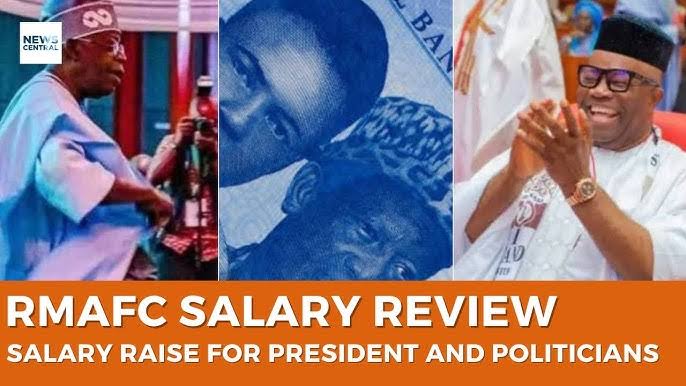
Photo Credit: Google Image
A bag of rice that once cost around ₦10,000 or less about a decade ago now hovers around ₦60,000 in some markets. Transport fares have tripled, making daily commutes nearly unbearable. Families are cutting meals, young graduates face a job market shrinking by the day, and small businesses battle with the unending surge in operating costs.
Against this backdrop, the news of improved salaries for politicians and top office holders rings like a bitter joke to the ears of the masses. The contrast could not be sharper: while leaders insulate themselves from the storm of economic hardship, citizens at the grassroots the very lifeblood of the nation are left to navigate it alone.
This begs a critical question: in a country where the masses are most hit by inflation and economic instability, who truly deserves financial relief, the leaders in Abuja or the ordinary Nigerians hustling for survival?
The Official Justification
The government’s official reasoning behind the proposed salary increment is couched in familiar terms: adjusting pay to reflect the nation’s harsh economic realities. Leaders argue that just like every other citizen, they too are affected by inflation, rising costs of living, and the need to maintain “standard dignity” in their positions. To them, the solution is simple, raise their salaries in line with current economic pressures.
On paper, this justification seems logical. If inflation eats into everyone’s pockets, then technically, no worker, whether in the public or private sector is immune. But the glaring question is whether those at the top of the political ladder, already cushioned by allowances, benefits, and perks of office, should be the first to receive economic “protection.”
Looking abroad, the comparison becomes even starker. During crises in countries like New Zealand, government officials reduced their own salaries or redirect funds toward relief packages for citizens. In fact, in several instances, lawmakers have voluntarily cut portions of their pay to show solidarity with their struggling populations.
Nigeria’s case appears to move in the opposite direction, at a time when citizens are crying out for subsidies on essentials, improved wages for civil servants, and social welfare schemes, the political class is prioritizing its own comfort.
The Grassroots Reality
Beyond the corridors of power, Nigeria’s economic crisis wears a very different face. For the ordinary citizen, survival has become a daily battle. Market women complain of dwindling sales as food prices rise beyond the reach of their regular customers. Minimum wage for public service workers can no longer sustain them, as the economic situation turn this workers into beings struggling to survive.
Transport workers are equally hit. With fuel prices soaring after subsidy removal, bus drivers and Okada riders spend more on petrol than they take home as profit. Students juggle rising school fees and the cost of living, while parents struggle to keep them in school. Civil servants, who make up a large share of Nigeria’s workforce, still earn wages anchored on a minimum wage of ₦70,000 per month which was recently increased by the current administration in July 2024, a figure that has not been adjusted in line with the reality of today’s inflation rate.
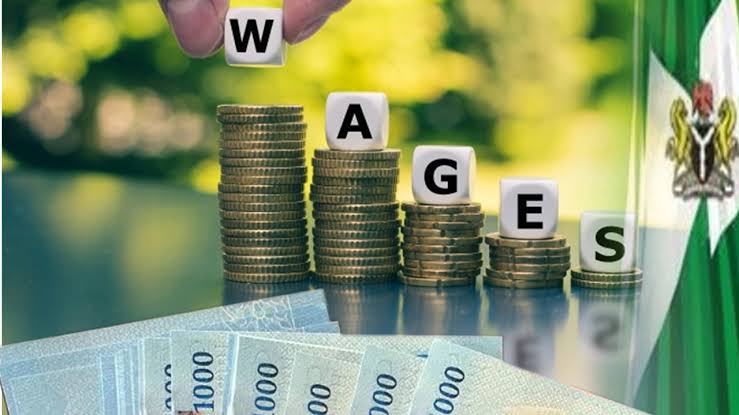
Photo Credit: Global Upfront Newspaper
Meanwhile, unemployment and underemployment rates remain troubling, pushing more youths into informal hustles or outright despair. Against this backdrop, the news of pay raises for public officials feels like salt on open wounds. The same leaders who argue that inflation justifies their own salary adjustments have failed to extend similar relief to the majority of Nigerians who bear the brunt of the economic downturn.
The contrast is glaring: while the elite insulate themselves with higher pay, the grassroots are left with stagnant earnings that shrink in value with each passing day. For millions of Nigerians, the message seems clear, relief is a privilege reserved for the powerful.

Public Reactions and Outrage
The announcement of salary increases for government officials has not been met with applause, but with a wave of sentiments across the country. On social media platforms like X (formerly Twitter) and Facebook, many Nigerians have expressed their displeasure and opinions on the move by the government, this began trending within hours of the news breaking. Nigerians are venting their frustrations, questioning why leaders deserved raises when the average citizen can't afford basic necessities.
Civil society groups and labour unions also joined the chorus of disapproval. The Nigeria Labour Congress (NLC) argued that the government’s move highlighted a blatant disconnect from the realities faced by ordinary Nigerians. “You cannot claim inflation is strangling the country and then raise salaries for a privileged few while leaving millions of workers behind,” one union leader remarked.
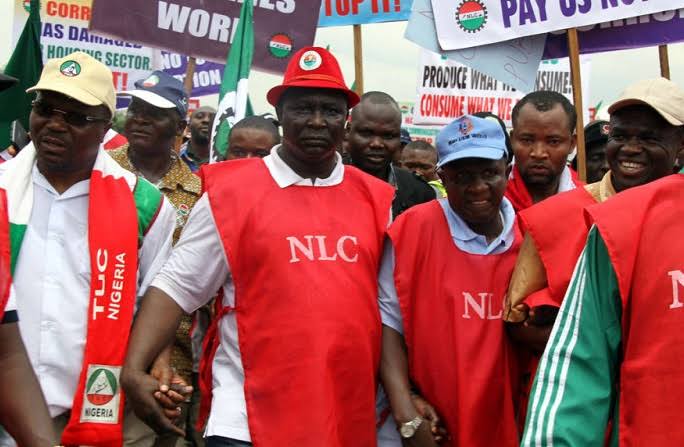
Photo Credit: Punch Newspaper
Even in everyday conversations, from roadside stalls to campuses, the sentiment is the same: leaders are enriching themselves while the masses are abandoned. Many Nigerians see the development as a betrayal of trust, a clear sign that public service has become more about personal gain than collective responsibility.
The outrage underscores a broader tension between Nigeria’s elite and its grassroots population. In a country where trust in leadership is already fragile, this pay raise risks deepening the sense of alienation and fueling disillusionment in government institutions. For many, it is not just about money, but about fairness, empathy, and accountability in a nation grappling with economic hardship.
The Bigger Picture: Priorities or Politics?
Beneath the government’s explanation lies a deeper question: is this salary increase really about survival, or about politics? For critics, the timing is suspicious. At a moment when Nigeria faces soaring inflation, a weakened naira, and rising poverty levels, prioritizing higher pay for government officials sends a troubling message about where leaders’ true concerns lie.
Many argue that the funds earmarked for these adjustments could have been redirected to far more pressing needs. Public hospitals are underfunded, schools across the country struggle with dilapidated infrastructure, and millions of workers still earn a minimum wage that has not kept pace with inflation. Even modest investments in these sectors could deliver widespread relief, compared to the narrow benefits of enriching political office holders.

Photo Credit: Google Image
This decision also raises questions about the health of Nigeria’s democracy. Democracy thrives when leaders are seen as accountable and responsive to the people’s needs. Yet, when leaders prioritize their own welfare over that of the masses, it erodes trust and widens the gulf between government and governed. Ordinary Nigerians begin to feel alienated from a system that seems to work for the few at the expense of the many.
Ultimately, the pay raise debate is not just about numbers on a payslip. It is about priorities, fairness, and the social contract. If leaders are unwilling to tighten their belts during times of crisis, how can they credibly ask citizens to endure sacrifice? And if citizens believe their leaders are disconnected from reality, democracy itself risks being reduced to a hollow ritual, rather than a shared pursuit of national progress.
Conclusion
The controversy over salary increases for government officials is not merely about paychecks, it cuts to the heart of governance, inequality, and democracy in Nigeria. When those elected to serve appear to prioritize their own comfort over the welfare of millions struggling to survive, it reveals a deep disconnect in leadership priorities. Governance should be about shared sacrifice, fairness, and delivering relief to those who need it most, the ordinary citizens who bear the brunt of economic hardship every day.
Inequality grows sharper when leaders insulate themselves from the same challenges their people face. A government that raises its own salaries while leaving minimum wage earners, market women, artisans, and young graduates to battle hunger and unemployment risks fueling resentment and eroding trust in democratic institutions. Democracy cannot flourish if it is perceived as a system of privilege for the few rather than a collective tool for national progress.
Solving this crisis requires political will and a reordering of priorities: addressing inflation through sound economic policies, revisiting minimum wage structures, and investing in health, education, and job creation. Relief should start at the grassroots, because it is only when the foundation of society is strong that the entire nation can thrive.
And so the big question remains: If leaders need relief from Nigeria’s economic crisis, shouldn’t the people at the grassroots get it first?