Atiku Demands Full Disclosure of Nigeria-US Health Agreement After Ghana Rejection
Atiku Abubakar has demanded the immediate publication of Nigeria's health agreement with the United States, following Ghana's rejection of a similar compact over concerns about data, funding, and inspections. He highlighted Nigeria's high maternal mortality rates and questioned the government's ability to fulfill its commitments amid domestic funding challenges.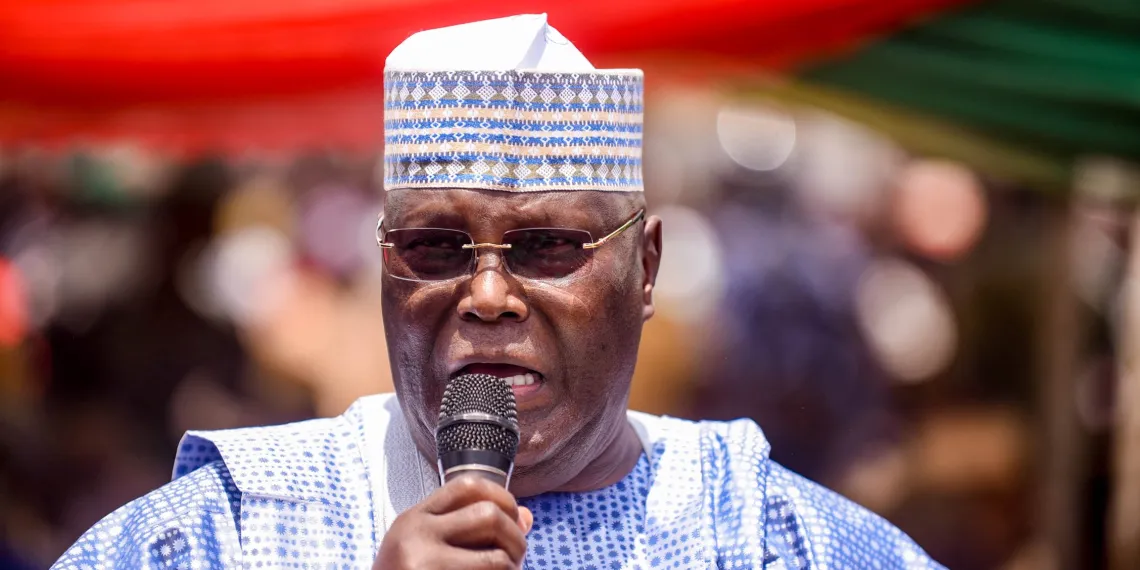
Former Vice President and ADC presidential candidate Atiku Abubakar has called on the Federal Government to publish the full text of Nigeria’s five-year health Memorandum of Understanding (MoU) with the United States, following revelations that Ghana rejected a similar proposed agreement over concerns about health data, pathogen information, funding obligations and the inspection of medicines.
Nigeria signed its agreement with the US on December 19, 2025, with the Federal Ministry of Health saying it covers disease surveillance, laboratory systems, pathogen sample collection and health data systems. Under the agreement, the US intends to provide nearly $2.1 billion in health assistance, while Nigeria is expected to commit nearly $3 billion in new domestic health expenditure over five years.
Atiku questioned whether Nigeria’s financial commitments can be fulfilled given the country’s existing health-sector funding constraints, citing the disclosure by Health Minister Muhammad Ali Pate that only ₦36 million of the ₦218 billion appropriated for the ministry’s 2025 capital budget had been released. He also pointed to Nigeria’s maternal-health crisis, arguing that the government must explain how an international partnership will translate into improved care for Nigerians.
Atiku, through Phrank Shaibu, Director of Strategic Communication of the ADC Presidential Campaign Council, said Nigerians should not have to speculate about the agreement’s provisions and called for the publication of its protocols, annexes, data-sharing arrangements, specimen-sharing agreements and financial commitments.
The former vice president specifically asked whether Nigerian medical information or pathogen samples can leave the country, who could access them, what safeguards apply to patients, whether NAFDAC retains authority to inspect medicines and medical products, and what the Federal Government and states have committed to spend. Atiku said Nigeria should welcome international cooperation that strengthens healthcare but insisted that the terms of such agreements should be publicly understood and scrutinised.
The Federal Ministry of Health has described the Nigeria-US agreement as part of a broader shift toward health-sector self-reliance, with increased domestic financing alongside US grant support and cooperation on disease surveillance, laboratory systems, healthcare workers, commodities and data systems.