Orbán's Election Defeat Sends Ripples Through Global Politics
Hungary's political landscape has shifted dramatically with the end of Viktor Orbán's 16-year premiership, replaced by Péter Magyar. This transition signals a potential rebalancing of Hungary's ties with the EU and NATO, a new stance on the Ukraine war, and a complex challenge for the Kremlin, which had viewed Orbán as a key European ally.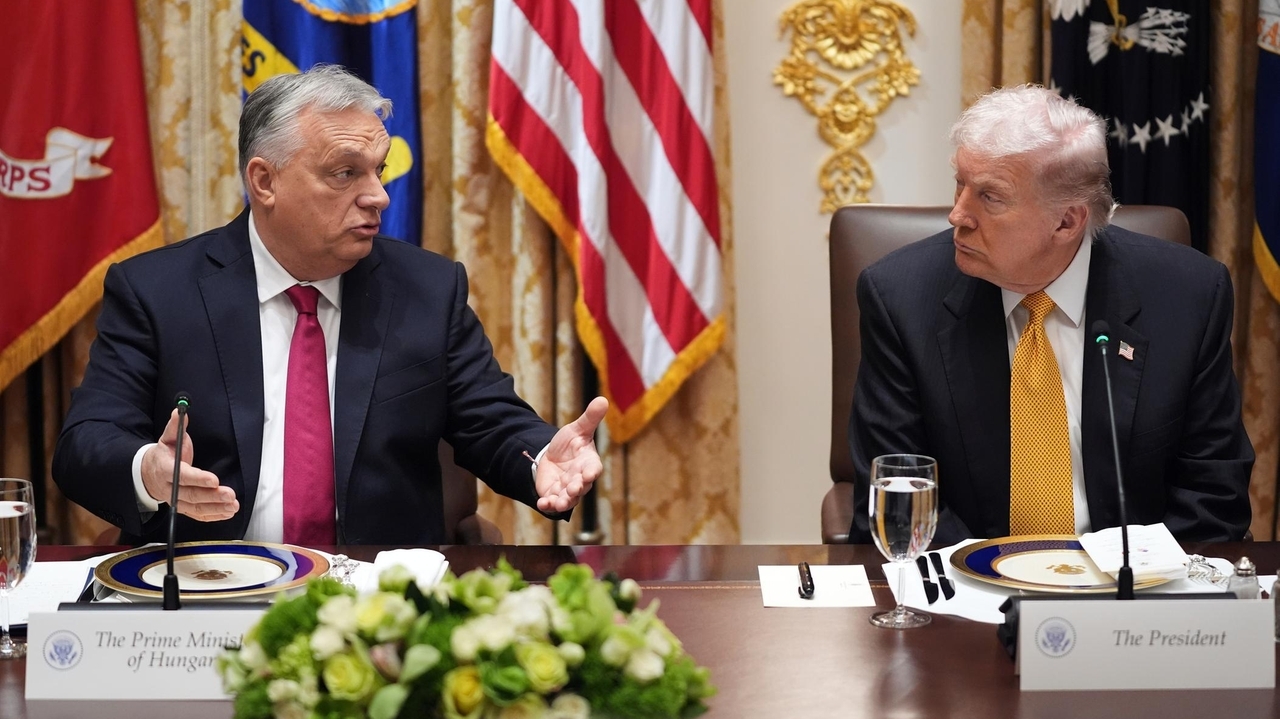
The recent election in Hungary, which saw the conclusion of Prime Minister Viktor Orbán's 16-year leadership, garnered significant international attention, from Europe to the United States. Vice President JD Vance even traveled to Hungary in a last-ditch effort to support Orbán and his Fidesz party, highlighting the geopolitical weight Orbán carried as a prominent figure in the right-wing nationalist populist movement seeking to reshape Europe and influence American political culture.
During his extensive tenure, Orbán, while not a true autocrat like his ally Russian President Vladimir Putin, employed authoritarian tactics to consolidate power and advance his social and cultural agenda. He manipulated electoral laws to hinder challenges, oversaw the acquisition of major media outlets by his associates, suppressed pro-migrant non-profits, and utilized dubious regulations to force the Central European University, founded by George Soros, out of Hungary. This was openly admitted by pro-Orbán conservatives as a move to prevent Soros from fostering a liberal elite within the country. Orbán leveraged genuine instances of liberal overreach in Western Europe, such as the destabilizing influx of migrants in the mid-2010s, to position himself as a defender of national sovereignty and popular will against "globalism." Despite his manipulation of the political system, his electoral majorities were initially genuine, but as his time in office progressed, his rhetoric became more extreme, explicitly denouncing "race-mixing." Power also proved corrupting, with rampant corruption and Orbán himself amassing vast wealth while Hungary's economy declined, falling behind once-poorer nations like Romania.
Orbán's close relationship with Putin was particularly evident following the war in Ukraine. He characterized Putin's invasion as a mutual conflict requiring compromise and used Hungary's European Union membership to obstruct sanctions against Russia and block loans to Ukraine. A leaked phone call from October revealed Orbán telling Putin, "I am at your service," and offering to be Putin's "mouse" within the EU. His campaign strategy even painted Ukrainian President Volodymyr Zelenskyy as an enemy attempting to draw Hungary into the conflict.
Orbán's successful challenger, Péter Magyar, is a former associate who turned against Fidesz due to its corruption and cronyism. Magyar, who is neither a leftist nor a liberal and supports strict immigration controls, has pledged to mend Hungary's relationships with the EU and NATO. He also committed to reinstating democratic norms, such as the right to free assembly, and unequivocally declared Russia as the aggressor in Ukraine. This stance marked a significant departure from Orbán's rhetoric.
The Kremlin responded to Orbán's defeat by noting Magyar's apparent openness to pragmatic dialogue, though it did not immediately congratulate him. Dmitry Peskov, the Kremlin spokesperson, stated that while Moscow respects Hungary's choice, the country no longer holds any special status and is now categorized among "unfriendly countries" in Europe. However, Moscow expressed mutual willingness for pragmatic dialogue, acknowledging Hungary's continued heavy reliance on Russia for over 80% of its fossil gas and crude oil, a factor expected to maintain Russia's leverage for years. Magyar confirmed that a dramatic rupture with Russia is not anticipated, as Hungary will pursue a pragmatic foreign policy that includes continued Russian energy imports, while also seeking to diversify and rebalance relations with the West. He reiterated his view of Russia as the aggressor and expressed willingness to speak with Putin to advocate for an end to the war.
Orbán's defeat carries significant symbolic weight for Trumpist national populism, given his prominent role as a recurring speaker at the Trump-aligned Conservative Political Action Conference (CPAC). His downfall could signal a turning point for similar movements, potentially demonstrating that uniting behind a moderate candidate offers the best chance to defeat the right. For the Kremlin, Orbán's ousting reinforced the view among more hawkish elites that relying on Kremlin-friendly leaders in democratic systems is a risky strategy. This lesson, according to political analyst Alexander Baunov, extends beyond Hungary, serving as a reminder not to place too many bets on figures like Donald Trump, who could disappear as suddenly as they emerged. Russian commentators concluded that Moscow must primarily rely on itself in the war in Ukraine, as external factors have only an indirect bearing on the situation. The public mood in Hungary was reflected in chants of "Ruszkik, haza" (Russians, go home) during celebrations, a slogan from the 1956 Hungarian Revolution revived to protest Orbán's close ties with Moscow.