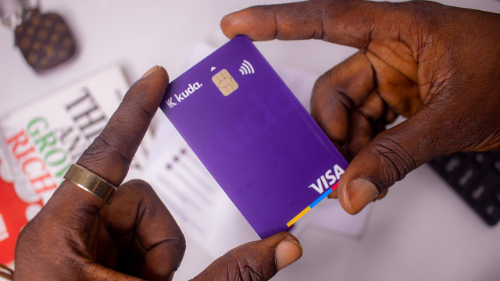
OPay's $4 Billion IPO: FinTech Giant Targets US Market with Wall Street Backing

Victoria from Techpoint delivers a comprehensive update on significant developments across the African tech landscape, highlighting OPay's ambitious US IPO plans, Wimbart's decade-long journey in African tech PR, and South Africa's critical review of its regulatory framework.
On May 1, 2026, news broke that OPay is seriously preparing for a US Initial Public Offering, targeting a valuation of approximately $4 billion. The Nigerian fintech giant has reportedly enlisted financial powerhouses Citigroup, Deutsche Bank, and JPMorgan Chase to lead this significant move, signaling a rigorous readiness for the global stage. This isn't a casual exploration; OPay is positioning itself for the intense scrutiny of a US listing by hiring experienced international executives, including a former Citigroup managing director as its CFO, to meet global investors' governance and transparency expectations. The targeted $4 billion valuation is substantial, especially considering OPay's growth from a $2 billion valuation in 2021 to an estimated over $3 billion by the end of 2025. As one of Nigeria's largest fintech platforms, OPay facilitates transfers, bill payments, savings, and merchant services through a vast network of over 500,000 agents and tens of millions of users. This IPO is not just about OPay's current standing but also a strategic bet on the future of Nigeria's digital economy. The timing is particularly noteworthy as Africa's fintech sector has long awaited a significant public market debut. If successful, OPay's IPO could pave the way for other prominent players like Flutterwave and Moniepoint and signal to international investors the maturity and readiness of African fintech for its next growth phase. This initiative coincides with a surge in fintech activity across the continent, with Airtel Money reportedly planning a London IPO and MTN Nigeria posting record Q1 results, suggesting an anticipated wave of African fintech IPOs may finally be materializing.
OPay's journey has been transformative since its inception in 2018 under Zhou Yahui, initially offering a mix of services including ride-hailing. Following Lagos's ban on commercial motorcycles in 2020, the company made a pivotal shift into financial services, a decision that proved highly successful. It subsequently built one of Nigeria's largest agent banking networks and evolved into a full-fledged mobile money operator. Recent regulatory milestones from the Central Bank of Nigeria have further solidified its position ahead of a potential listing. However, the path is not without risks, including Nigeria’s currency volatility, escalating competition from rivals like PalmPay and Moniepoint, and potential geopolitical scrutiny concerning its ownership structure. Should the IPO succeed, it would represent a significant triumph for OPay and a potential turning point for the broader African fintech ecosystem, with execution being paramount in the interim.
In another notable development, Jessica Hope's Wimbart marks its 10-year journey in African tech PR. Launched in 2016, Wimbart stepped into a relatively uncrowded space, aiming to amplify Africa’s tech narrative globally. The agency has since collaborated with over 230 clients across 20 countries, aiding startups, investors, and operators in effectively communicating their stories. Hope's career trajectory began in journalism, transitioned to communications, and led to a role as Global Head of Communications at iROKO. Following an abrupt departure, she founded Wimbart, building it from the ground up. In its early days, Wimbart’s primary objective was to bridge the gap between founders and the media, thereby influencing the perception of African tech. The agency distinguished itself through its commitment to quality, strategic client selection, and fostering long-term trust. A decade later, Wimbart is a recognized leader in African tech PR and a developer of new communications talent. Hope views this milestone as both a personal and professional achievement, reflecting on the organic growth that has defined Wimbart’s success. The agency’s evolution mirrors the broader transformation of the African tech ecosystem from a niche conversation to a global dialogue, with Wimbart playing a crucial, albeit quiet, role in this shift.
Simultaneously, South Africa is proactively addressing its regulatory challenges, with the Competition Commission initiating a nationwide review of the country's regulatory framework on April 23, 2026. This initiative invites businesses to pinpoint specific regulations that impede their ability to launch, expand, or compete. Submissions, open until June 5, require participants to identify problematic rules, explain their impact on competition, and propose actionable changes. The commission candidly acknowledges that certain regulations, particularly those concerning licensing, permits, and procurement, may be counterproductive, leading to delays, increased costs, and stifled innovation through protracted approval processes, inconsistent interpretations, and excessive administrative burdens. The objective is not outright deregulation but rather the implementation of smarter regulations that uphold market integrity without hindering smaller enterprises. This review is timely, as international bodies like the International Monetary Fund have cited South Africa's regulatory burden as a deterrent to investment and economic growth. For investors, predictability and efficiency in the regulatory environment are crucial, and the current framework presents challenges. Small and medium-sized enterprises (SMEs) are disproportionately affected, often lacking the resources to absorb compliance costs that larger corporations can manage. While President Cyril Ramaphosa has long advocated for reducing red tape, progress has been inconsistent. The commission's own investigations across various sectors have consistently revealed regulations not adequately designed with competition in mind. This internal focus seeks to reset the system. The review also forms part of a delicate balancing act, as South Africa has intensified enforcement across industries, which, while necessary, has inadvertently complicated the business landscape. This process aims to streamline regulations without compromising essential oversight. The true measure of success will be whether it leads to tangible reforms, offering businesses a vital opportunity to influence the rules governing their operations.
You may also like...
Guardiola Casts Doubt on Manchester City's Premier League Destiny After Crucial Draw

Manchester City's dramatic 3-3 draw with Everton has left manager Pep Guardiola acknowledging that the Premier League ti...
Mavericks Make Major Play, Bringing NBA Visionary Masai Ujiri Aboard
The Dallas Mavericks have hired Masai Ujiri as their new team president and alternate governor, bringing a proven champi...
Hollywood Showdown Settled: Blake Lively & Justin Baldoni End 'It Ends With Us' Legal Battle

A two-year legal battle between Blake Lively and Justin Baldoni over their film "It Ends With Us" has concluded with a c...
Dolly Parton's Health Battle: Legend Cancels Las Vegas Shows, Vows 'Everything I Have Is Treatable'

Dolly Parton has canceled her Las Vegas residency due to ongoing health issues, though she assures fans of her daily imp...
Noah Kahan Shatters Records: All 21 'The Great Divide' Tracks Invade Hot 100, Artist 100 Crowned!

Noah Kahan's new album, "The Great Divide," has secured his biggest career week on Billboard charts, debuting at No. 1 o...
OpenAI President Reveals His Jaw-Dropping $30B Company Stake
OpenAI President Greg Brockman revealed his nearly $30 billion stake in the company during a civil trial in Oakland, Cal...
Bitcoin's Jaw-Dropping $80,000 Surge: What's Fueling the Crypto Frenzy?

Bitcoin has surged to over $80,0 ...
Elon Musk Shatters TikTok Acquisition Rumors, Declares No Plans

Elon Musk has denied claims of interest in acquiring TikTok's US operations, while the platform remains embroiled in a '...