One Voice That Shook a Nation: The Legacy of Nelson Mandela
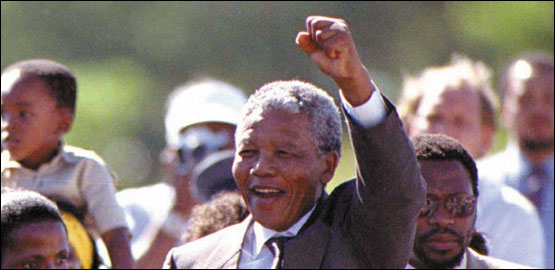
Nelson Mandela walked out of prison after 27 years, not bitter, not broken, but blazing with forgiveness, His raised fist told a story centuries old, chains could not quiet truth.
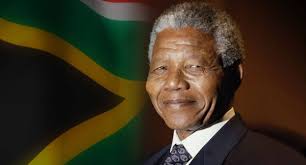
One Voice
“Chains could not quiet truth.”
Nelson Mandela walked out of prison after 27 years not bitter, not broken, but blazing with forgiveness, The world watched in silence as his raised fist told a story centuries old, chains could not quiet truth, This is not just the tale of a man, It’s the song of a nation reborn through struggle, courage, and the audacity to dream beyond the bars.
Nelson Mandela once wrote in Long walk to freedom, his Autobiography
A leader is like a shepherd, he leaves the flock to go on ahead, calming those who are behind and ensuring that the ones in front are not running too fast’’
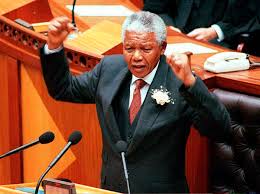

From the Dust of Mvezo to the Fire of Defiance
Before he came a legend, he was Rolihlahla, “the troublemaker’’ Born in 1918, in the small rural village of Mvezo, Eastern Cape, he came from a bloodline of chiefs but a world that denied his dignity, The young boy herded cattle under a vast African sky, dreaming of freedom without knowing the word for it, His father’s death tore his world apart, but the lesson it left behind became his compass, lead with purpose, even in pain.
As apartheid’s cruel machinery tightened its grip, the world grew darker, signs reading “Whites Only” and “Native Pass Required” littered the land like scars.
But in the classrooms of Fort Hare and later Wits University, the troublemaker found his voice,Law books turned into weapons of justice. Words became ammunition, Then came 1944, the birth of the ANC Youth League, where he and his comrades (Walter Sisulu, Oliver Tambo, and others) vowed to ignite a new fire in South Africa’s struggle.
They were young, bold, and tired of bowing, When the Sharpeville Massacre (1960) drowned peaceful protest in blood, Mandela’s resistance transformed, The world had forced his hand.
He co-founded Umkhonto we Sizwe, “Spear of the Nation” not to wage war, but to declare that fear would no longer govern their steps, He would soon vanish underground, a wanted man.
The government branded him a terrorist; the oppressed called him a hero, In 1962, he was caught, Two years later, At the Rivonia Trial he gave the world one of history’s most defiant speeches:
“I have cherished the ideal of a democratic and free society, It is an ideal for which I am prepared to die.” They could not silent his message.
The Prisoner Who Led from the Shadows
Salt in the air, Chains on wrists, Limestone dust burning in his eyes, That island was meant to break him, yet it built a legend, Inside a 2x2 meter cell, he studied humanity more deeply than any book could teach, The guards watched him, expecting hate.
What they saw instead was discipline. Dignity. A quiet, defiant grace, He wrote letters in secret, Smiled when they took away his pen And when younger prisoners despaired, he became their teacher drilling into them that freedom begins in the mind.
The world beyond those shores began to stir, Protests erupted, Artists sang his name, Governments debated his fate, South Africa was becoming a wound the world could no longer ignore.
Then, February 11, 1990, A simple gate swung open, and the man who walked through it carried the weight of a nation on his shoulders, He didn’t shout, He raised his fist, He didn’t call for revenge, He called for peace.

Four years later, he walked again, this time into the Union Buildings in Pretoria, not as a captive, but as the first Black President of South Africa, Crowds cried, Soldiers saluted, The sun itself seemed to rise differently that day.
The Art of Forgiveness and the Echo of a Name
Leadership, for him, was not a throne, It was a test, He could have punished those who jailed him, but he invited them to tea, He could have rewritten history to glorify himself, instead, he built a Truth and Reconciliation Commission, where victims and perpetrators faced each other under the harsh light of honesty.
He told the world, “Courage is not the absence of fear, it’s triumph over it.” then he proved it, again and again.
He wore Springbok green at the 1995 Rugby World Cup, embracing a sport once hated as a symbol of white supremacy and turned it into a symbol of unity.
The image of him handing the trophy to Captain Francois Pienaar is still the heartbeat of the “Rainbow Nation.”
After one term, he stepped down, Power never owned him, He devoted his later years to battling HIV/AIDS, promoting education, and mentoring a generation that would never know apartheid but would forever owe their voices to his.
When he passed on December 5, 2013, the world didn’t just mourn, From the streets of Johannesburg to the White House, from Lagos to London, millions sang his name, His death didn’t end a story, It amplified it.
“Madiba” became more than a man, he became a movement.
The Echo Lives On
Today, when young Africans march against inequality or speak up against injustice, that same fire burns, Mandela’s voice still hums beneath the rhythm of every protest chant, every peace accord, every act of forgiveness that defies hate.
He proved that leadership is not about power, it’s about purpose, That revolution is not only fought with fists, but with heart And that one voice, when anchored in truth, can indeed shake a nation.
When giving a speech in london he said ‘’ As long as Poverty, Injustice and gross inequality persist in our world, none of us can truly rest’’.
The Torch in Our Hands
The story didn’t end with Mandela’s raised fist or his presidential oath, it passed on, quietly, into our hands.
Every student who refuses silence, every artist who paints protest into color, every voter who believes their mark can move mountains, they are the continuation of that one voice.
In a continent still fighting corruption, inequality, and fading hope, Mandela’s spirit is no monument, It’s a challenge, A challenge to speak truth when it’s dangerous, to forgive when it’s easier to hate, to lead when others look away.
His voice echoes now through new movements from #FeesMustFall to climate marches in Nairobi, to peace walks in Juba and justice chants in Accra, Each echo says, we are still here, still rising.
“The torch of freedom is not meant to be admired, it’s meant to be carried.”
And so we carry it, imperfectly, courageously, together.