One in Five Nigerian Women Has Faced Physical, Sexual Violence: What Happens Behind That Number?
One in five Nigerian women has experienced physical or sexual violence. Here’s what the 21% figure reveals about harassment, silence and gender-based violence.

Twenty one percent is the official figure now attached to Nigerian women aged 15 to 49 who have experienced physical or sexual violence. If said outloud, it sounds like something very abstract belonging in a report.
But after doing the math, putting in streets, marketplaces, office buildings in mind, that number stops being a statistic. It becomes your neighbour, your colleague, your sister and possibly you.
For a figure this large, it is not shocking to most Nigerian women. It is merely a confirmation of something they already carry in their bodies.
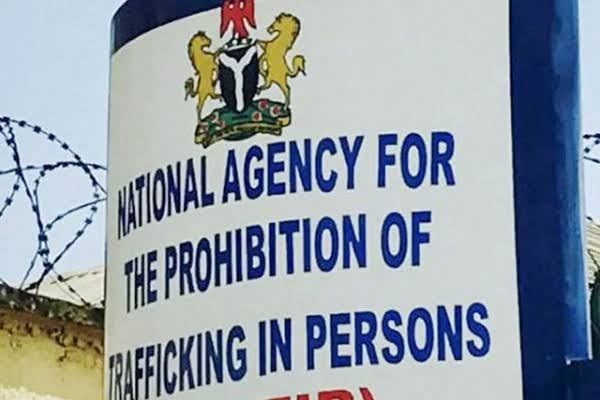
The 21 Percent Figure Is Not the Whole Story
The National Agency for the Prohibition of Trafficking in Persons, working with the European Union and International IDEA, released this figure while launching a Media Corps meant to push journalists to investigate gender-based violence with more depth and consistency.
On paper, that is a necessary intervention but in practice, it reveals that Nigeria still needs a foreign-backed initiative to formally track and publicise what women have been reporting informally for decades.
And even at 21%, this number is almost certainly a minimum. Sexual and gender-based violence in Nigeria thrives on underreporting.
Stigma, fear of retaliation, distrust of the police, and a justice system that moves at the pace of a snail all combine to keep the real figure hidden.
For every woman captured in that one-in-five statistic, there are likely several more who never told anyone, who normalised what happened to them, or who were talked out of speaking up by family members protecting a man's reputation.

Violence Against Women in Nigeria Does Not Wait for Closed Doors
What makes this figure especially maddening is how much of this violence is not hidden at all. It happens in public, in daylight, in front of witnesses who do nothing. Nigerian streets are spaces where harassment has been repackaged as culture, humour, or even compliment.
Walk past a group of men on any major road in large Nigerian cities and there is a real chance one of them will grab your wrist, block your path, or shout something meant to be flattering but lands as intimidation.
This is what many Nigerian men still casually call "toasting." It has been laundered into something playful but ask any woman who has had a stranger grip her arm to stop her mid-stride and she will tell you exactly what it is: physical harassment dressed up as flirtation.
The defenders of this behaviour will insist it is harmless, that women are overreacting and that a little street attention never hurts anyone. But there is nothing harmless about an unfamiliar man closing distance on a woman's body without her consent, refusing to take silence as an answer, or escalating to insults the moment he is turned down.
That escalation after rejection is the real deal. Genuine interest does not need to trap a woman physically to get her attention. What Nigerian streets call toasting is frequently a rehearsal for entitlement and a small test of how much a woman's body can be controlled in public without consequence.
Market Men and the Everyday Grip of Harassment
Traders, particularly men selling clothes, shoes, or accessories, have built an entire sales tactic around physically pulling women toward their stalls. A hand on the wrist, a tug on a bag strap, a body deliberately blocking a walkway until the woman relents is treated as standard market behaviour, so normalised that many women brace for it before they even enter certain markets.
Social Insight
Navigate the Rhythms of African Communities
Bold Conversations. Real Impact. True Narratives.
This is merely unwanted physical contact used as a sales strategy. It should not require a woman's discomfort or fear to move a product.
Yet this practice persists because there is no real deterrent, no shared understanding that a woman's body is not a marketing tool, and no consequence for men who treat public space as an extension of their right to touch.
This pattern (street harassment, market intimidation, workplace coercion, domestic violence) feeds into that 21 percent figure and beyond it. Women stay silent because reporting rarely leads anywhere useful.
Police stations can be hostile. Families can side with the aggressor to preserve peace. Communities can brand a woman as the problem for speaking up. Silence becomes the safer option.
What Needs to Change Beyond the Statistics
A Media Corps trained to investigate these patterns is a good start but not a real solution. Real change means holding perpetrators accountable in public spaces and not just in isolated criminal cases.

It means naming street harassment and market intimidation as forms of gender-based violence. It means Nigerian institutions treating women's safety as a baseline expectation. Until then, that 21 percent will keep climbing quietly..