Nolan's 'Dark Knight' Secret: Unveiling Its Role in 'The Odyssey'
Christopher Nolan's epic film, "The Odyssey," is set to immerse audiences in Homer's tale through groundbreaking IMAX technology. Nolan, with cinematographer Hoyte van Hoytema, details the meticulous filmmaking process, including lens choices and editing, while also paying tribute to the late IMAX pioneer David Keighley for his pivotal role in safeguarding film production.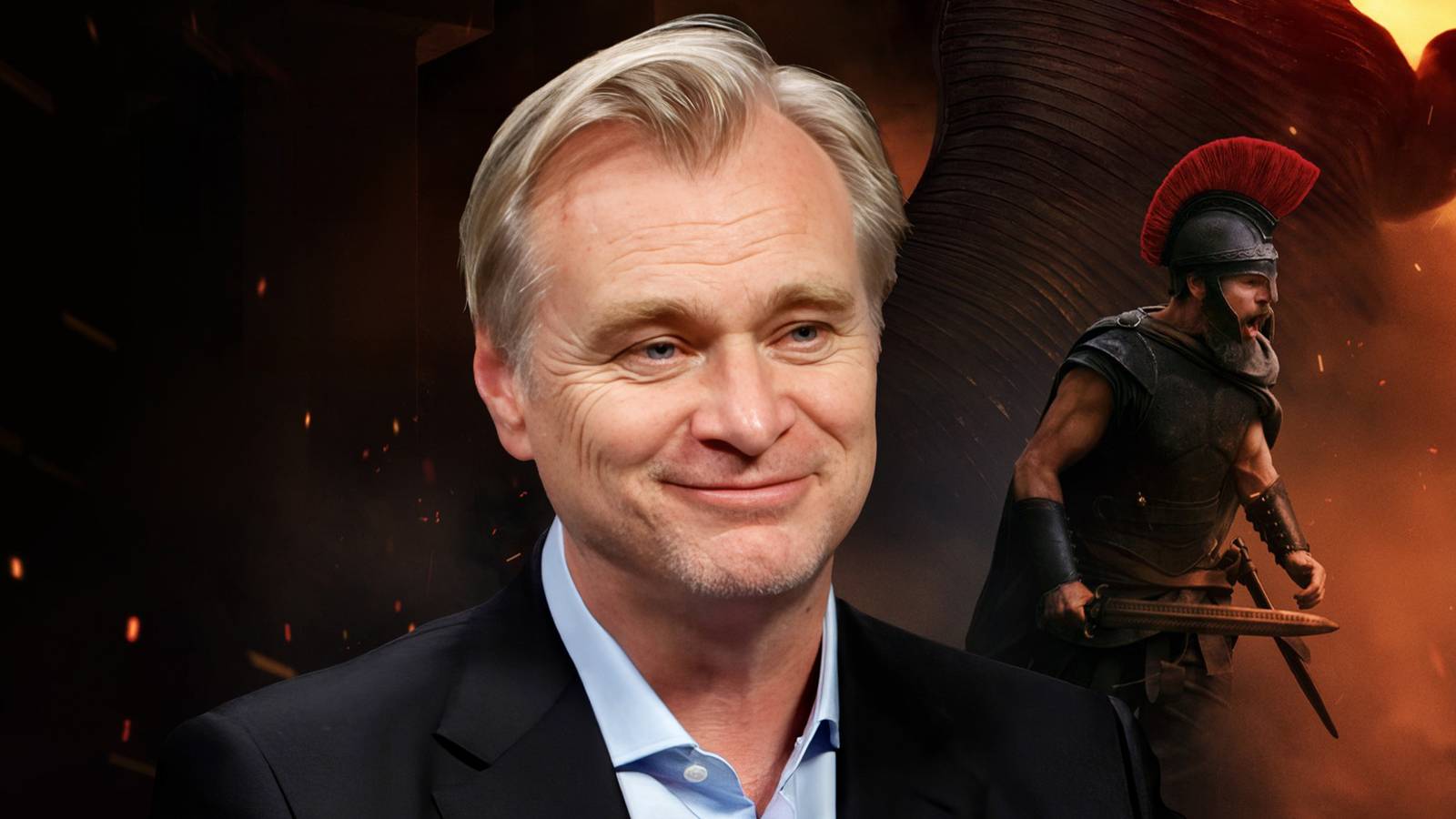
Oscar-winning filmmaker Christopher Nolan's highly anticipated action epic, "The Odyssey," is set to journey across theaters and IMAX, promising a star-powered rendition of Homer's Greek epic. Fans are eagerly awaiting Nolan's interpretation of Odysseus's (Matt Damon) decade-long voyage home, particularly anxious to witness the saga told in the director’s signature boundary-pushing large format. Collider's Steven Weintraub had the opportunity to discuss with Nolan how "The Odyssey" continues to redefine the capabilities of IMAX technology, featuring Damon as the King of Ithaca, Anne Hathaway as Queen Penelope, Tom Holland as their son Telemachus, Zendaya as Athena, Lupita Nyong’o as Helen of Troy and Clytemnestra, and Robert Pattinson as Antinous, among a host of talented actors. The film, shot entirely in IMAX 70mm, boasts a substantial runtime of 2 hours and 52 minutes.
Nolan discussed the innovative methods he and cinematographer Hoyte van Hoytema employed to fully immerse audiences in the film, whether during high-intensity action sequences or intimate close-ups, and how IMAX influenced the editing process. He also reflected on the custom lens he modified for "The Dark Knight," which became a highly sought-after tool for other filmmakers like J.J. Abrams and Zack Snyder, and paid tribute to the late David Keighley, the longest-serving IMAX employee, who collaborated with Nolan to revolutionize the future of filmmaking.
Choosing the right lenses for "The Odyssey" was a meticulous process. Nolan explained that IMAX filmmaking encourages a focus on the proximity of the camera to the action rather than the frame itself. This means lens changes are less frequent, with a preference for 50mm or 80mm lenses, which exhibit varied characteristics based on their distance from the subject. Nolan and van Hoytema concentrate on moving the camera to create a sense of immediacy, ensuring the audience feels close to the action. On a giant IMAX screen, the proscenium effectively disappears, with the 5-perf 70mm version designed to fill the viewer's peripheral vision, drawing them onto a ship deck or close to the actors.
The role of IMAX in editing has significantly evolved since Nolan first utilized it for a dramatic theatrical feature with "The Dark Knight." Initially, filmmakers were presented with a strict rulebook for using IMAX cameras. However, through experience, Nolan and his cinematographers—first Wally Pfister and then Hoyte van Hoytema—discovered the format's greater versatility. The key, as learned from "The Dark Knight," is protecting the action for the 240 frame, especially when mixing IMAX with other formats. They use the expansive frame for peripheral immersion and employ camera movement rather than zooming to orient the viewer within the action. This approach makes the robust IMAX image highly adaptable for various aspect ratios, including 70 millimeter full frame, 1:9 digital screens, 2.20:1 5-perf, 1:8:5 presentations, DCPs, and laser projectors, ensuring optimal presentation on the largest possible screen in every theater.
Nolan's tribute to David Keighley highlights his profound impact on IMAX and filmmaking. David, along with his wife Patricia, was instrumental in shaping the format. As the longest-serving IMAX employee, he guided Nolan on camera usage, fostering a 20-year conversation about integrating IMAX technology into Hollywood filmmaking. Keighley's keen eye for quality control and his deep knowledge of IMAX were invaluable. Crucially, Keighley demonstrated an unwavering commitment to film itself. When Kodak considered ceasing film production due to declining sales, it was David who passionately advocated for its continuation, convincing Kodak to persist. His efforts led to a resurgence in film stock production, including bespoke options for filmmakers, and inspired a new generation to embrace the medium. Nolan emphasizes that the availability of film to shoot on today is a monumental debt owed to David Keighley by both filmmakers and filmgoers alike.
"The Odyssey" opens in theaters and IMAX on July 17.