Nigerian Youth Were Brave in 2020. What Happened to Us?
In 2020, Nigerian youth united to challenge police brutality. Six years later, we fight each other online over gender, identity, and culture while the real problems persist. What happened to our courage?
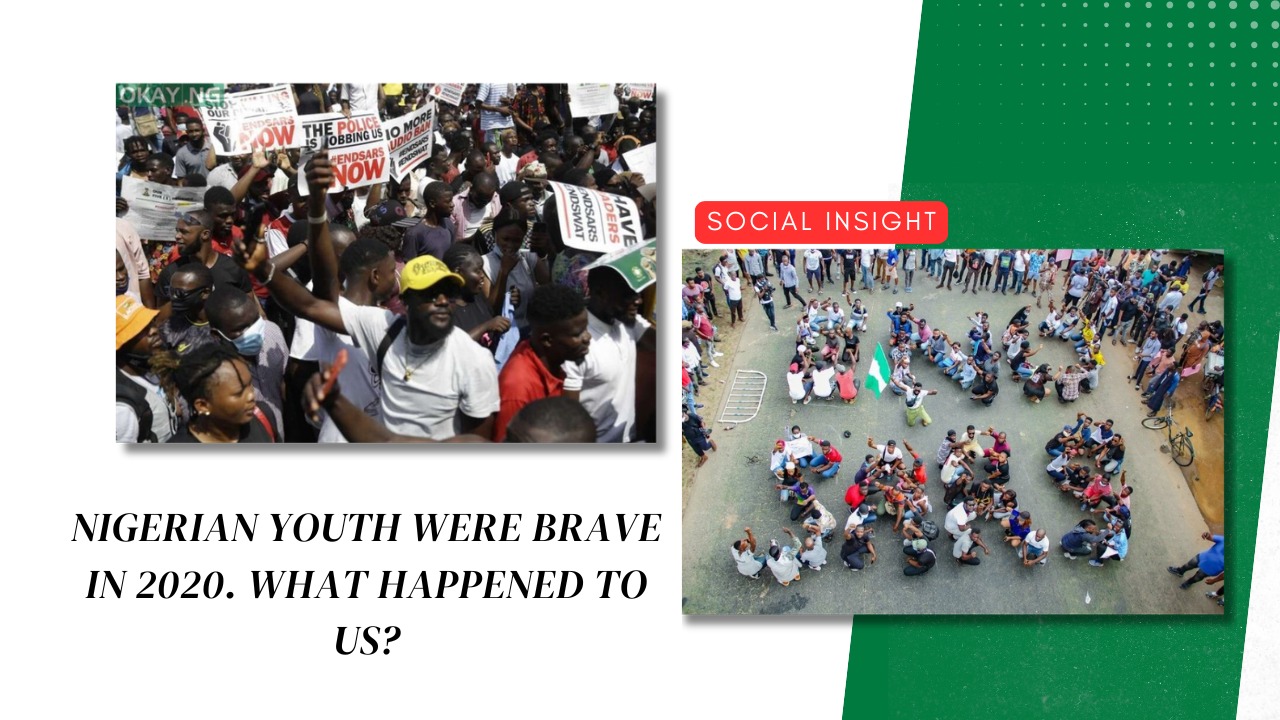
In October 2020, Nigerian youth did something this country had not witnessed in decades. We stepped into the streets without waiting for permission.
We fed strangers without invoices or contracts. We guarded people whose names we did not know. We raised millions of naira in broad daylight and watched the donations update in real time.
During the End SARS protests, there was no distinction based on tribe, identity, religion, or gender. We were all one, and the only thing we saw was that WE WERE ALL NIGERIANS. We were not arguing about who was right; we were arguing about how to survive.
As a young Nigerian, I had never experienced that kind of unity. Not in school, not online, and not in politics. For the first time, it felt like we were looking in the same direction.
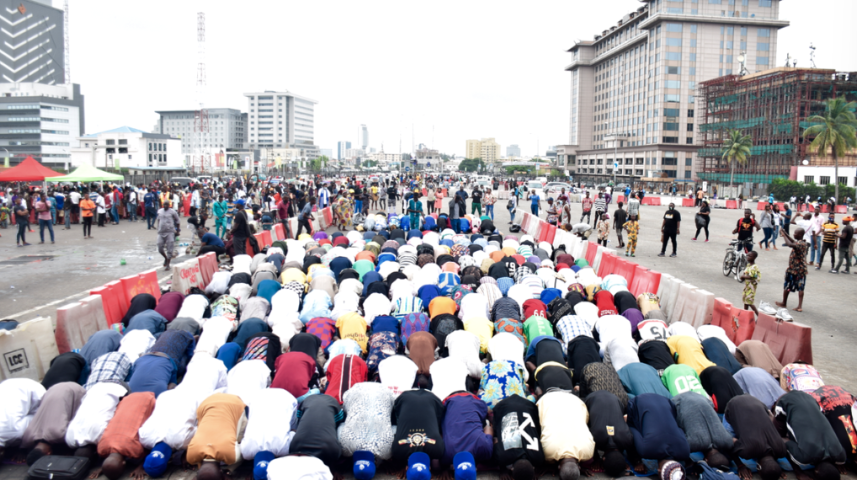
Young women coordinated logistics with military precision. Young men formed human barricades. Lawyers volunteered their time without negotiation.
Medical teams arrived with supplies before anyone had formally requested them . Tech workers built donation dashboards and legal aid trackers overnight. It was decentralized, imperfect, and at times chaotic.
Yet it worked. It worked because trust, however fragile, was present.
For a brief moment, we were not suspicious of one another. The problem felt clear. The target was obvious. The anger had a destination. We did not need to debate whether injustice had occurred before condemning it. We recognized it instinctively.
Six years have passed, and so much no longer looks the same. Which leaves one unavoidable question hanging in the air: WHAT CHANGED?
The Year We Looked Upward
Today, scroll through Nigerian digital spaces and you will find something very different. The same generation that once demanded police accountability now spends entire weeks debating whether men are inherently violent or whether women are inherently manipulative.
A woman speaks about harassment; the replies become a referendum on false accusations. A man speaks about economic pressure; the responses morph into lectures about patriarchy.
Every issue has become a proxy war. Every tragedy has turned into a gender tribunal. Everyone suddenly has a hot take. Every conversation is an opportunity to prove how “intellectual” they are.
Scroll through Twitter, and you’ll find low-budget lawyers lecturing about law while their degree is in fishery. Influencers dissect every word of a viral video as if they were Supreme Court justices.

Social Insight
Navigate the Rhythms of African Communities
Bold Conversations. Real Impact. True Narratives.
Bloggers with zero experience in governance debate fiscal policy like it’s a chess match. People audit the victim before offering sympathy, cross-examine intentions before calling out injustice, and weaponize empathy like it’s a competitive sport.
Screenshots circulate, reaction videos multiply, and threads explode into chaos, while actual accountability drifts further away. The more we fight each other, the safer the real oppressors feel.
What happened to us?
In 2020, outrage traveled upward. It was aimed at institutions: policing, governance, corruption, impunity. Today, outrage travels sideways. It targets peers, exes, even strangers with profile pictures.
Every viral story exposes how little attention we pay to reason. Every debate online is a performance, every comment a chance to outshine someone else.

Getting married becomes a scandal. Reading 120 books in a year is a problem. Breathing instead of choking is a problem. Existing is a problem. Even someone posting their achievements or celebrating their wins becomes a public trial, to be judged by a bunch of self acclaimed jobless critics who have zero stuff going on in their lives.
Everyone is under surveillance. Everyone is a suspect. And while we pick apart each other’s lives, the real abuses continue unchecked.
The question is not whether gender issues are important. They do. Nigeria remains a deeply unequal society. Gender-based violence is real. Economic pressure on men is real. Social expectations distort both.
But when every conversation collapses into “men versus women,” we are no longer diagnosing structural failure. We are rehearsing grievance.
The unity of 2020 was not accidental. It was built on a clear antagonist. The Special Anti-Robbery Squad was a visible symbol of state violence. Videos circulated. Stories converged. The injustice was legible. When the shootings at the Lekki Toll Gate occurred, the horror did not require interpretation. It demanded condemnation.
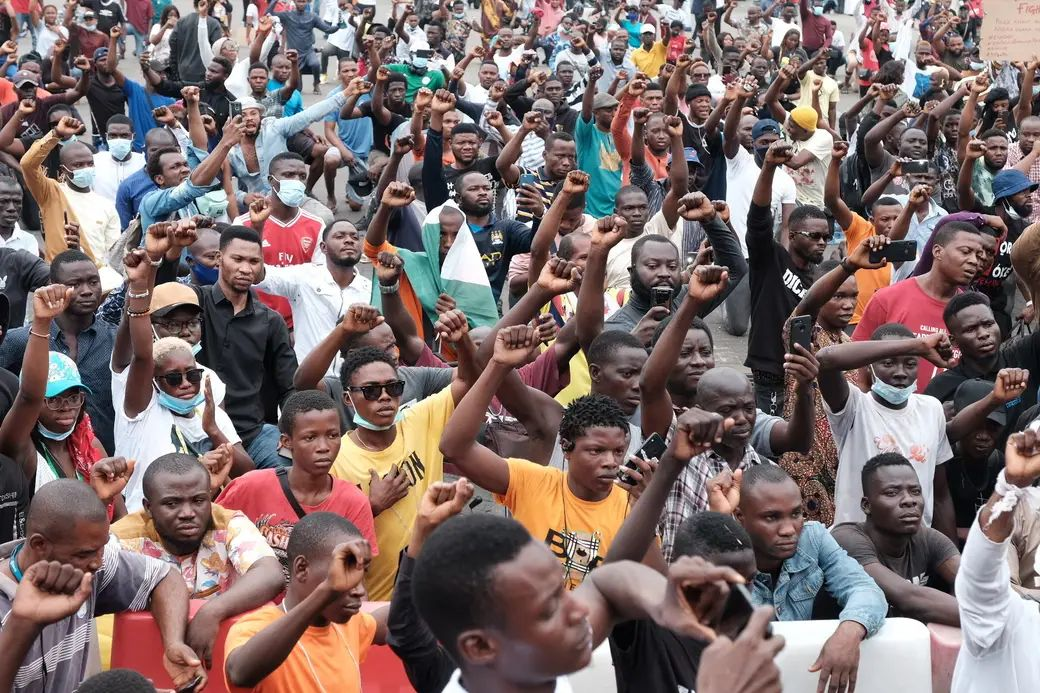
From Action to Exhaustion
We are tired. We should admit it.
After the protests were violently dispersed, after panels stalled, after the 2023 elections disappointed us, hope began to feel expensive. Disillusionment does not look like defeat. It looks like sarcasm. It looks like detachment. It looks like “let everyone handle their own business.” It looks like arguing over cultural debates that change nothing.
It is easier to debate dating standards than inflation. Safer to argue about gender than insecurity. One earns retweets, and the other invites risk.
Identity loyalty has replaced principle.
In 2020, if a young man was brutalized by police, young women showed up. If a young woman was harassed, young men stepped in. Harm to one threatened all.
Social Insight
Navigate the Rhythms of African Communities
Bold Conversations. Real Impact. True Narratives.
Now, we audit each other before showing empathy. Is the victim in our group? Do they share our politics? Have they said something “wrong” before? We hesitate before acting, we debate before defending, we argue before helping.
The Rise of Performative Intellectualism
We have become obsessed with looking and sounding smart instead of being brave and focusing on issues that actually matter.
Every outrage must be explained, every harm must be contextualized, every argument balanced. Emotional clarity is treated as stupidity.
In 2020, we acted without consensus. We saw injustice and we moved. Today, we argue over definitions while the same injustice continues.
We seem to have forgotten that unity requires humility. In 2020, no influencer owned the movement. Energy was bigger than any individual. Today, every tragedy is content. Every argument is performance. Outrage is currency. Visibility matters more than justice.
Were we brave in 2020 because we believed in something bigger than ourselves, or because it made us feel important?
Have we retreated into gender wars because they are easier to win than structural battles?
We blame the algorithm, but it only rewards what we feed it. If gender antagonism dominates timelines, it is because we create it, consume it, and amplify it.
This is not a call for silence on gender issues. Abuse exists, economic pressures exist, institutional failures exist; but we spend more energy fighting each other than confronting the real system.
In 2020, we looked up and saw power. Today, we look sideways and see enemies.
Digital victory is instant. Structural change is slow. And we are addicted to instant wins.
What Happened to Us
The same youth that built decentralized donation systems now organize pile-ons online. The same creativity that tracked legal aid now crafts intricate threads dissecting interpersonal conflict. Capacity is intact, and orientation has shifted.
We did not lose our fire. We scattered it. Ego, algorithms, identity loyalty, and global culture wars filled the space we left behind.
Unity is still possible. But it will not come from nostalgia. It will not come from memes. It will come from real alignment. From seeing structural problems and prioritizing them above personal grievance. From risking visibility for courage.
We were brave once. The question is short and simple: are we brave enough to be brave again?