Nigeria's CBN Cracks Down: New Rules Shake Up POS Agents and Bank ATM Access!
The Central Bank of Nigeria (CBN) has introduced new guidelines for ATM deployment and PoS agent banking, aiming to significantly enhance financial service access and infrastructure. These regulations mandate increased ATM density, stricter agent qualifications, and transaction limits, while also introducing measures for improved transparency and compliance across the Nigerian financial sector.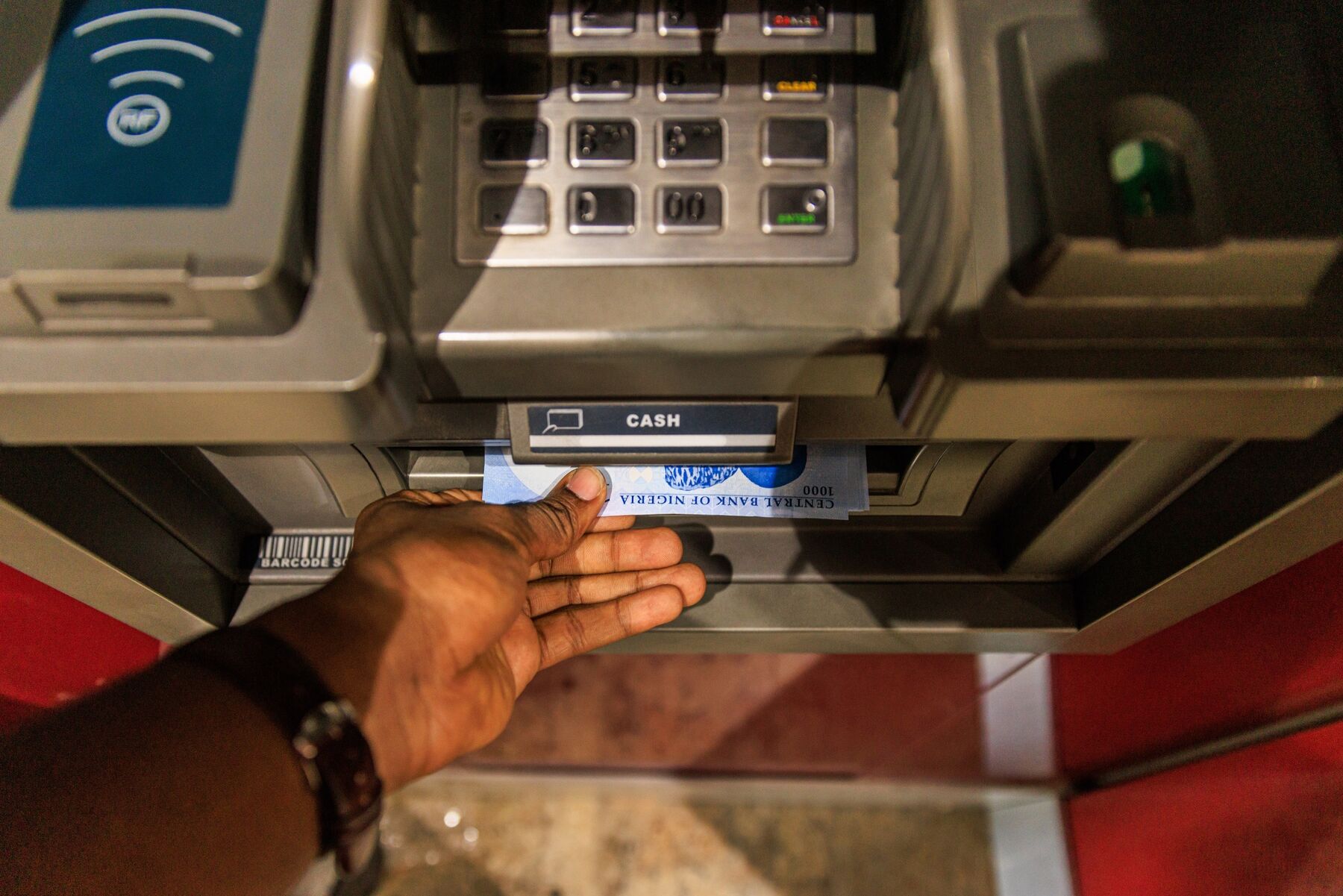
The Central Bank of Nigeria (CBN) is taking significant steps to reform the country's financial distribution channels, issuing comprehensive guidelines aimed at enhancing access to cash and payment services. These new regulations address both the deployment of Automated Teller Machines (ATMs) and the operations of Point-of-Sale (PoS) agent banking, reflecting the CBN's intent to reshape the financial landscape and improve service delivery across urban and rural areas.
A draft guideline released in October 2025 outlines the CBN's push to improve ATM density, which has long been plagued by downtime and lengthy queues. If implemented, banks will be mandated to deploy one ATM for every 5,000 payment cards they issue. This requirement poses a considerable challenge for institutions like Zenith Bank, which, with 27.80 million issued cards and 2,142 existing ATM terminals, would need to expand its network to at least 5,561 ATMs by 2028. Nationally, with 320.05 million active bank accounts as of March 2025, a full card issuance to all accounts would necessitate approximately 64,011 ATMs to comply with the mandate. This contrasts sharply with the current active ATM count, which fell to 16,714 in the first half of 2024 from 17,377 the previous year. Nigeria's ATM density stands at 14 per 100,000 adults, significantly lower than Egypt's 31, according to the International Monetary Fund (IMF).
The CBN's ATM guidelines propose a phased compliance schedule: 30% of the required ATMs must be deployed by 2026, 60% by 2027, and full compliance achieved by 2028. These rules apply to deposit money banks, other financial institutions, and independent ATM deployers. Beyond density, the guidelines aim to establish minimum standards for ATM operations and maintenance, ensuring improved access. Key mandates include equipping 2% of all ATMs with tactile features for visually impaired users, guaranteeing refunds for failed transactions within 24 to 48 hours, and ensuring ATMs are located within reasonable distances with consistent cash availability. To facilitate this, banks are required to install real-time online monitoring systems to track cash levels. The regulator has already demonstrated its strictness, fining nine banks ₦1.35 billion ($926,237) for not ensuring their ATMs were adequately stocked with cash. While compliance will incur higher infrastructure and maintenance costs for banks, particularly in underserved areas, the CBN suggests these costs should be offset by new cost structures, including increased ATM withdrawal fees introduced in February.
Complementing the ATM reforms are new guidelines for PoS agent banking, which took effect with most provisions immediately binding from October 6, 2025, although a critical exclusivity clause for agents will commence on April 1, 2026. These guidelines aim to strengthen the environment for offering safe financial services to underbanked and remote areas, consolidating and replacing all previous agent banking regulations.
Under the new framework, agents will continue to perform established functions such as cash-in and cash-out transactions, naira fund transfers, and bill payments, and may assist with account opening forms. However, super agents—entities licensed to recruit, aggregate, and manage agents—are now prohibited from directly offering agent banking services. Principals will also have the discretion to determine the services their agents can offer, guided by internal risk assessments and CBN operational standards. The exclusivity rule mandates that individual agents and agent networks can only belong to one super agent at a time, though super agents retain the ability to partner with multiple principals.
The new framework introduces stricter eligibility and operational standards for agents. To qualify, individuals and businesses must not have non-performing loans within the preceding 12 months, must not be bankrupt or convicted of a felony, and must not have their Bank Verification Number (BVN) flagged or blacklisted. Agents are now required to operate from an agreed location, defined as not lower than a kiosk. Non-individual agents, such as petrol stations and retail outlets, must restrict operations to their registered places of business. The guidelines also foster competition and fairness by prohibiting principals from promoting or favouring any specific card brand and requiring equal pricing and rewards for all customers and agents. Furthermore, agent banking activities must be distinct from merchant transactions, requiring agents to use the agent code 6010 for all operations.
A new class of stakeholders, Payment Terminal Service Aggregators (PTSAs), has been formally recognized. PTSAs are now responsible for registering PoS terminals, facilitating their geo-location, and ensuring proper tracking of devices deployed to agents. This builds on the CBN’s August 2025 directive instructing all financial institutions to geotag their PoS terminals as a measure to curb fraud and improve payment reporting transparency.
Stricter transaction limits have also been implemented for customers: a daily limit of ₦100,000 and a weekly limit of ₦500,000 for cash-in, cash-out, and bill payments. Agents face a daily cash-out limit of ₦1.2 million. While these thresholds aim to manage liquidity and mitigate money laundering risks, some agents, particularly in high-traffic urban areas, may find them restrictive given that PoS terminals have become primary cash points for many Nigerians since becoming mainstream in 2013, with 8.36 million registered terminals (5.90 million active) by March 2025.
Finally, the CBN has introduced clear branding and advertising rules. All agent locations must display proper branding with the names and logos of both the principal and super agent (where applicable), a list of services, applicable charges, and customer support contacts. Agents are explicitly prohibited from using terms like “bank” or “finance” to avoid misleading the public. The guidelines empower the CBN to impose sanctions for breaches, including termination of agent agreements, blacklisting of agents or super agents, direct inspections, and regulatory penalties for principals failing to comply with reporting or operational requirements. This comprehensive approach underscores the CBN's determination to regulate and improve the efficiency and accessibility of financial services across Nigeria.