New Chills: Unveiling 6 Unsettling Facts About the Creepy Slender Man Legend
Slender Man, a digital monster created on an internet forum in 2009, has rapidly become a chilling figure in modern folklore. Originating from eerie manipulated photos, he has inspired a wide range of media, from video games to films, and is characterized by his tall, faceless appearance and supernatural abilities. This unique creature has also tragically been linked to severe real-world crimes, highlighting the profound impact of internet legends.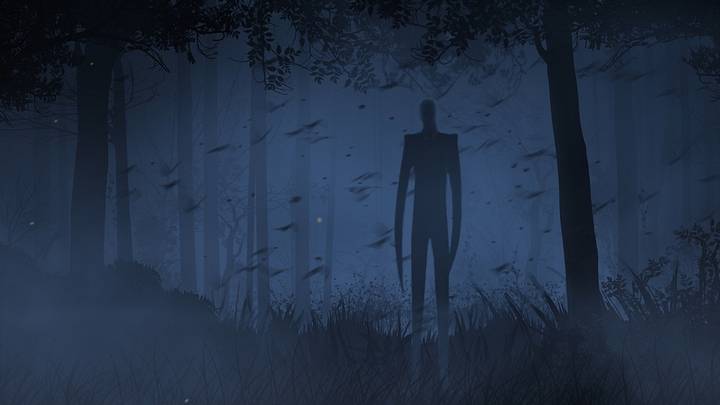
Unlike legendary monsters such as vampires and trolls, which boast centuries of folklore, Slender Man is a uniquely digital entity, born on an internet forum in 2009. Despite his recent origin, this creature has rapidly transcended his online birthplace to become a pervasive figure in modern-day folklore, inspiring a wide array of video games, stories, gruesome real-world crimes, and a chilling sense of unease, particularly when one imagines a fleeting glimpse in the twilight woods.
Slender Man first emerged into cultural consciousness on June 10, 2009, through a post by Something Awful user Eric Knudsen, posting as Victor Surge. In response to a challenge for creating the scariest edited photos, Knudsen shared two black-and-white images featuring groups of children, with a towering, rail-thin, faceless man subtly lurking in the background. Accompanying these unsettling visuals were eerie captions, such as “‘We didn’t want to go, we didn’t want to kill them…’ -1983, photographer unknown, presumed dead,” and text referencing vanished children and a library fire, which helped to instantly imbue the creature with a disturbing backstory and set the stage for its legendary status.
In a 2011 interview, Knudsen revealed a diverse range of inspirations behind Slender Man, citing literary giants like H.P. Lovecraft, Stephen King (especially his short stories), and the surreal imaginings of William S. Burroughs. He also drew from the survival horror video game genre, specifically Silent Hill and Resident Evil, as well as Zack Parsons’ fiction series That Insidious Beast, King’s short story “The Mist,” tales of “shadow people,” and the cryptid Mothman. Knudsen's primary objective was to craft a being with motivations so incomprehensible that it would instill deep unease and terror in the general population, a goal he demonstrably achieved.
The creative spark ignited by Slender Man was immediate and widespread. Just ten days after Knudsen’s initial post, a trio of college film students released a collection of short videos, filmed in the style of The Blair Witch Project, which depicted Slender Man disrupting a student’s film project. These early interpretations were pivotal in cementing the monster’s legacy and encouraging further creative exploration.
By 2012, Slender Man had become the subject of popular video games, most notably Slender: The Eight Pages, and was even incorporated into a version of Minecraft. His presence expanded across platforms, gaining significant traction on 4chan—the platform renowned for spawning other internet legends like the Backrooms—and earning his own dedicated page on the horror story website Creepypasta. His cultural impact was further solidified by the 2016 documentary “Beware the Slenderman,” which delved into his origins and legacy, followed by a theatrical horror film simply titled “Slender Man” in 2018.
Slender Man is consistently described as an unnaturally tall man dressed in a suit, famously devoid of facial features, and often possessing long, tentacle-like limbs. Across various narratives, he is attributed with supernatural powers including teleportation and mind control. Some accounts suggest he can stretch his height from six to fifteen feet and induce paranoia, coughing fits, and nosebleeds in individuals who investigate him or venture too close. While typically depicted in forested environments, he is also believed by some stories to cause static interference in cameras, televisions, and other electronic devices when in proximity.
Academically, Slender Man has been extensively studied as a modern case study in the creation and dissemination of folklore in the digital age. Lynne McNeill, an assistant professor of English at Utah State University, asserts that Slender Man “qualifies as folklore because the stories, the beliefs, the images—all of these cultural artifacts—are circulating entirely in a word-of-mouth culture, person to person.” McNeill further posits that Slender Man is an ideal monster for the modern era due to his tendency to lurk unnoticed, mirroring the pervasive nature of technology and surveillance culture. She notes, “He’s watching. He’s rarely attacking in the pictures —he’s standing in the background watching. It sort of reminds you of how Amazon is constantly tracking you online...”
Intriguingly, Slender Man has also been linked to much older mythological figures. Researchers and Knudsen himself have drawn connections to creatures from fairy folklore, who in medieval and early modern stories were often blamed for kidnapping children—a parallel to Slender Man’s alleged activities. Vivian Asimos, a researcher, points out