Men's Health Doesn't Stop With Men: How Male Health Affects Partners and Children
Male fertility, age, diet and hygiene can affect partners, pregnancy and children. Here is why men's health is a family and reproductive health issue.

It is easy for men to be dismissive about their health and hug tightly the myth largely promoted by misogyny, the idea that their fertility is like wine, forever fresh, while everything is the woman's fault.
It is easy to spot in the jokes about men fathering children at 70 and in the quiet judgment aimed at a woman who has "waited too long," and in the near total silence around what a man's diet, hygiene, and lifestyle actually do to the people who share his bed and, eventually, his household.
Men's health is not a private and individual affair. It follows a man into his partner's body during conception, into the womb during pregnancy and into the biology of a child long before that child is born.

The Myth of the Forever-Young Man
In many African households, fertility conversations are aimed almost exclusively at women. A woman past 30 is warned about her "ticking clock" while a man of the same age, or even ten years older, is rarely told that.
Biology says otherwise. Male fertility does decline with age and the decline has measurable and documented effects on conception, pregnancy outcomes, and child health.
The problem is that culture has refused to catch up with what science has already shown.
Male Fertility Doesn't Freeze in Time
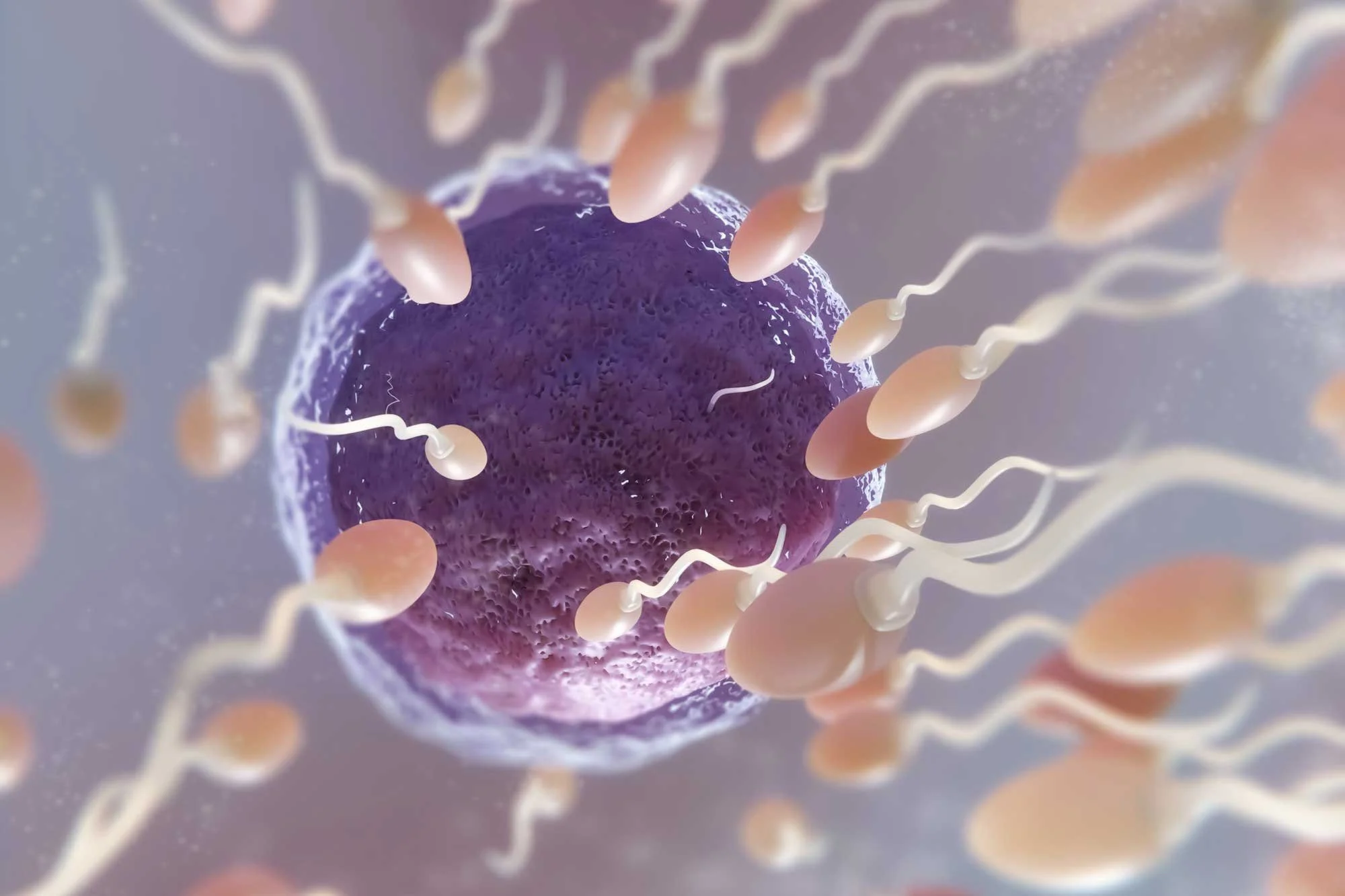
A large meta-analysis pooled data from more than 90 studies and over 93,000 men were found with consistent and age-dependent declines in semen quality. This includes drops in semen volume, sperm motility, and the proportion of normally shaped sperm.
Separate research tracking men from their late teens into their seventies found that sperm count, motility, and shape all worsen with age, with some of the sharpest declines appearing after age 35 and becoming more pronounced after 50.
Sperm DNA fragmentation, which is a marker of genetic damage in sperm, also rises steadily with a man's age. This single point dismantles the wine analogy. A man's reproductive cells are aged by time, the same way eggs are.
What a Man Eats Can Shape His Unborn Child
Nutrition is treated as a woman's preconception issue almost by default, yet paternal diet and body weight before conception carry their own risks.
A review of parental preconception health found that paternal obesity and poor nutrition are linked to higher risks of metabolic disorders in children, including type 2 diabetes and cardiovascular problems later in life.
The mechanism is epigenetic. A father's sperm carries chemical markers that are shaped by his diet, weight, and stress levels and this influences how genes switch on and off in his child.
Animal studies reinforce this fact. Offspring of fathers on poor diets show altered insulin response and higher fat mass and this is independent of what the child itself eats. A man's plate, in other words, is already feeding a child he has not conceived yet.
Older Fathers, Higher Risks for Their Children's Minds
Perhaps the most striking research concerns paternal age and neurodevelopmental outcomes. A large population study in a Chinese cohort found that men who became fathers after 35 had significantly higher relative risk of having a child later diagnosed withschizophrenia or obsessive-compulsive disordercompared with men who fathered children in their late twenties, with risk climbing sharply past 35.
Broader reviews spanning multiple countries confirm associations between advanced paternal age and higher rates of autism, bipolar disorder and attention difficulties in offspring.
Researchers point to the accumulation of genetic copying errors in sperm-producing cells as men age, errors that are simply less common in younger men. The same aging process also raises the risk of pregnancy loss.
As sperm DNA fragmentation increases with age, so does the likelihood of failed implantation and early miscarriage, outcomes that are almost always described in clinical settings and casual conversation alike as "the woman's body rejecting the pregnancy," when the sperm itself may have carried the damage from the start.
This is not heaping the blame on older fathers. It is about correcting a public conversation that has assigned every reproductive risk to maternal age while leaving paternal age almost entirely unexamined.

Hygiene Isn't Just a Woman's Responsibility
Personal hygiene is another area where men are rarely questioned. Research on cervical cancer, a disease that affects women exclusively, has repeatedly identified the male partner as a transmission factor.

Studies have linked poor male genital hygiene to higher HPV transmission rates to female partners, with one early study finding that the presence of smegma in a male partner raised a woman's cervical cancer risk by over 50%.
A qualitative study conducted in Central Kenya found that men are frequently asymptomatic carriers of HPV, unknowingly spreading the virus while facing none of its visible consequences themselves, while their partners bear the full weight of screening, treatment, and stigma.
Washing up is preventive care that extends past a man's own body.
Rewriting the Script: What Real Accountability Looks Like
None of this research suggests that men are solely responsible for every fertility struggle, pregnancy complication, or childhood diagnosis. Biology is shared, and so is responsibility.
However, the current script runs in the direction where a woman's body is interrogated for every delay while a man's body is assumed blameless by default and it is not supported by the evidence.
Sperm quality declines. Paternal weight and diet shape a child's metabolic future. Paternal age carries its own risks for pregnancy loss and for a child's mental health. Male hygiene affects a partner's cancer risk. These are established and replicated findings that are largely ignored in everyday conversation, especially in African communities where masculinity is still tied to an illusion of biological invincibility.
Men's health does not end at a man's own body. It travels into the people who love him and the children who inherit more from him than they are ever told. Taking that seriously should not be seen as an attack on manhood but as simply catching up to what the evidence has already said.