M-KOPA Hits Astounding $1.6B Customer Credit Milestone in Kenya
M-KOPA Kenya has issued over $1.6 billion in credit, serving 4.8 million customers and becoming a leading financing provider in the country. The company's pay-as-you-go model, primarily driven by smartphones, has brought financial inclusion and device ownership to millions, while also expanding into electric vehicles and contributing significantly to the economy.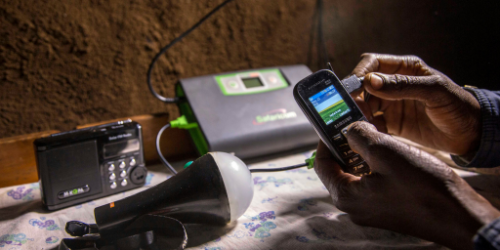
M-KOPA Kenya has established itself as a significant force in the country's consumer market, extending over $1.6 billion in credit to customers, marking one of the largest financing footprints. Since its inception in 2010 with solar home systems, the company has served 4.8 million customers, many of whom previously lacked access to traditional bank financing, demonstrating its pivotal role in financial inclusion.
The company's operations are predominantly driven by smartphones, with 4.5 million Kenyans acquiring handsets through M-KOPA's innovative pay-as-you-go model. This initiative has been particularly impactful, enabling more than 2 million individuals to own a phone for the first time. Beyond just devices, M-KOPA serves as a gateway to broader financial services; its report indicates that 37% of users obtained their initial formal loan through the platform, while 68% accessed their first health insurance product via its comprehensive 'More than a Phone' bundle. This approach highlights how smartphone access is becoming a crucial entry point for millions into Kenya's digital economy, especially in a market where feature phone users remain significant.
M-KOPA's economic contributions extend to national revenue and local development. The company paid KES 3.79 billion in taxes last year. Its assembly line in Nairobi has produced two million devices and actively supports local manufacturing by providing training for technicians. Employing 1,320 staff and collaborating with 14,000 sales agents across the nation, M-KOPA plays a substantial role in job creation and economic empowerment.
The company continues to diversify its offerings, notably expanding into the electric vehicle (EV) sector by financing 5,000 electric motorbikes. This move into new asset classes, traditionally deemed too risky by conventional banks, showcases M-KOPA's adaptive model. While its pay-as-you-go structure aims to mitigate over-indebtedness, the company's device-locking mechanism remains a subject of ongoing debate within the consumer credit landscape.
M-KOPA's success underscores the growing importance of asset-financing platforms in Africa's consumer credit market, particularly where traditional banks face challenges in lending to low-income or informal workers. By combining hardware provision with credit scoring based on daily repayment behavior, M-KOPA has built one of the region's most extensive alternative credit datasets. This data-driven approach has enabled it to provide loans for a range of products, including smartphones, cash advances, insurance, and now electric motorbikes, effectively blending credit, payments, and device accessibility. As regulators increasingly scrutinize digital lenders, M-KOPA's commitment to transparent practices, such as limiting hidden charges and capping debt, becomes central to the broader policy discussions surrounding safe consumer credit.