Kofar Mata Dye Pits: The 500-Year-Old Factory That Still Runs Till Today
Kano’s Kofar Mata dye pits have been turning cloth blue since 1498. Five centuries later, the ancient craft is still alive. But for how much longer?
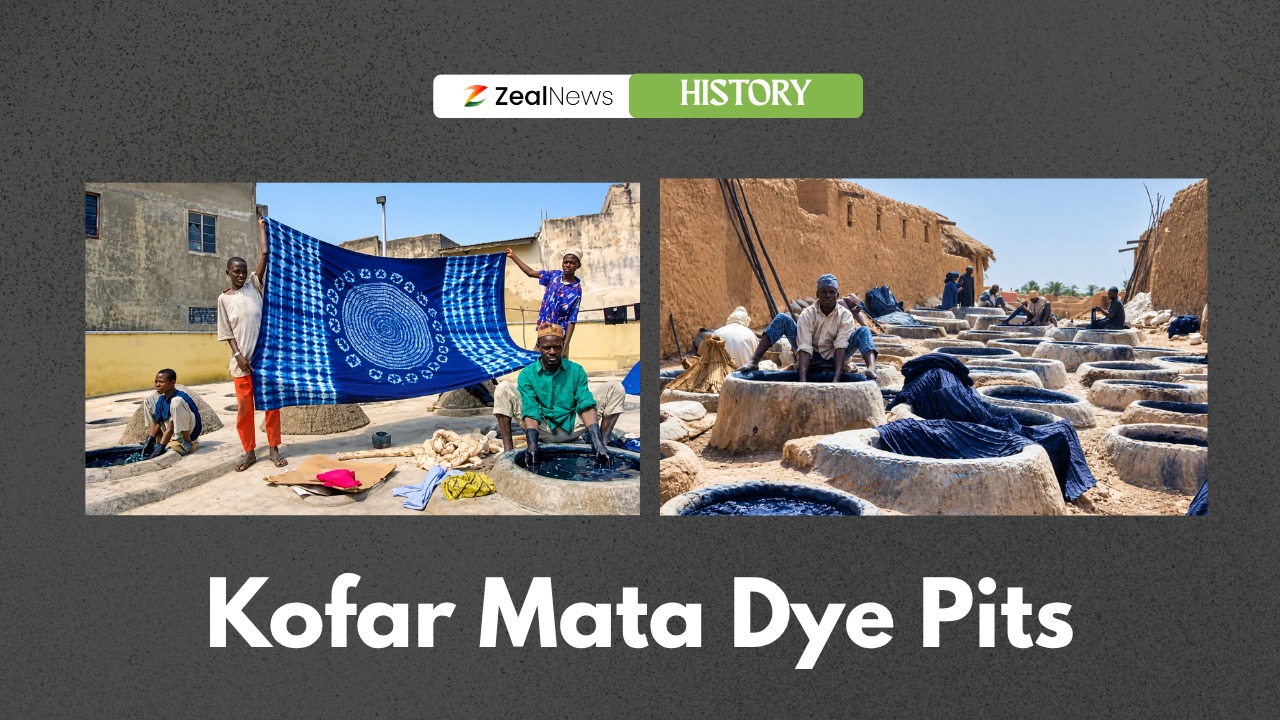
Since 1498, Kano’s Kofar Mata dye pits have turned plain cloth into deep indigo. Five centuries later, the pits are still in use.
Walk through the old city of Kano, and you can find something that looks almost too ordinary to have survived for more than five centuries: deep, circular pits dug into the ground.
There are no giant machines here, no factory floor, and absolutely no complicated production line.
Instead, there are artisans, cloth, water, indigo, and a dyeing technique passed down through generations.
These are the Kofar Mata dye pits, traditionally dated to 1498. They are regarded as the surviving centre of Kano’s centuries-old indigo-dyeing tradition.
And they are not simply an archaeological relic.
People still work there.
In July 2026, reporting from the site documented 31 active pits, a tiny fraction of the number that once operated in Kano, but enough to show that the craft has not disappeared.
That is what makes Kofar Mata unusual. Its history is not sitting behind glass. It is still being made by hand, one piece of cloth at a time, using a craft that has survived for more than 500 years.
To understand how that is possible, you have to go back to the Kano that existed long before Nigeria had a name, when the city was already a major centre of trade, textiles and craftsmanship.
Why Did Kano Become a Centre for Indigo Dyeing?
Kofar Mata did not appear in isolation.
For centuries, Kano was an important commercial centre connected to the trans-Saharan trade routes. Long before Nigeria became a country, merchants moved goods between communities south of the Sahara and markets farther north and west.
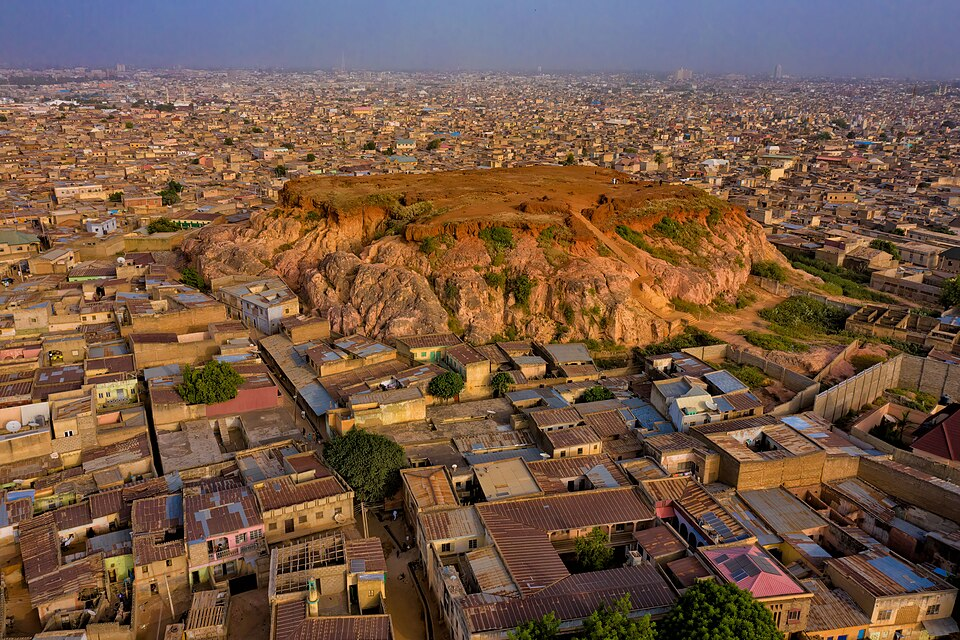
Textile production was already established in the region centuries before the Kofar Mata pits. Historical accounts place textile production in Kano as far back as the ninth century, involving materials including cotton, raffia and silk.
By the time the Kofar Mata pits were established in 1498, dyeing was part of a much larger textile economy.
History
Rewind the Stories that Made Africa, Africa
A Journey Through Time, Narrated with Insight.
The location also mattered as the pits were established near the historic Kofar Mata gate and close to the central mosque in Kano's old city. Indigo-dyed cloth produced in Kano became part of the trade that connected the city with communities across the Sahel and beyond.
By the nineteenth century, Kano cloth had travelled remarkably far. German explorer Heinrich Barth recorded that cloth produced in Kano reached the Atlantic coast, with Kano-made textiles worn in places as far away as Arguin.
What Happens Inside a Kofar Mata Dye Pit?
The process is remarkably hands-on.
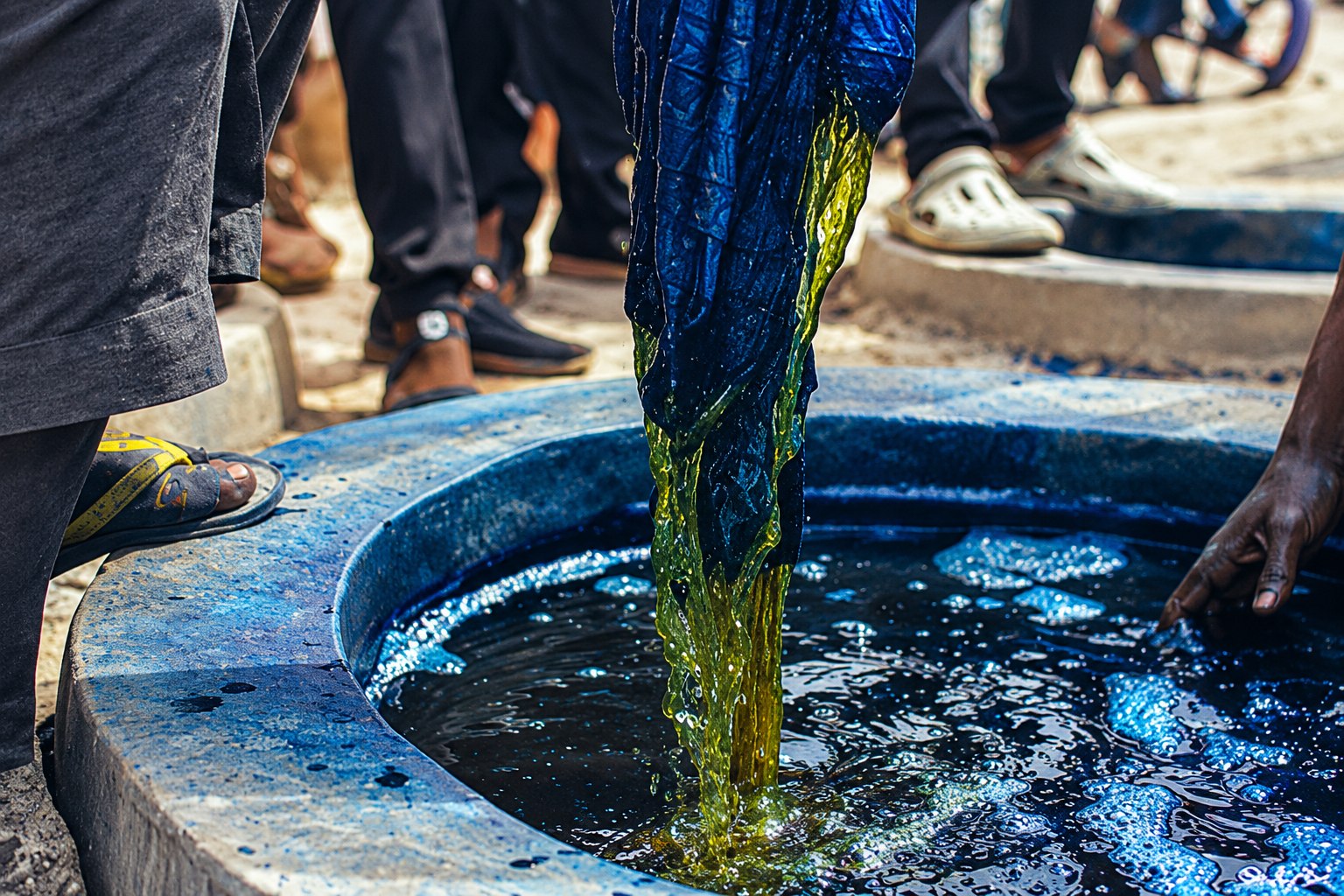
Traditional indigo dyeing relies on fermentation. Natural indigo and other materials are prepared in the pits, creating a dye bath into which cloth is repeatedly immersed. When the fabric is brought back into contact with air, oxidation changes the colour, gradually producing the familiar blue.
The depth of colour depends on the treatment. Cloth can be worked repeatedly to achieve different shades, from lighter blues to much darker tones.

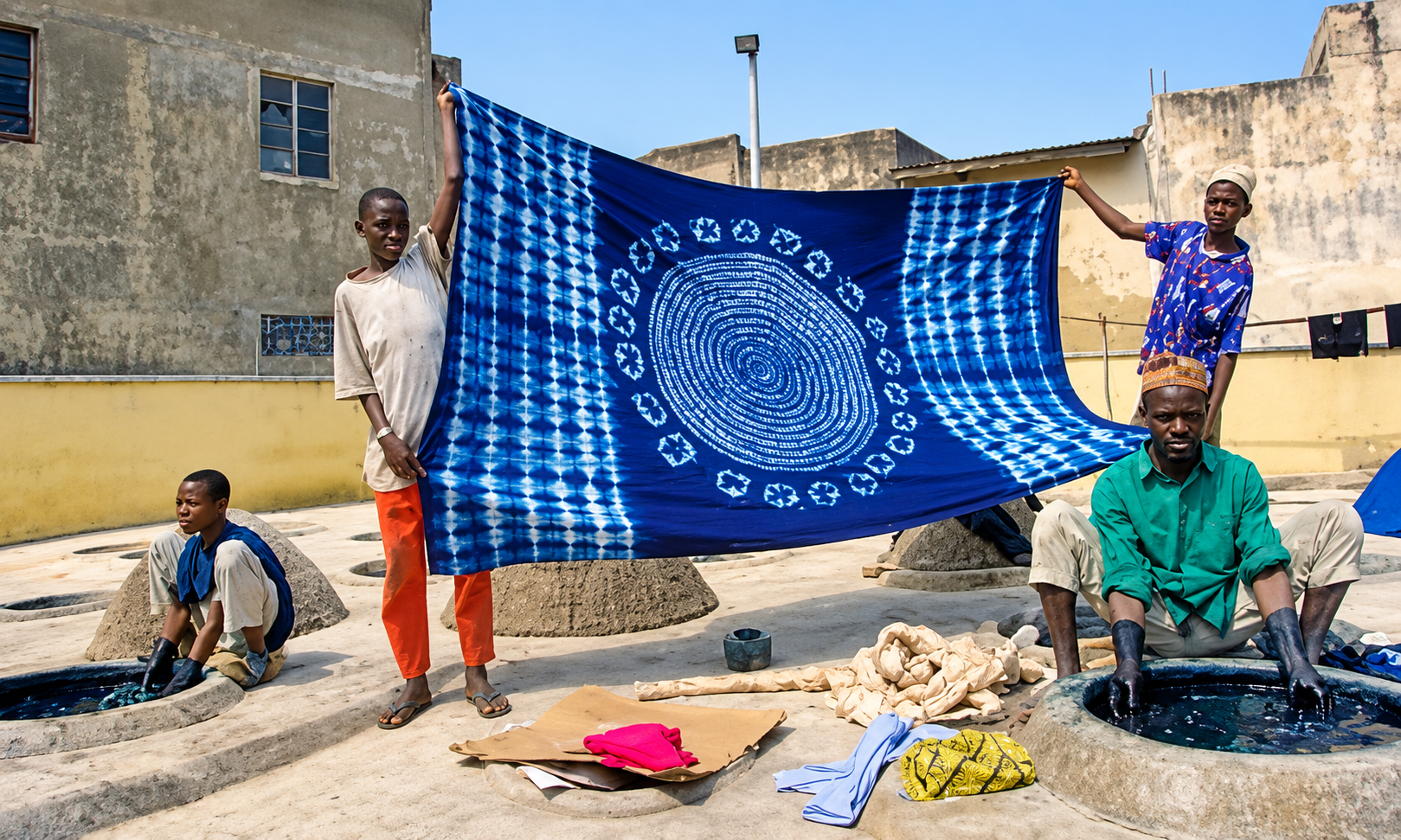
The patterns are also part of the craft. Cloth can be tied, folded, or otherwise prepared before dyeing, allowing parts of the fabric to resist the dye and create distinctive designs.
Then comes another traditional step: the finished fabric can be beaten with a wooden implement to give it a particular texture and finish.
The technology may be simple, but the knowledge behind it is not.
A successful dye bath depends on experience. Generations of artisans learned how to prepare and maintain the pits, recognise the condition of the dye, and produce the colours customers wanted.
That knowledge cannot simply be replaced by buying a machine.
So How Did a 500-year-old Industry Nearly Disappear?
This is where the story of Kofar Mata gets less romantic.
The pits survived for centuries because there was a market for what they produced. Eventually, that market changed.
Imported and industrially produced textiles began competing with locally made fabrics. Mass production offered customers something traditional dyeing could not easily match: large quantities of cheaper cloth.
The consequences were visible at Kofar Mata.
In 2007, reporting documented that more than 100 pits at the site had fallen into disrepair, with some clogged by refuse and stones. The report described Kofar Mata as the only surviving centre from what had once been a much larger network of dyeing sites in Kano.
History
Rewind the Stories that Made Africa, Africa
A Journey Through Time, Narrated with Insight.
By 2013, the situation had become even more embarrassing. Channels Television reported that parts of the historic dye-pit site had become dumping grounds for refuse.
The problem was not that the artisans had forgotten the craft.
The problem was that the economics surrounding the craft had changed.
If customers could buy cheaper manufactured fabric, fewer people had a reason to pay for labour-intensive hand-dyed cloth.
And when the business becomes less profitable, the next generation has less reason to inherit it.
That is exactly the danger Kofar Mata has faced.
Can Kofar Mata survive another 500 years?
The fact that the pits are still operating in 2026 deserves to be applauded, but survival should not be confused with security.
Recent reporting found only a few dozen working pits at Kofar Mata.
That is a dramatic reduction from the hundreds of pits associated with Kano's historic dyeing industry.
The challenge is therefore bigger than preserving the physical pits. A pit can be repaired, a tourist sign can be installed, and a historic building can be restored.
The harder thing to preserve is the knowledge.
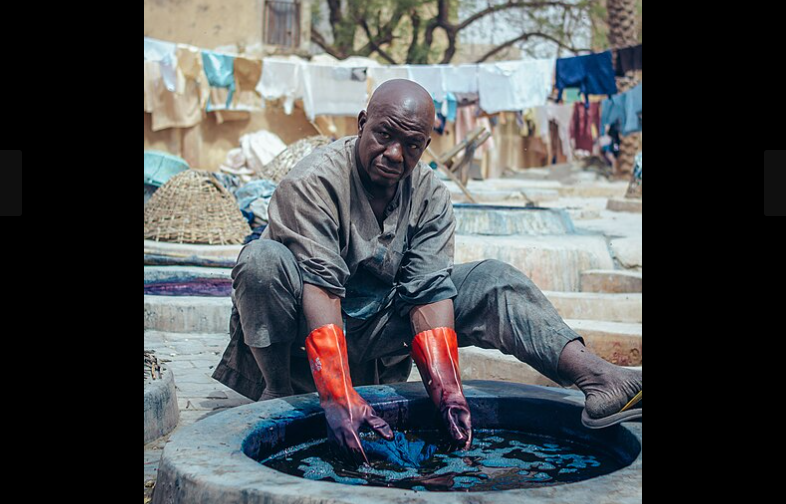
If fewer young people choose to learn the craft, the chain of knowledge eventually breaks. A tradition that survived empires, colonial rule, the creation of Nigeria, and the arrival of industrial textiles can still disappear because there are not enough people willing or able to make a living from it.
Kofar Mata has already survived one version of that disappearance.
The question now is whether it can survive the next one.
There is a temptation to treat places like Kofar Mata as pieces of history that should simply be protected because they are old.
History
Rewind the Stories that Made Africa, Africa
A Journey Through Time, Narrated with Insight.
But age is not what kept these pits alive.
People did.
People learned the process. People bought the cloth. People taught apprentices. People kept returning to the pits.
For more than 500 years, the colour has changed, the markets have changed, and the country around Kofar Mata has changed.
The pits remain.
And somewhere in Kano, a piece of plain cloth can still enter a hole in the ground and come out blue.
History is definitely still at work.