Kenya's Digital Resilience: Presidential Website Back Online After Cyber Attack
African tech news features Kenya's prompt recovery of its presidential website after a cyberattack, alongside Nigeria's new executive order to coordinate virtual asset regulation. Additionally, a new health startup, Wakamedics, emerges from personal fertility struggles, aiming to revolutionize access to care.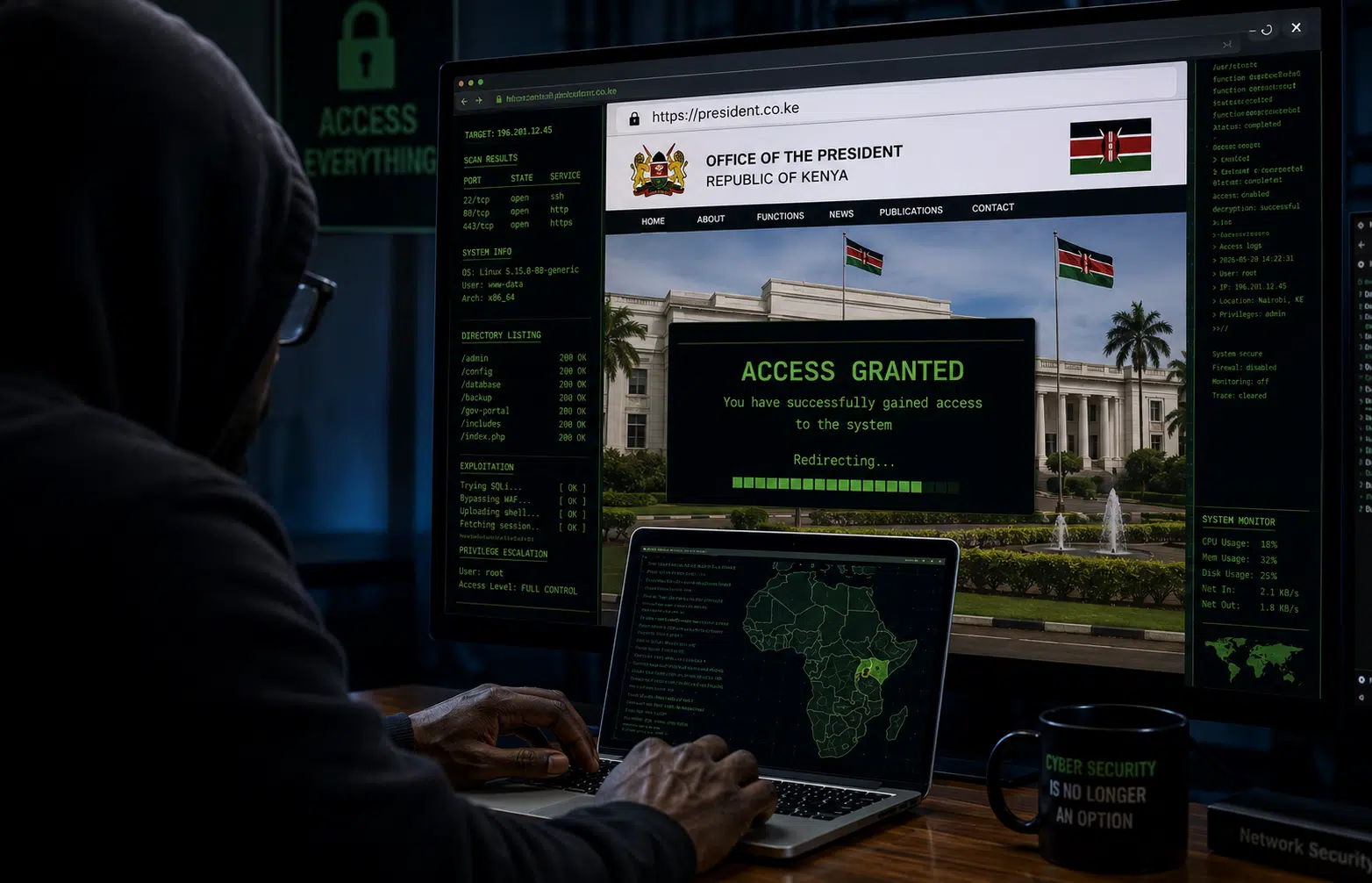
The tech landscape in Africa has recently seen significant developments across cybersecurity, health innovation, and financial regulation. This includes Kenya's response to a high-profile presidential website hack, the inspiring genesis of a health startup addressing fertility challenges, and Nigeria's proactive steps to regulate its burgeoning virtual assets sector.
Kenya's government moved swiftly to restore President William Ruto’s official website after it was compromised by hackers on Saturday, July 18, 2026. The attackers had defaced the site with anti-government messages, displayed a Bitcoin wallet, and demanded a ransom of 5 BTC, equivalent to approximately KSh41 million, while also threatening to leak unspecified sensitive information. Despite the initial breach, Kenya’s ICT Ministry confirmed that control of the platform had been regained within hours, and forensic investigations were immediately launched. Authorities temporarily restricted access during this period, and the website was fully restored by the end of the day. The Ministry, however, insisted there was no evidence of sensitive government data theft.
This incident is not an isolated event for Kenya, which has faced previous cyberattacks. In July 2023, the eCitizen platform, crucial for numerous public services, suffered disruptions, impacting agencies like the National Transport and Safety Authority and Kenya Power. Another coordinated attack occurred on November 17, 2025, targeting several government websites, including the presidency's portal, and replacing pages with extremist content; this was attributed to a group named PCP@Kenya. These recurring breaches underscore the ongoing vulnerability of Kenya's digital infrastructure, despite heavy investments in digitizing government services. The latest hack serves as a stark reminder that even if only the homepage was defaced, such incidents can disrupt services, erode public confidence, and expose systemic weaknesses. Investigators are now focused on understanding the entry point of the attackers and the full extent of the damage, with the incident expected to intensify pressure on Kenyan authorities to bolster cybersecurity measures across all state institutions. Rebuilding public trust in digital defenses is projected to be a more substantial challenge than the technical restoration itself.
Meanwhile, in the realm of health technology, Dr. Victoria Duru's personal battle with fertility struggles sparked the creation of Wakamedics, a startup dedicated to making fertility care more accessible. Dr. Duru's turning point came after she had to leave her demanding career in air ambulance services due to the challenges of balancing it with fertility treatments. Four months post-resignation, she became pregnant, but the experience led her to question why women often have to choose between their careers and building a family. This profound question formed the foundation of Wakamedics.
Dr. Duru's journey with technology began early, from learning email as a child to using digital tools for UNICEF campaigns against female genital mutilation during her medical studies. After graduating, her ambition to enter aviation was cut short. She joined Flying Doctors, but the conflict between emergency medical evacuations and fertility appointments became untenable. Following her successful pregnancy and subsequent training in fertility care, she launched Wakamedics in September 2022. The startup has since evolved from a physical clinic into a mobile fertility and diagnostics platform, leveraging telemedicine, advanced diagnostics, AI, and digital health tools to offer flexible fertility care. Wakamedics has already made a significant impact, assisting over 1,500 women with fertility testing, educating more than 3,500 individuals, and supporting over 200 pregnancies, aiming to ensure fewer women face the difficult choices she once did.
Across the continent, Nigeria's President Bola Ahmed Tinubu has taken a decisive step to bring clarity to the nation's virtual assets landscape by signing the Presidential Executive Order on Virtual Assets Coordination, 2026. Announced on July 17, 2026, and effective immediately, this order aims to end the long-standing regulatory confusion surrounding cryptocurrencies and other digital assets. It establishes a Virtual Asset Council, chaired by the Central Bank of Nigeria (CBN), designed to foster improved coordination among key financial, security, and revenue agencies.
The executive order is not intended to create new regulators or rules overnight, but rather to integrate the efforts of existing bodies such as the CBN, Securities and Exchange Commission (SEC), Nigeria Revenue Service (NRS), Nigerian Financial Intelligence Unit (NFIU), and the Office of the National Security Adviser (ONSA). Previously, these agencies often operated with overlapping responsibilities, leading to regulatory gaps and uncertainty. The new council's mandate is to streamline oversight, combat fraud, money laundering, terrorism financing, cybersecurity threats, and revenue leakages, while simultaneously providing a clearer regulatory pathway for legitimate crypto businesses. This move marks a continued shift from the CBN's 2021 ban on banks facilitating cryptocurrency transactions towards a more structured regulatory approach, recognizing digital assets as an integral part of the economy.
Looking ahead, the executive order lays the groundwork for further developments. The CBN is expected to introduce a regulatory sandbox for testing blockchain and virtual asset products under supervision, while the Nigeria Revenue Service plans to implement a dedicated tax policy for virtual assets. The Federal Government is also in the process of finalizing a Virtual Assets White Paper, which will articulate a comprehensive, long-term national strategy for the industry. The newly formed council has been given 30 days to develop an implementation framework. As Nigeria consistently ranks among the top countries for cryptocurrency adoption, this coordinated approach seeks to create a predictable environment that safeguards consumers without stifling innovation, a balance crucial for attracting investment and fostering growth in the digital asset space.