Tensions Flare During Jerusalem Day March as Nationalist Chants Draw Condemnation
An annual state-sponsored Jerusalem Day march saw Israeli nationalists chant inflammatory slogans and assert control over Palestinian East Jerusalem. The event, marked by National Security Minister Itamar Ben-Gvir unfurling an Israeli flag at the al-Aqsa mosque, also involved scuffles and counter-protests aimed at protecting Palestinian residents.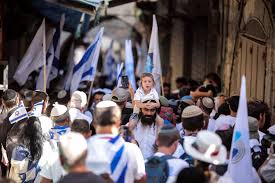
Tensions escalated during this year’s Jerusalem Day celebrations as groups of Israeli nationalists marched through the Old City chanting anti-Arab slogans, prompting condemnation from rights activists and raising fresh concerns over relations between Jewish and Palestinian residents.
The annual event commemorates Israel’s capture of East Jerusalem during the 1967 Six-Day War. The march has become increasingly controversial in recent years due to nationalist rhetoric and clashes in predominantly Palestinian areas of the city.
Witnesses reported that some participants chanted slogans including “Death to Arabs” and other inflammatory remarks while moving through the Muslim Quarter of Jerusalem’s Old City. Most Palestinian-owned businesses in the area closed before the procession began amid security concerns.
The event also drew attention after Israeli National Security Minister Itamar Ben-Gvir raised an Israeli flag near the Al-Aqsa Mosque compound, known to Muslims as Al-Aqsa and to Jews as the Temple Mount. The site remains one of the most sensitive religious locations in the Israeli-Palestinian conflict.
Ben-Gvir later suggested on social media that Israel had strengthened its authority over the site. His comments reignited debate over longstanding arrangements governing access and worship at the compound, which have been in place since 1967.
Israeli Finance Minister Bezalel Smotrich also participated in the march, which received support from municipal and government bodies. Participants travelled from across Israel, including some from settlements in the occupied West Bank.
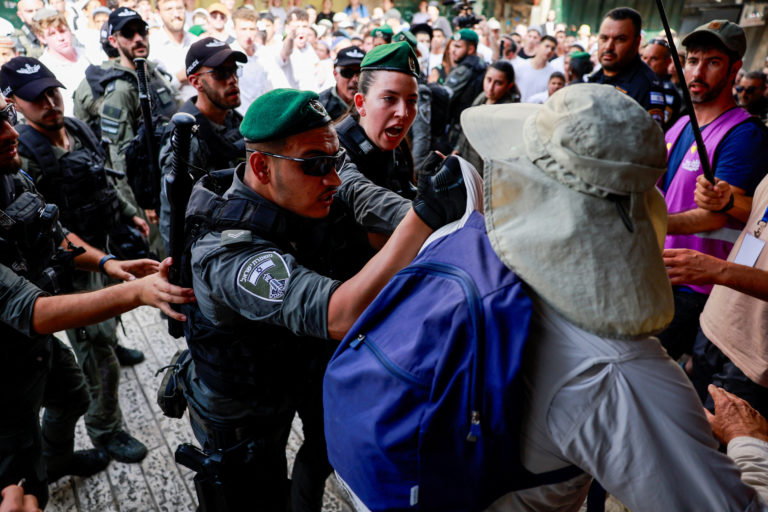
Minor confrontations were reported in parts of the Old City as nationalist activists and Palestinian residents exchanged insults and threw objects before police intervened. No major injuries were immediately reported.
Amid the tensions, members of Standing Together organized a counter-demonstration aimed at protecting Palestinian residents and reducing the risk of violence. Volunteers formed human barriers in several locations throughout the Old City.
Organizers said they deployed hundreds of volunteers for the initiative, describing it as their largest Jerusalem Day mobilization to date. The effort sought to prevent escalation and demonstrate solidarity between Jewish and Palestinian communities.
Some religious Jewish participants also voiced opposition to the hostile rhetoric displayed during the march. Several described the chants and confrontations as inconsistent with their religious values and called for greater restraint and mutual respect.
The events underscore the continuing sensitivities surrounding Jerusalem, a city claimed by both Israelis and Palestinians and regarded as sacred by Judaism, Islam and Christianity. As political tensions persist, Jerusalem Day remains one of the most closely watched and contentious dates on the region’s calendar.