Japada: When Nigerians Return Home
The Japada phenomenon marks a chapter on Nigeria's migration story — and maybe it's not a reversal of the Japa Wave that saw millions of Nigeria leave — it is definitely the beginning of a movement that seeks to inspire others to come back and invest in their nation.

INTRODUCTION — THE JAPA SYNDROME
Migration is as old as as man and like bees to honey, humans are wired to seek greener pastures. The downturn of Nigeria's economy in the 80s started what people referred to as a mass exodus of Nigerians — Doctors and all sorts of academic professionals were leaving not just the country but the continent to seek better life in European, American and Asian Countries.
The brain drain that came with this attracted national attention. In response, a popular television and radio jingle was launched as a national campaign to discourage mass migration from the country. The theme song was by Veno Marioghae, a musician, and actor Enebeli Elebuwa known in the jingle as Andrew.
In the song, Veno is seen pleading with Andrew not to leave. “Nigeria go survive. Andrew don’t check out o.“ (In the local pidgin language it means Nigeria will survive, Andrew, don’t emigrate).
Four decades later and Nigeria is still on the run — it's citizens still looking for ways to "Japa" and save themselves.
The most concerning issue wasn't always the mass migration — but the government's inaction towards the issues that fuel it. Efforts of the government towards keeping them in Nigeria were mere public comments of encouragement and other symbolic campaigns rather than solving the problems that plagues the country — the same problem that prompted them to leave. Nigerians have come to shut out that noise and pave their own way even if it means draining their home country of its intellectual capability.
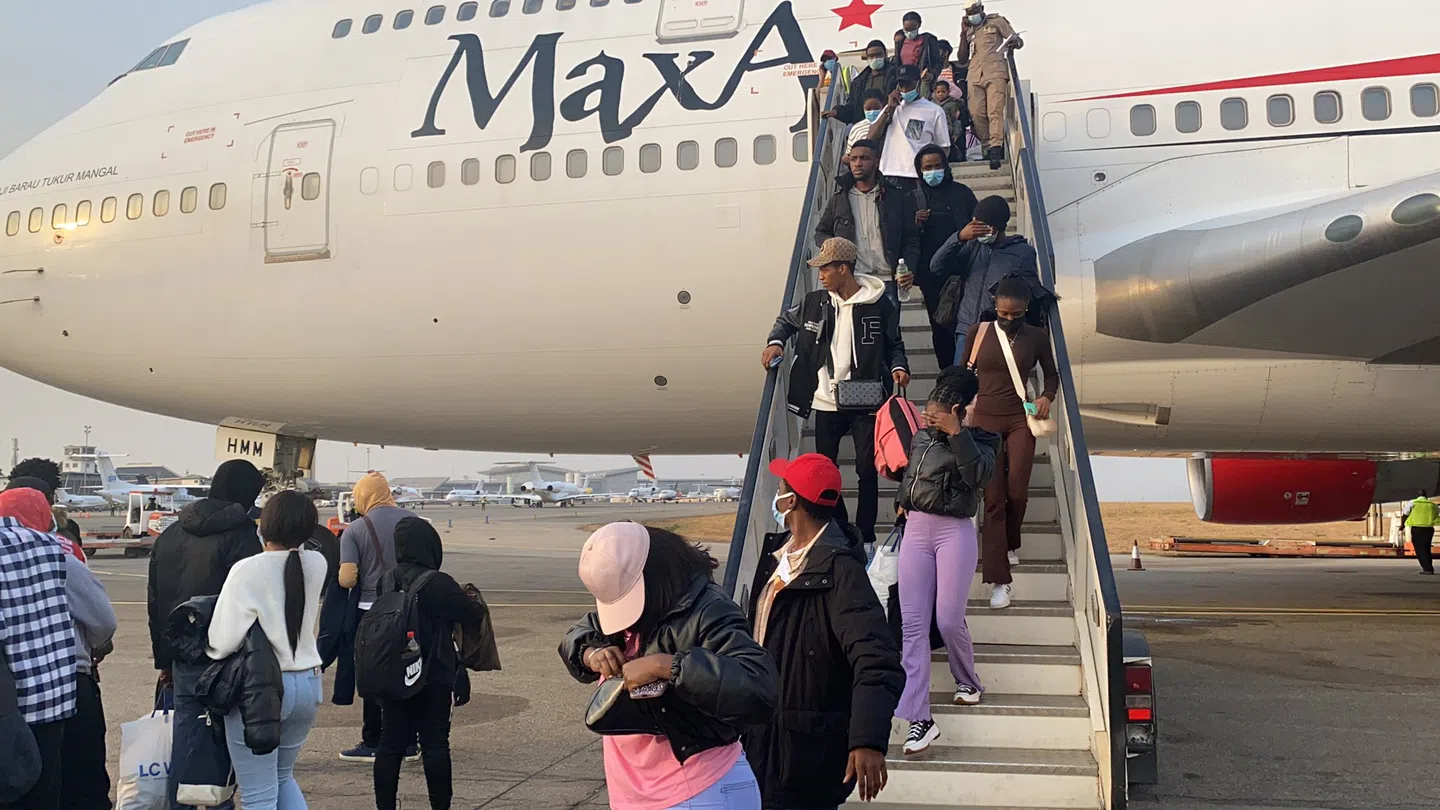
Years later and now it seems the trend is changing — "Japa" has now become "Japada" with many Nigerians wanting to return home due to various individual factors.
Diaspora Connect
Stay Connected to Home
From Lagos to London, Accra to Atlanta - We Cover It All.
THE EMERGENCE OF JAPADA
Japada often referred to be the contrasting sibling of Japa simply put—is the return of Nigerians back to their home.
Japada is a Nigerian slang derived from the Yoruba language and is loosely translated to "come back" or "to return". This slang is used to describe the recent trend of Nigerians who had decided to go abroad for reasons of security or better opportunities now choosing to return home.

Unlike the earlier exodus driven by frustration or survival, Japada reflects a reverse migration motivated by varying factors with the positive ones being a desire to reinvest, reconnect or contribute to national growth — all motivated by renewed optimism.
WHY JAPADA?
Many Nigerians have chosen to return home for various reasons. However, let it not be mistaken that millions of Nigerians do not wish to escape the harsh reality of Nigeria. The emergence of Japada has by no means replaced "the Japa Syndrome”.
An African Polling Institute survey from 2022 found that 69% of Nigerians aged 18-35 would relocate given the opportunity. This establishes that despite many wanting to return home, a larger number want to leave.

Many Nigerians are choosing to return home for various reasons and these reasons can be grouped into two — those who had to return home and those who wanted or needed to.
Diaspora Connect
Stay Connected to Home
From Lagos to London, Accra to Atlanta - We Cover It All.
Nigerians That Had to Return Home.
Nigerians that fall into this category are those whose migration story didn't meet the desired expectations. Many emigrated with hope for a better life, security or life and job, happiness and with a little irony — not having to pray for things that the government should on a normal day do.
Some of the reasons they have to leave are;
Rising Cost of Living and exchange rate pressures: For Many Nigerians in Diaspora, the cost of living came with significant financial pressures. From taxes to housing costs, living expenses, child care, and insurance, many find themselves struggling with the high cost of living, especially those with families or dependents.
This high cost of living often forces Nigerians to move back to their country as they feel that their modest savings could offer a more flexible and comfortable lifestyle in Nigeria.
Immigration and Residency Issues: Securing permanent residencies in these migrated countries come at a huge cost and not many Nigerians are able to attain it. They face issues of expired visas, green card denials, or legal uncertainties that make staying abroad difficult or unsustainable and thus, they decided that leaving is necessary because it's better to leave than get deported.
Health Reasons and Climate Preference: Nigerians are well accustomed to the harsh sunny weather that comes with walking under the legendary Lagos sun, conditions that aren't so popular in these greener pastures.
Cold winters, unfamiliar foods, and other factors can become a source of frustration, pushing some to seek the warmth and familiarity of their home country.
Nigerians Who Want to Return Home
Retirement and Slower Pace of Life: After working for years abroad, many Nigerians choose to come back home and retire. I mean where best to retire and spend your resources than a society where — the average migrate is considered a big man — janitors make more than bankers and senior lecturers.
They often desire a slower pace of life and find comfort in familiar environments, local food, native languages, and cultural practices.
In all, the saying that “East or West, home is the best” proves true as Nigeria, despite its own challenges, offers comfort and a sense of belonging that cannot be gotten elsewhere.
The Desire to Reinvest: This stands out as one of the highlights of the Japada Trend. It isn't just about Nigerians wanting to return home but they wanting to give back to their community and nation by Implication.
This has given rise to an even newer term "Japada-Preneurs" — individuals who made the unusual decision to return back home in pursuit of their entrepreneurial journey.
The decision to leave a stable job and income, developed infrastructure and security of life and property to come back to Nigeria to build businesses is one of Nigeria's most elevating stories.
Some individuals who achieved this are;
Jason Njoku: Jason left behind the safety of London, Njoku returned to Lagos and began building iROKOtv from his mother’s house. He confronted unreliable internet, piracy, and investor skepticism.
Diaspora Connect
Stay Connected to Home
From Lagos to London, Accra to Atlanta - We Cover It All.
His sacrifice and desire to invest in his nation by promoting its culture through the Iroko TV platform was rewarded. Today, Iroko TV is one of Africa’s largest online distributor of Nollywood films, raising over $40 million in funding and becoming a global face for African entertainment.
Tayo Oviosu (Founder of Paga) – From Silicon Valley Salaries to Fintech for the Masses: Tayo's story is one that will continue to inspire generations.
In 2009, he left Silicon Valley comforts behind to launch Paga and navigating Nigeria’s weak financial infrastructure and strict regulations tested his resilience. Today, Paga processes billions monthly, with over 19 million users and partnerships with global players like Visa.
Iyinoluwa Aboyeji (Co-founder of Andela & Flutterwave) – From Canada to Building Africa’s Unicorns: Iyinoluwa enjoyed a stable job in Canada, but he wanted to build something for Africa. This led him to return home and co-found Andela a platform that has today, trained and created pathways for thousands of African talents.
Alongside Olugbenga Agboola, Iyinoluwa moved to co-found Flutterwave — a platform that powers payments for businesses across Africa and is now valued at over $3bn.
Ultimately, the Japada represents more than just a return home — it's a connection with identity, purpose and possibility. While Japa has for long drained the nation of it's intellectual capability, Japada is starting a "Brain Gain" where Nigeria's most intellectual minds decide to come back and build their country themselves.