How "OK" Went From Inside Joke to One of the Most Used Word on the Planet
From a snarky 1839 newspaper joke to one of the most recognized words in the world, "OK" survived campaigns, conspiracy theories, and centuries of use to become the universal expression everyone knows.
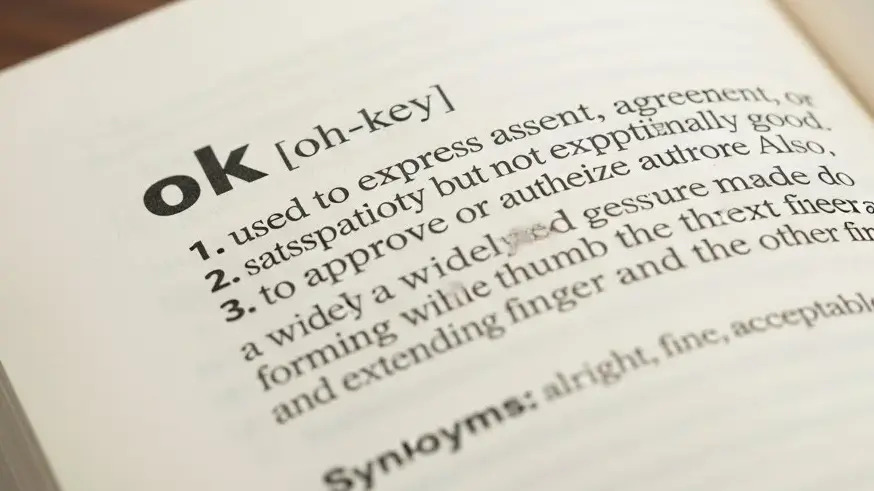
You have said it today and probably more than once. It could be in a text to your mum, maybe in response to your boss’ instructions, maybe just as a reflex when someone told you something you didn't care about.
"OK" — that two-letter neutral affirmative word, zero syllables and certainly a full sentence.
But have you ever stopped to wonder where it actually came from? The origin story is quite interesting and it starts with a part of educated Americans being weird on the internet of their time: newspapers.
The 1830s Had Extremely Chaotic Energy
It all started in Boston, 1838. At that time, the internet did not exist but young, educated Americans had found their version of it: newspapers.
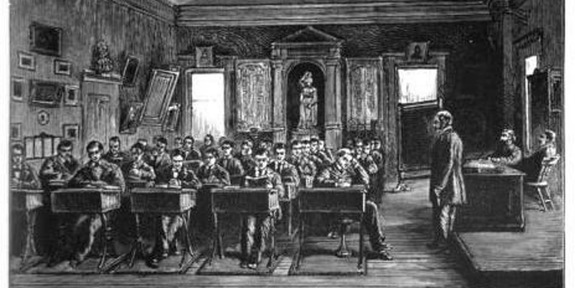
Just like every generation before and after them, they had their own slang which was absurd, self-referential and deeply confusing to anyone outside the circle.
The trend was to take a phrase, misspell it on purpose, then abbreviate the misspelling. Think of it like typing "lol" except the joke was also that you deliberately wrote it wrong.
"No go" became "KG" for "know go." "All right" became "OW" for "oll wright." It was the 19th century's version of typing "smort" instead of "smart" or "teh" instead of "the."
The humour was in the error. However, most of these abbreviations died quietly but one surprisingly survived.
The Joke That Refused to Die
On March 23, 1839, a Boston Morning Post editor named Charles Gordon Greene was writing a snarky piece about a rival newspaper in Providence. At the end of a throwaway line, almost as an afterthought, he dropped the letters "o.k." — shorthand for "oll korrect," which was itself a humorous misspelling of "all correct."
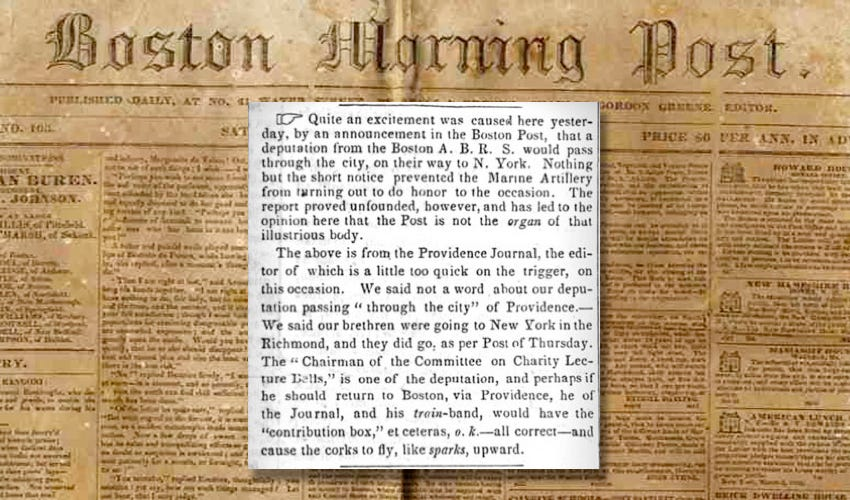
It wasn't even the main point of the piece. It was the verbal equivalent of a footnote meme.
The abbreviation reappeared in the same paper a few days later and slowly, the way things move when there is no algorithm to speed them up, it started spreading. Newspapers like the Boston Evening Transcript, the New York Evening Tattler, the Philadelphia Gazette started to use it.
By the end of 1839, "OK" had left Boston and was quietly infiltrating American newsprint everywhere.
Then a president got involved, and everything changed.
Old Kinderhook and the Election That Supercharged a Slang Word
History
Rewind the Stories that Made Africa, Africa
A Journey Through Time, Narrated with Insight.
In 1840, incumbent President Martin Van Buren was running for re-election. Van Buren was from a small New York town called Kinderhook and his supporters had been calling him "Old Kinderhook" because at that time, political nicknames were the vibe.
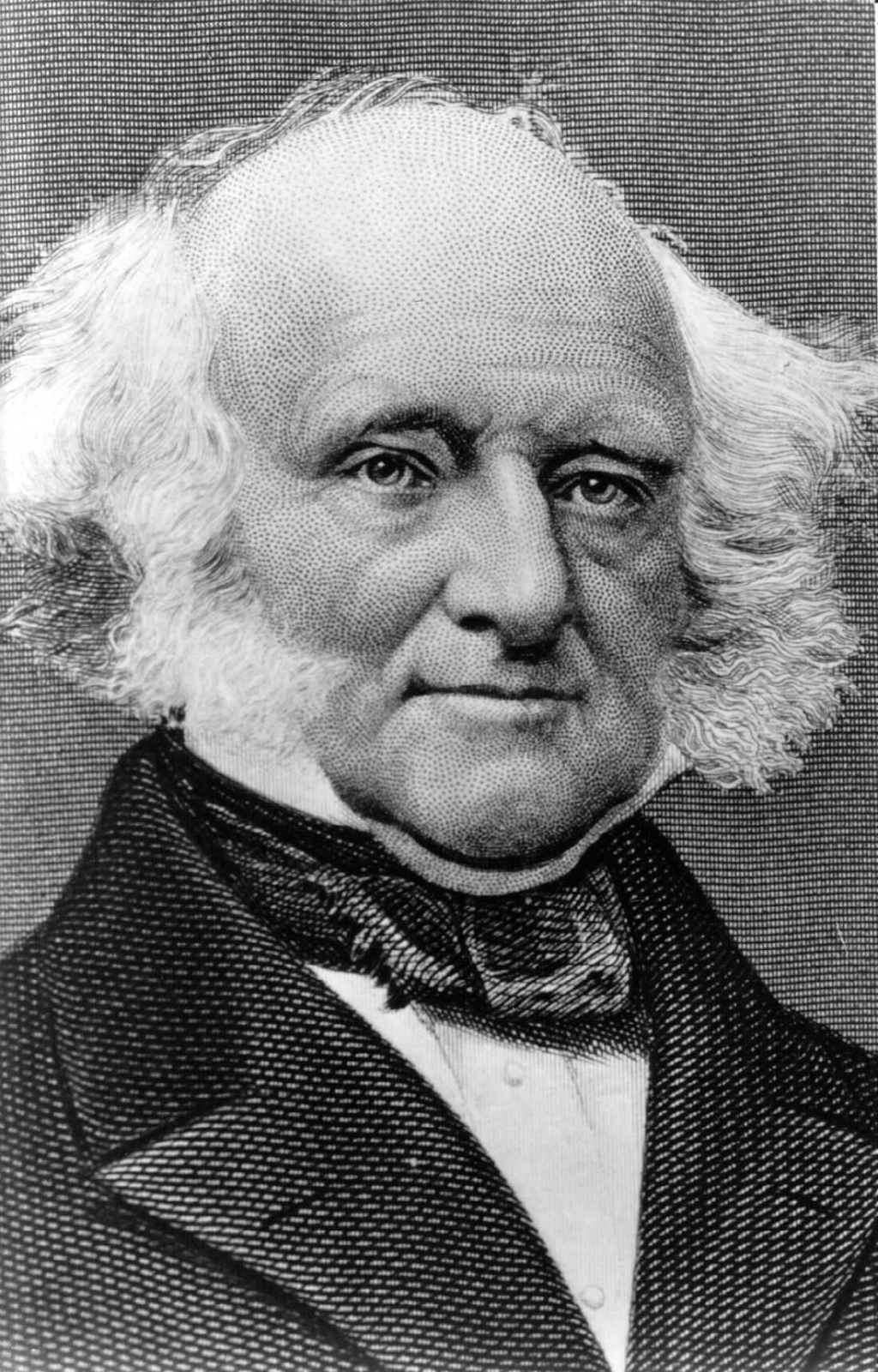
Andrew Jackson had been "Old Hickory." William Henry Harrison, his opponent, was "Old Tippecanoe." Everyone was old something.
Van Buren's campaign needed a rallying cry, and his people spotted an opportunity to use "OK" which could also stand for "Old Kinderhook."
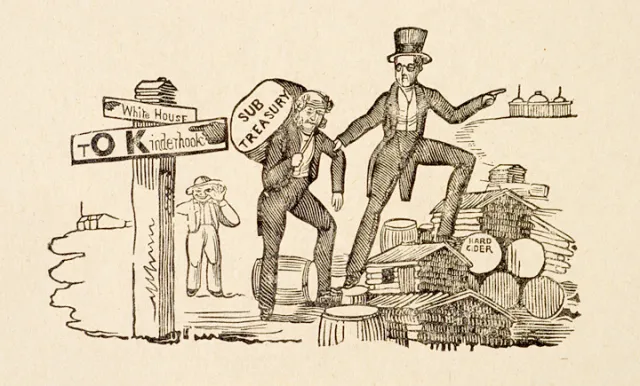
They started forming "O.K. Clubs" across the country, plastering the letters everywhere and giving the abbreviation a second identity.

Now "OK" meant both "all correct" and a president's nickname at the same time. It was the 19th century's version of a campaign hashtag going viral.
Van Buren lost the election. OK won.
The Conspiracy Theories Were Absolutely Everywhere
For over a century after OK first appeared in print, people were offering all kinds of origin stories.
The Germans said it came from Ohne Korrektur, meaning "without correction," used in printing. The French claimed it descended from Aux Cayes, a Haitian port famous for its rum. The Greeks pointed to the phrase óla kalá, "all good."
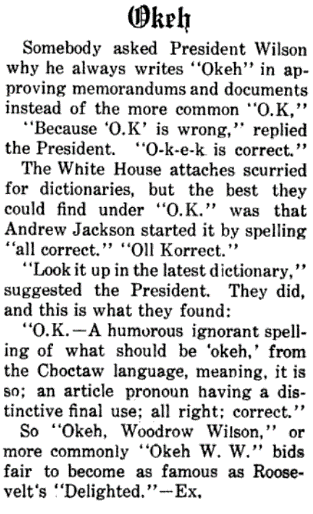
There was even a theory linking it to a Choctaw word, okeh, meaning "it is so," which was apparently convincing enough that President Woodrow Wilson started writing "okeh" on official documents he approved.
Some Scottish immigrants argued it came from "och aye," meaning "oh yes." One theory traced it to a biscuit manufacturer named Orrin Kendall.
The mystery wasn't actually solved until the 1960s, when a Columbia University English professor named Allen Walker Read spent years going through old newspapers and documented the whole chain of events, from Greene's 1839 joke all the way forward.
Everything else, Read concluded, was folk etymology: humans doing what humans do, which is filling in gaps with stories that feel satisfying.
Two Letters, Every Language
What made OK unstoppable was not just the politics that advanced it or its clever branding; it was the word itself.
History
Rewind the Stories that Made Africa, Africa
A Journey Through Time, Narrated with Insight.
It is, linguistically speaking, almost too easy. Nearly every language on earth has an "o," a "k," and an "ay" sound. It requires no contortions of the mouth.
It fits into any sentence as a noun, verb, adjective or just a filler when you have nothing else to say. It is maximally flexible and minimally demanding.
By the mid-20th century, OK had crossed into French, then Spanish, Japanese, Arabic, Swahili.
When NASA astronauts were preparing for the Apollo 11 moon landing in 1969, one of the first things Houston said to Neil Armstrong as the world watched was: "OK, Neil, we can see you coming down the ladder now."

A word born from an obscure newspaper joke was present at one of the most watched moments in human history.
Allan Metcalf, widely considered the foremost authority on the word's history, calls OK "the most frequently spoken or typed word on the planet" in his 2001 book, OK: The Improbable Story of America's Greatest Word and given how seamlessly it lives in French, Swahili, Japanese, and Arabic all at once, it is hard to argue.
Today, linguists consider "OK" one of the most recognised word on the planet. All of this because a Boston editor wanted to make a joke in 1839 and couldn't be bothered to spell correctly.