How Africa's Recent History is Forging a Multipolar Foreign Policy
Africa is no longer a passive recipient of global agendas. Explore how recent historical shifts are empowering the continent to diversify alliances and assert its own interests in a rapidly changing world order.
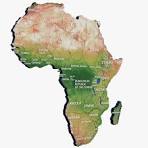
For decades, Africa's international relations were largely defined by its post-colonial ties and Cold War alignments.
However, recent history has seen a dramatic shift. African nations are increasingly asserting their agency on the global stage, actively pursuing a multipolar foreign policy that diversifies partnerships beyond traditional Western powers.
This evolution, shaped by past experiences and emerging global dynamics, is allowing the continent to prioritize its own development, security, and economic interests.
Africa is now strategically navigating a complex international environment, leveraging competition among global powers to its advantage and fostering a more self-determined future.
The Legacy of Past Grievances
Historical grievances and the perceived limitations of traditional partnerships have significantly contributed to Africa's push for diversified alliances.
Post-colonial relationships, often built on a foundation of economic exploitation and paternalistic aid, created a dependency that many African nations are now actively trying to shed.
The Cold War further complicated this. It turned the continent into a chessboard for proxy conflicts. This resulted in internal instability and the propping up of authoritarian regimes by both the East and West.
Today, many African leaders view traditional Western development aid as insufficient. They see it as a mechanism that has failed to drive structural economic transformation. In contrast, they are increasingly seeking partnerships based on mutual respect and shared economic interests, rather than on a donor-recipient dynamic.
This shift is a direct response to a long history of unequal power dynamics and a desire for greater economic sovereignty. A recent report noted that African leaders criticized Western vaccine hoarding during the COVID-19 pandemic and the redirection of aid to Ukraine, further fueling the search for alternative partners.
Key Pivots to Non-Traditional Partners 🤝
Recent history is marked by key trends that illustrate Africa's pivot towards non-traditional partners. The most significant is the rise of China. It has emerged as Africa's largest trading partner and a major source of investment in infrastructure.
Unlike Western partners who often attach political conditions to loans, China has offered a "no-strings-attached" approach to development finance, which has resonated with many African governments.
China's presence, particularly through initiatives like the Belt and Road Initiative (BRI), has provided African nations with a viable alternative for much-needed infrastructure development.
History
Rewind the Stories that Made Africa, Africa
A Journey Through Time, Narrated with Insight.
The expansion of BRICS (Brazil, Russia, India, China, and South Africa), which now includes Ethiopia and Egypt, further cements this multipolar strategy.

SOURCE: Google
It provides a powerful platform for African nations to engage with the Global South. Turkey and Gulf states have also become increasingly active players.
Turkey's engagement is often driven by a mix of trade, defense cooperation, and soft power initiatives, including the sale of affordable and effective drones.
Meanwhile, Gulf states, particularly Saudi Arabia and the UAE, are investing heavily in sectors like food security and port infrastructure in the Horn of Africa, diversifying their own interests while providing African nations with new sources of capital.


SOURCE: Google
Africa's Voice in Global Forums
African leaders and regional bodies are collectively asserting the continent's interests in global forums, and this is having a tangible impact on international decision-making. The most significant recent development is the African Union (AU) becoming a permanent member of the G20.
This move elevates Africa from an "object of decision-making" to an active participant in discussions on global governance, economic stability, and climate change.
The AU's G20 membership provides a unified platform to advocate for key priorities. These include the reform of international financial institutions, a just energy transition for the continent, and the full implementation of the African Continental Free Trade Area (AfCFTA).

SOURCE: Google
By speaking with a single voice, African nations can better ensure that global policies are responsive to their unique needs and challenges.
This collective action transforms their status from a collection of individual states to a powerful, influential bloc, giving Africa a seat at the table on issues that directly affect its future.
Balancing Old and New Partnerships
African nations are strategically pursuing economic and strategic benefits from new partnerships while carefully balancing them with existing relationships. This pragmatic approach aims to enhance their agency in a changing global landscape.
New alliances offer access to diverse development models, financing, and technological expertise.
History
Rewind the Stories that Made Africa, Africa
A Journey Through Time, Narrated with Insight.
Countries are leveraging competition between global powers to secure better terms for loans and investments, avoiding over-reliance on any single power. This increases their bargaining power and fosters a healthier competitive environment.
However, this multipolar approach requires a delicate balancing act. African leaders must maintain ties with traditional partners who still provide critical aid, trade access, and security cooperation.
The goal isn't to sever old ties, but to build a diversified portfolio of alliances. This strategy grants African nations more leverage and autonomy, allowing them to choose collaborations that best serve their national interests without being constrained by any one power's geopolitical agenda.
This complex strategy is not without its challenges. African nations must navigate the risk of becoming pawns in great power rivalries, ensuring that new dependencies do not replace old ones.
Internally, managing diverse national interests and priorities across the continent can complicate a unified foreign policy stance, though regional bodies like the African Union strive to foster collective action and a stronger voice on the global stage.
Despite these hurdles, the pursuit of diversified partnerships underscores Africa's commitment to shaping its own destiny in an increasingly interconnected and multipolar world.
Challenges on the Path to Self-Determination
Africa faces significant challenges in pursuing this multipolar foreign policy. A major one is debt sustainability. The continent's external debt has risen significantly, and a large portion of this is now owed to non-traditional creditors.
This raises concerns about debt traps and the loss of critical assets in the event of default. The G20's Common Framework for Debt Treatment has been criticized for its slow and inefficient implementation, partly due to a lack of strong African representation in its initial design.
Another challenge is maintaining unity amidst diverse national interests. While the AU provides a collective voice, individual countries have different economic priorities and geopolitical alignments. This can sometimes lead to a fragmented approach.
Finally, internal conflicts and security challenges, often exacerbated by the involvement of external actors, can destabilize nations and undermine their foreign policy goals. Despite these challenges, African nations are seeking to address them through stronger regional cooperation, improved governance, and a clear, unified stance in global forums.
A report by the African Development Bank highlights the need for fiscal discipline and strengthened debt management to build resilience.