Hitchcock's Secret Ingredient: The Master Director's Unexpected Link to the Mimosa Cocktail Craze
Alfred Hitchcock, the master of suspense, unexpectedly played a key role in popularizing the mimosa, a drink whose slow-burn tension mirrored his cinematic style. While its origins lie in 1920s Europe with the Buck's Fizz and Frank Meier's mimosa, Hitchcock's public embrace in the mid-20th century normalized day-drinking with sparkling wine, transforming American morning culture.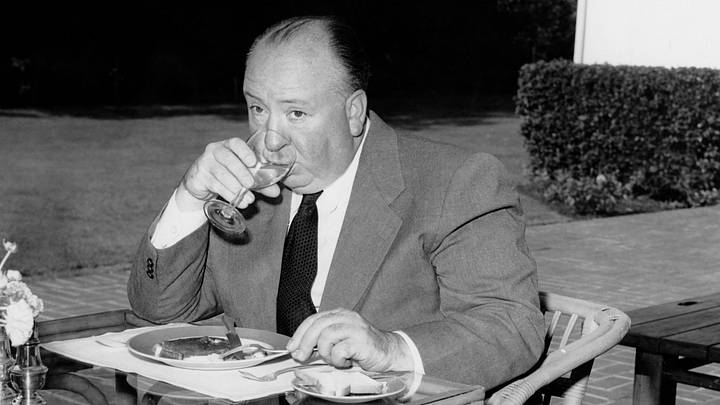
Alfred Hitchcock, renowned master of suspense, had an unexpected affinity for the mimosa, a drink whose inherent characteristics surprisingly mirrored his cinematic approach to tension. Hitchcock believed that true suspense stemmed from allowing the audience into the secret, creating a slow burn rather than a cheap jump scare. The mimosa, with its inviting blend of sweet orange juice and bright champagne, functions similarly, gently easing one in while the inevitable effects of the alcohol subtly build, embodying a master class in the slow burn. While Hitchcock's fondness for the mimosa and its place in his morning routine are well-documented, the question of whether he truly popularized it in mid-20th century America remains a captivating mystery.
The mimosa's origins trace back to Europe, predating Hitchcock's involvement. In 1921, a bartender at London's Buck's Club created the "Buck's Fizz," a concoction consisting of two parts champagne to one part orange juice. Just four years later, in 1925, Frank Meier, a bartender at the illustrious Ritz Paris, refined the drink by diluting it to equal parts sparkling wine and citrus, christening it the "mimosa." For many years, this elegant drink remained an exclusive European luxury, savored primarily by aristocrats, international hotel guests, and even royalty, including Queen Elizabeth II. However, like any groundbreaking concept, it required a visionary to introduce it to a broader American audience.
Despite ample evidence supporting Hitchcock's invention of the "dolly zoom" for his 1958 film Vertigo, his claims regarding the brunch cocktail are far more elusive. While the drink had roots in London and a burgeoning legacy in Hollywood, the supposed scene of Hitchcock's invention played out in San Francisco. Legend suggests that in the 1940s, Hitchcock conceived the mimosa there as a hangover cure in a bar one morning. Yet, Meier had already published the mimosa recipe a full decade earlier. Nevertheless, Hitchcock's public and undeniable obsession with the drink significantly propelled its recognition across the Atlantic. The Oxford Companion to American Food and Drink specifically credits Hitchcock as pivotal in popularizing the cocktail stateside. A famous 1966 interview in the London Express vividly depicted the director "in fine form, drinking mimosas and smoking an eight-inch cigar," further solidifying his association with the beverage.
Hitchcock's embrace of the mimosa irrevocably altered American drinking culture by normalizing the consumption of bubbly before noon. Prior to his endorsement, sparkling wine was largely perceived as a late-night indulgence, reserved for special occasions like New Year's Eve toasts and wedding receptions. By diluting the effervescent wine with fruit juice, Hitchcock transformed day-drinking into not merely an acceptable pastime, but a sophisticated and even cinematic experience, thereby establishing the mimosa as a quintessential morning staple.