Hidden Danger: LED Lights Linked to Diabetes, Obesity, and Dementia Risk
Red light therapy is emerging as a promising drug-free treatment for conditions like sight loss, type 2 diabetes, and spinal injuries, by boosting cellular energy. Conversely, excessive blue light from screens is linked to negative health impacts by depleting this energy. While experts explore various light therapies, some caution against over-extrapolation of current findings.
Emerging research suggests that focused exposure to red light holds significant potential as a drug-free therapeutic approach for a wide range of conditions, from sight loss and type 2 diabetes to paralysis and even dementia. This specific part of the light spectrum is gaining recognition among scientists as a simple and safe intervention for illnesses affecting millions.
The National Institute for Health and Care Excellence (NHS spending watchdog) already endorses red light for treating oral mucositis, a painful side effect of chemotherapy and radiotherapy for head and neck cancer. Studies show that merely 20 to 30 minutes of red light exposure from a small, toothbrush-sized probe, applied two to five times weekly, can effectively reduce inflammation and pain in the gums caused by cancer treatments.
The therapeutic applications of red light extend further. In January, the US Food and Drug Administration (FDA)authorized its use for dry age-related macular degeneration (AMD), which is the primary cause of sight loss in the UK and currently lacks a definitive treatment. This condition progressively destroys the light-sensitive cells of the retina, crucial for central and detailed vision. A trial reported in the journal Retina last year involved patients receiving six series of red light treatments – five minutes per eye, every four months. After 13 months, approximately 55% of treated eyes experienced a notable improvement in vision, gaining at least five letters on a standard optician's chart. A larger study is now underway to validate these promising findings.
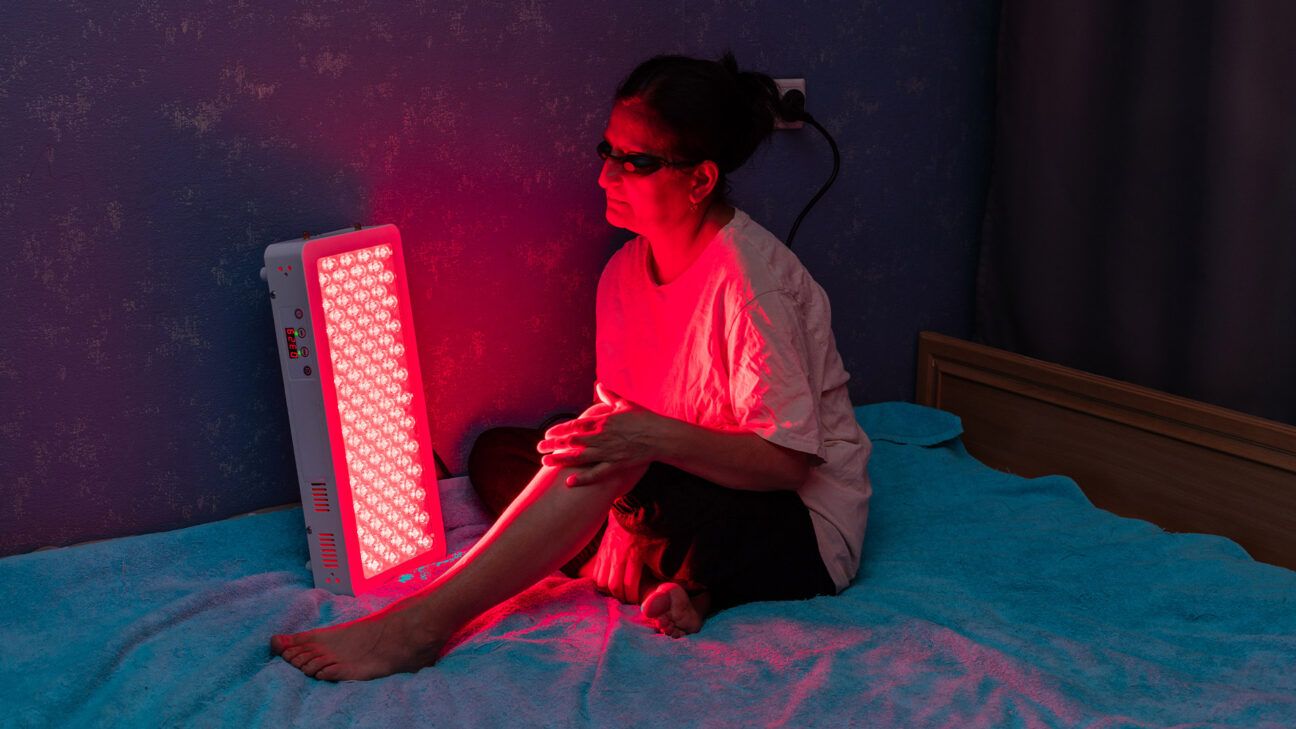
Photo Credit: Healthline
Professor Glen Jeffery, a professor of neuroscience at the University College London Institute of Ophthalmology, has been a key figure in exploring red light's curative potential. His research indicates that staring at a deep red light for three minutes daily can significantly improve age-related declining eyesight. A 2020 study published in the Journal of Gerontology involved 24 healthy volunteers who used a red light torch (670nm wavelength) for three minutes a day for two weeks, with their eyes closed.
Volunteers over 40 showed significant improvements in low-light vision and up to a 20% improvement in color detection. Professor Jefferyexplains, "These red light exposures can recharge the energy system that has declined in the retina cells, rather like recharging a battery. The technology is simple and safe. Our devices cost us only about £12 to make."
Beyond ophthalmic conditions, red light therapy shows promise for metabolic disorders. Professor Jeffery's study, detailed in the Journal of Biophotonics, involved exposing the backs of 15 type 2 diabetes patients to red light for 15 minutes before giving them a sugary drink. Subsequent blood sugar level tests over two hours revealed significantly lower sugar spikes and total sugar levels compared to a control group. "Our mitochondria need blood sugar in order to get the energy to charge their batteries," Professor Jeffery notes. "If we make the mitochondria work harder [by exposing them to red light] they take more blood sugars, which stops the sort of spikes in the bloodstream that can lead to type 2 diabetes."
The mechanism behind red light's benefits, according to experts, lies in its effect on mitochondria – the tiny "battery packs" within every cell responsible for generating energy. Professor Jeffery asserts, "Red light boosts our mitochondria energy," clarifying that chemicals inside mitochondria become energized by specific energy-carrying photons in red light, subsequently increasing cellular energy production. As we age, mitochondrial energy naturally declines, and in conditions like dry AMD, problems often stem from insufficient energy production by mitochondria in retinal cells. Professor Jeffery adds, "Mitochondria are effectively batteries with a charge – and red light increases that charge."
In contrast to red light's therapeutic potential, other forms of light, particularly blue light, are implicated in various health problems. Experts express concern that excessive exposure to light from screens and modern LED lamps, which predominantly emit high-energy blue light, is contributing to a rise in obesity, anxiety, blindness, and certain cancers. Blue light, in excess, can disrupt circadian rhythms, damage the retina, and interfere with melatonin release, the hormone vital for sleep regulation. A study published in Scientific Reports this year indicated that mice exposed to high levels of blue light rapidly gained weight and exhibited increased anxiety.
Furthermore, a 2020 study of 2,000 individuals by the Barcelona Institute for Global Health linked high nocturnal blue light exposure to a 60% higher risk of bowel cancer, possibly due to sleep disruption. Professor Jeffery states, "Blue light depletes it and harms our cells' function," emphasizing, "Modern lighting is undermining public health. LED lights have almost no red light and a lot of blue. Mitochondria don't like it." He contrasts this with old-style incandescent bulbs, which provided a full light spectrum akin to natural sunshine.
Beyond red light, other light therapies are being explored. Scientists at the Technical University of Denmark are utilizing flickering light directed through the eyes to induce beneficial gamma waves in the brains of dementia patients. Prior studies suggest this technique can reduce the brain's production of toxic amyloid plaques associated with the disease and invigorate cells responsible for their destruction.
Early clinical trials indicate that patients with mild to moderate Alzheimer's, receiving 30 minutes of daily light exposure for three months, experienced improvements in speech and memory. While the Alzheimer's Society deems this technique "promising," they caution it is too early for a general recommendation.
Meanwhile, the University of Birmingham is pioneering red-light therapy as an emergency treatment for potentially paralyzing spinal injuries. Lab tests demonstrate that it stimulates mitochondrial energy in damaged nerve cells, promoting regrowth and significant restoration of sensation and movement. Professor Zubair Ahmed, a neuroscience professor at the University of Birmingham and a device developer, explained that a red light device could be rapidly implanted in spinal injury victims. He notes, "In spinal trauma the physical damage causes an energy crisis in the nerve cells. This sets off lots of degeneration in the nerves, which can lead to paralysis. Red light therapy balances that."

Photo Credit: SciTech Daily
However, not all experts are convinced of red light's wide-ranging efficacy. Professor Russell Foster, a professor of circadian neuroscience at the University of Oxford, expressed skepticism, stating, "These studies have major flaws, and too many assumptions being made. Extrapolation from lab mice to humans is deeply problematic as the light sensitivities between mice and humans differ hugely."
For those seeking a simpler way to benefit from red light, Professor Jeffery points to natural sunlight. He advises, "My red light therapies don't provide anything you can't get from sunlight. We need about one hour's sunlight exposure per day to be healthy – the equivalent of a good walk in the park." He also highlights the benefits of green spaces, where plant matter reflects infrared light, suggesting that "it is much better to be in natural environments than in concrete jungles."