Global Trade War Escalates: EU Clashes with US Over China Tariffs and Accusations
The European Union faces mounting trade pressure from the United States, which is urging the bloc to revise its green regulations and address accusations of enabling Chinese tariff evasion. While the EU maintains its regulatory autonomy, tensions are escalating over supply chain directives, carbon border taxes, and concerns about illegal transshipment.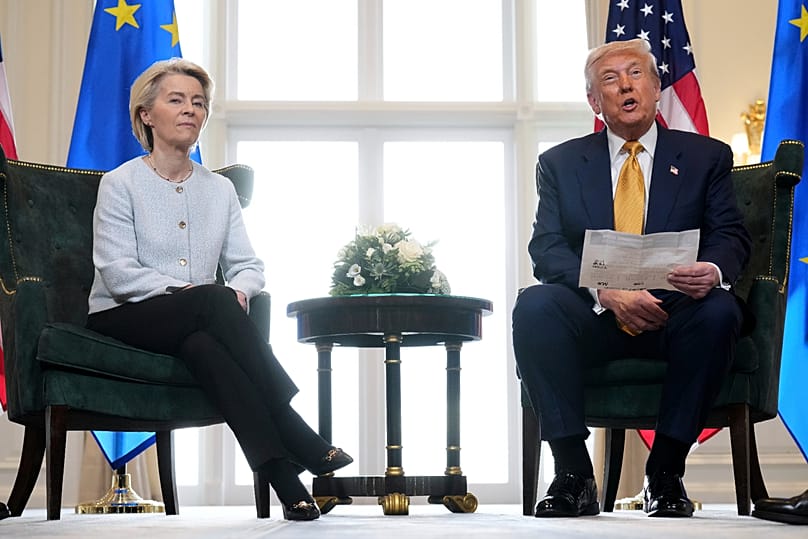
The European Union is facing renewed trade pressure from the United States, as Washington asserts that the bloc is facilitating Chinese evasion of US tariffs and escalates its demands for the EU to modify its prominent green regulations impacting businesses. Andrew Puzder, the US Ambassador to the EU, explicitly urged the bloc to "align" the provisions of two significant new laws concerning environmental and human rights supply chain standards with the existing EU-US trade agreement established last year. Puzder highlighted a US government document outlining extensive "concerns" with these rules, stating that "The United States will take any actions necessary to address unreasonable burdens on US commerce absent a solution that addresses these concerns."
In response to Ambassador Puzder's remarks, European Commission spokesperson Arianna Podesta affirmed that the EU continues to engage in "constructive" discussions with the United States on both tariff and non-tariff matters. However, Podesta firmly stated, "We have been very clear and consistent on the fact that neither our rules framework nor our regulatory autonomy are up for negotiation." The directives in question are the Corporate Sustainability Due Diligence Directive (CSDDD), which mandates large companies to rectify "adverse human rights and environmental impacts" throughout their global supply chains, and the Corporate Sustainability Reporting Directive (CSRD), which requires companies to disclose information on their climate impact, emissions, and mitigation efforts.
The US document specifically criticized these directives, arguing that their "extraterritorial reach and costly and onerous supply chain due diligence obligations will adversely impact the ability of US businesses to compete on a level playing field in the EU market." Despite the EU having already scaled back the scope of both laws—delaying implementation and exempting smaller firms under pressure from businesses both within and outside the bloc—the US document indicated these adjustments were insufficient. Puzder’s comments on the supply chain directives followed his earlier critique of the EU's carbon border tax (CBAM), which he branded as "a tariff in substance, no matter the 'climate policy' label."
Further exacerbating tensions, the EU was cited in a White House report as one of dozens of trading partners posing risks concerning "illegal transshipment" from China. This practice involves routing goods through third countries to circumvent comprehensive levies imposed by President Donald Trump. The report, which also identified Mexico, Canada, and Japan, pledged to employ artificial intelligence to detect such illicit activities in the future. Addressing these accusations, the European Commission spokesperson reiterated that the "EU shares the US objective of tackling customs fraud." Podesta added that Brussels is "engaging" with Washington to fully comprehend the report's "potential implications for the EU," while noting the document's observation that the EU's transshipment risk is "embedded within broad legitimate trade flows." This ongoing dialogue reflects the complex and contentious nature of current transatlantic trade relations.