Ghana's GoldBod $1.7bn Loss: A Political Firestorm Ignites Over Bank of Ghana's Financial Woes
Ghana is embroiled in a heated debate over an alleged US$1.7 billion loss from the Domestic Gold Purchase Programme. While critics link the losses to GoldBod's operations and demand accountability, GoldBod's CEO Sammy Gyamfi challenges these claims, citing IMF reports that attribute the losses to the Bank of Ghana and the program's scaling-up. Parliament's Public Accounts Committee chairperson has called for an investigation into the matter.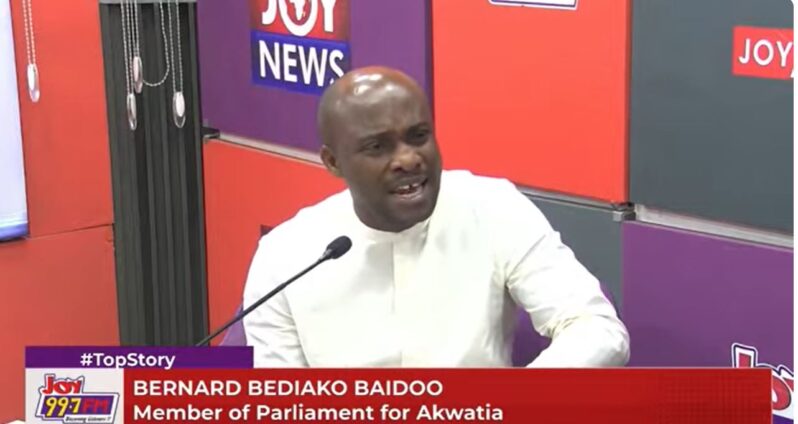
A significant political and financial debate has erupted in Ghana concerning an alleged US$1.7 billion loss associated with the Bank of Ghana’s (BoG) Domestic Gold Purchase Programme (DGPP). This reported loss, equivalent to approximately GH¢22 billion or 1.5% of Ghana’s Gross Domestic Product (GDP), has become a focal point of contention, particularly regarding the role and responsibility of the Ghana Gold Board (GoldBod).
Members of the Minority in Parliament, including Leader Alexander Afenyo-Markin and MP Alexander Akwasi Acquah, have strongly linked the losses to GoldBod's operations. They cite findings from recent International Monetary Fund (IMF) reports, specifically paragraphs 13, 14, and 15, which they argue reinforce concerns about the financial implications of the DGPP. Akwasi Acquah, the Akim Oda MP, challenged GoldBod CEO Sammy Gyamfi to explain how these losses occurred and what preventive measures are being taken, stating that the DGPP, managed by GoldBod, is merely a “change of name” from previous gold purchasing arrangements. Similarly, Akosua Manu, Advisor on Gender and Social Protection to NPP flagbearer Dr. Mahamudu Bawumia, rejected Sammy Gyamfi's challenge to identify a loss in GoldBod's accounts. She argued that the challenge was a “technical sleight of hand” to distract from the DGPP losses, noting that while the losses were recorded on the BoG's balance sheet, the central bank provided financial backing for gold purchases while GoldBod executed the programme. Manu also pointed to IMF's reference to service and assay fees paid to GoldBod as contributing factors, calling Gyamfi's defense “textbook gaslighting.”
In response, Akwatia MP Bernard Bediako Baidoo accused the Minority of shifting the debate from facts to personal attacks. He asserted that the IMF report attributed the referenced loss to the Bank of Ghana, not GoldBod, and challenged the Minority to specify any section of the report that indicated GoldBod had incurred these alleged losses. Mr. Baidoo also criticized suggestions that GoldBod's CEO could face legal consequences, arguing that financial losses do not automatically equate to criminal conduct without established wrongdoing or personal benefit. He maintained that GoldBod’s audited accounts did not show any record of the alleged losses.
GoldBod Chief Executive Officer Sammy Gyamfi has vehemently rejected claims linking the US$1.7 billion losses directly to GoldBod. Speaking at the Government Accountability Series, he challenged Minority Leader Alexander Afenyo-Markin to utilize Parliament’s oversight mechanisms, such as the Public Accounts Committee (PAC), to invite him for an inquiry rather than holding press conferences. Mr. Gyamfi stated his readiness to appear before Parliament at any time to provide evidence and defend GoldBod. He clarified that the IMF reports identified the DGPP as the source of losses, not GoldBod, which was established later to take over key activities of the programme. He pointed to IMF documents, including paragraph 15 on page 27 of Ghana’s Extended Credit Facility (ECF) programme review and paragraph 13 of the Selected Issues report, which discussed the DGPP’s impact on the Bank of Ghana’s financial position.
Mr. Gyamfi detailed that the IMF reported losses of about $400 million in 2024, rising to over $1.7 billion in 2025 due to a “significant scaling-up” of the DGPP. He emphasized that the IMF specifically linked the 2025 losses to this expansion and identified service fees, discounts, and crucially, exchange-rate valuation effects as contributing factors. He noted that the exchange-rate effect was the most significant and that the IMF also qualified that these were “accounting losses” partly reflecting “valuation effects rather than actual economic costs.” The GoldBod CEO further highlighted a July 2026 memorandum of understanding formalizing the transfer of DGPP activities from the central bank to GoldBod, aimed at eliminating related quasi-fiscal risks for the BoG, underscoring that GoldBod was taking over a pre-existing programme. He also mentioned that an external audit of the DGPP from its inception in 2021 is expected in 2026, which would provide an independent assessment. Mr. Gyamfi concluded by urging for public discussions to be based on the actual wording of IMF reports, stressing that the IMF has not stated that GoldBod is responsible for causing the Bank of Ghana to lose $1.7 billion.
Meanwhile, the Chairperson of Parliament’s Public Accounts Committee, Abena Osei-Asare, has stated that reports suggesting GoldBod recorded such losses warrant a thorough investigation to establish how they occurred and whether public funds were adequately protected.
In a separate development, Lihong Shen, Security Advisor and Representative of the United Nations Department of Safety and Security (UNDSS), paid a courtesy call on GoldBod CEO Sammy Gyamfi. The visit facilitated discussions on security, safety, and personnel protection within GoldBod’s operations, aiming to strengthen collaboration between GoldBod and UN security structures.