Ghana's Economic Miracle: Finance Minister Declares Recovery as IMF Era Ends!
Ghana's Finance Minister Cassiel Ato Forson announced the nation will no longer need IMF financial bailouts, marking a dramatic economic turnaround under President Mahama's administration. The country has transitioned from crisis to stability, achieving significant fiscal improvements and setting a new course for reform-focused engagement with the IMF and future growth.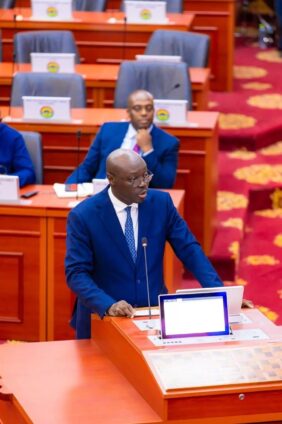
The Finance Minister of Ghana, Cassiel Ato Forson, has emphatically declared that Ghana will not require another International Monetary Fund (IMF) financial bailout "in the foreseeable future." This announcement, made in Parliament on Thursday, May 28, 2026, marks a pivotal moment, signaling Ghana's transition from economic dependence to a position of partnership, as the country has achieved a dramatic turnaround in its fortunes. Dr. Forson articulated that Ghana has moved from a state of crisis management to stability, from dependence on financial aid to partnership in reform, and from the "intensive-care unit (ICU) to the wellness center." This signifies the successful conclusion of the final review of the current IMF financial bailout programme, pending approval by the IMF Executive Board.
Dr. Forson recounted the severe economic crisis Ghana faced in 2022, attributing it to the previous administration's gross mismanagement, which led to fiscal, balance of payments, and debt crises. The then-government turned to the IMF for a bailout on July 1, 2022, a decision President John Dramani Mahama acknowledged as necessary but belated. The crisis was profound, marked by intense pressure on the cedi, inflation rising to painful levels (exceeding 50 percent), sharp deterioration of investor confidence, strained external reserves, and a loss of access to the international capital market. Credit rating agencies repeatedly downgraded Ghana’s sovereign rating to unprecedented levels, culminating in Eurobond spreads widening to an all-time high of 3400 basis points by October 2022. This further deepened the crisis, impacting institutions like COCOBOD and domestic commercial banks. In December 2022, the Domestic Debt Exchange Programme (DDEP) was introduced, imposing significant haircuts on various bondholders, including the Bank of Ghana, commercial banks, pension funds, and individual bondholders. Ghana also formally requested debt treatment under the G20 Common Framework and defaulted on external commercial debt obligations. Ordinary Ghanaians bore the heaviest burden, experiencing rapid depreciation of the cedi, erosion of incomes and savings, punitive interest rates, and the imposition of "nuisance taxes" such as the E-Levy, Betting Tax, COVID-19 Levy, and Emissions Tax, leading to job losses, business distress, and rising poverty. By December 2024, the previous administration was reportedly undermining its own IMF program by missing targets and commitments. Dr. Forson stressed that these "painful experiences" must serve as a lesson, affirming a collective resolve that Ghana must never return to such a path of fiscal indiscipline.
Upon assuming office, President Mahama’s administration moved decisively to "reset the Ghanaian economy" and bring the IMF-supported programme back on track. The government recalibrated the IMF programme to ensure "fairer burden-sharing and deeper structural reform." A comprehensive series of fiscal, institutional, and structural reforms were implemented. Key interventions included the introduction of Public Financial Management (PFM) commitment authorization controls to curb excessive spending, an audit of government arrears to eliminate recycled payment claims and overpayments, and amendments to the PFM Act to institutionalize a 1.5 percent primary surplus target and a 45 percent debt-to-GDP ceiling by 2034. The government also operationalized the Sinking Fund with dedicated cedi and dollar buffers for future debt repayments, established the Office of Value for Money to improve expenditure efficiency, and created an Independent Fiscal Council to monitor compliance with fiscal rules. Further measures included the introduction of GOLDBOD to support foreign exchange stability and reserve accumulation, and the removal of several taxes deemed "nuisance taxes," including the E-Levy, Betting Tax, Emissions Levy, and VAT on motor insurance, to support private sector activity. Aggressive expenditure rationalization was undertaken, reducing the number of ministers from 123 (later 88) to 60, and ministries from 30 to 23. In the energy sector, the government concluded renegotiations with Independent Power Producers, generating savings of over US$250 million and clearing more than US$1 billion in legacy arrears.
These reforms have yielded "clear and measurable results," according to Dr. Forson. Ghana’s real GDP growth reached 6.0 percent in 2025, marking the highest post-pandemic expansion, while non-oil GDP growth climbed to 7.6 percent, the strongest performance in 14 years. For the first time, Ghana’s economy crossed the US$100 billion threshold in 2025, making it the eighth-largest economy in Africa, with per capita income rising to US$3,385. Fiscal performance also improved dramatically, with the primary balance recording a surplus of 2.5 percent of GDP in 2025. The public debt-to-GDP ratio declined sharply from 61.8 percent in 2024 to 44.7 percent by the end of 2025, achieving the 45 percent target well ahead of both the IMF programme timeline and the statutory target for 2034. Debt sustainability indicators showed major improvement, as debt service-to-domestic revenue fell from 55.7 percent in 2022 to 28.8 percent in 2025, even with the resumption of full Eurobond debt obligations. Ghana moved from a "high risk" to a "moderate risk" of debt distress under the Debt Sustainability Analysis framework. Inflation significantly declined from 23.8 percent in December 2024 to 3.4 percent as of April 2026. Treasury bill rates and bond yields fell sharply, with the 91-day Treasury bill dropping from 28.4 percent in January 2025 to 4.8 percent by April 2026, and the monetary policy rate reduced from 27 percent to 14 percent over the same period. Ghana’s external sector performance also strengthened, recording a current account surplus of 8.3 percent of GDP in 2025, while the cedi appreciated by 40.7 percent against the US dollar. Dr. Forson declared, "fiscal prudence and discipline always deliver results," emphasizing that macroeconomic stability is the foundation for jobs, incomes, investment, and long-term prosperity.
Looking ahead, Ghana’s engagement with the International Monetary Fund will transition to a reform-focused, non-financing Policy Coordination Instrument (PCI). The PCI is designed for countries that do not require IMF financing but seek a credible framework for reform, regular policy reviews, and a stronger signal to investors and development partners. This marks a crucial shift for Ghana—from seeking financial bailout to engaging as a credible reform partner—while benefiting from policy discipline, external validation, and strengthened investor confidence. The PCI will allow Ghana to leverage the IMF’s regular policy assessments and expertise to certify the credibility of its stewardship and further strengthen its credit rating. Furthermore, President Mahama’s administration has designed a new economic programme, "The New Economy," to be unveiled in the 2027 Budget. This programme aims to move Ghana from stabilization to transformation, with a clear focus on sustainable jobs, higher productivity, greater resilience, and broad-based prosperity. President Mahama expressed deep gratitude to Ghanaians for their sacrifices, patience, and steadfast forbearance, pledging that the government will not be complacent but will continue the hard work of building "the Ghana We Want."