From Courtroom to Crisis: Nnamdi Kanu, IPOB, and Nigeria’s Fragile Unity
“Nnamdi Kanu’s health crisis and ongoing trial reignite debates about IPOB, Biafra, and Nigeria’s fragile unity. Can the nation balance justice, democracy, and ethnic inclusion?”
Introduction: A Verdict Beyond the Courtroom
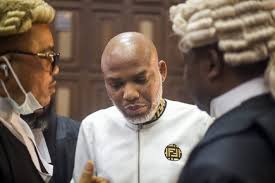
Nnamdi Kanu is not just a name — he has become a symbol, one that carries both hope and controversy. To millions of his followers, he embodies the dream of liberation; to the Nigerian government, he represents a threat capable of destabilizing the nation. Can one man truly embody both hope and terrorism at the same time? That paradox lies at the heart of his trial.
For years, Kanu has been detained on charges of terrorism linked to his role as leader of the Indigenous People of Biafra (IPOB). Yet, recent whispers, not just speculation, but serious concerns — about his deteriorating health have added new layers to an already complex narrative.
The court’s ruling to press ahead with his case has reopened old wounds about Biafra and Nigeria’s fragile unity. IPOB agitators are particularly alarmed about Kanu’s condition, demanding assurances that their leader is being treated fairly and humanely even in custody. This makes the matter more than a legal battle, it is a national fault line that could either be carefully managed or dangerously inflamed.
As pressure mounts, one question looms: is justice genuinely being served, or has Kanu’s vulnerable body become yet another political battleground — one that risks being manipulated in the struggle over Nigeria’s.
Who Is Nnamdi Kanu? Symbol, Agitator or Revolutionary?
Nnamdi Kanu, born 25 September 1967, is a political activist known for advocating the independence of Biafra from Nigeria. He is the leader of the Indigenous People of Biafra (IPOB), which he founded in 2012 with the aim of restoring the defunct Republic of Biafra— an entity that once existed in Nigeria’s Eastern Region and which also led to the Nigerian Civil War between 1967 and 1970 under the leadership of Lieutenant Colonel Chukwuemeka “Emeka” Odumegwu Ojukwu.
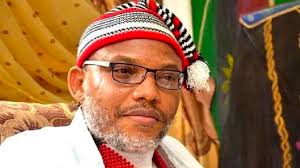
Kanu has since become a tremendous catalyst in the push for an independent Biafra, gaining influence across the board since the inception of the group. His role has sparked a tug-of-war between heroism and threat, depending on perspective. To many of his supporters, he represents hope; but to the Nigerian government, he poses a grave threat to national sovereignty.
Kanu was first arrested on 14 October 2015 by agents of the Federal Government of Nigeria, the State Security Service (SSS), on an 11-count charge bordering on terrorism, treasonable felony, managing an unlawful society, publication of defamatory material, illegal possession of firearms, and improper importation of goods, among others. He later jumped bail in 2017 and was rearrested in 2021, when he was brought back to Nigeria.
To some, Kanu may be an agitator and revolutionary, but to loyalists of IPOB, he remains a symbol of hope, though one that simultaneously threatens the sovereignty of the Nigerian state. His movement has stirred uproar and protests, from the killing of pro-Biafra demonstrators to the infamous sit-at-home orders in Nigeria’s southeast, which dealt heavy blows to the region’s economy.
Amid all this, fresh claims about his deteriorating health have surfaced, raising concerns about whether his condition requires urgent medical intervention. A recent court ruling has called for verification of his health status. Yet, the question remains: is this a matter of genuine humanitarian concern, or a legal strategy quietly unfolding behind the courtroom walls?
Ethnic Fault Lines: Igbo Grievances and Nigeria’s Fragile Unity
While the war may have ended decades ago, the scars still remain—felt deeply by many, especially those who fought hard for the independence of the Republic of Biafra. Over the years, claims of political exclusion and cultural imbalance within the Nigerian government have continued to resurface. For instance, since the return to democracy in the Fourth Republic, Nigeria has yet to produce a president from the eastern region. Is this absence merely a coincidence, or does it reflect a deliberate agenda by those in the corridors of power? The truth remains uncertain, but the perception fuels quiet resentment within the Igbo community, even if it is not always openly expressed.
The recent concerns about Nnamdi Kanu’s health and the ongoing trial he faces could further aggravate these underlying tensions. If not carefully and transparently managed, the situation risks igniting deeper grievances among his supporters—threatening once again to test Nigeria’s fragile unity.
Beyond the immediate politics of Kanu’s trial lies a broader national dilemma: how to genuinely integrate historically marginalized groups into Nigeria’s governance structure. The unresolved wounds of the civil war, coupled with decades of perceived exclusion, have left the Igbo people questioning their place in the Nigerian project. Unless addressed through meaningful political reforms, equitable representation, and sincere dialogue, these grievances could continue to fester, shaping not just IPOB’s rhetoric but the attitudes of future generations toward the Nigerian state.
Democracy on Trial: Dissent, Integrity, and the Nigerian State
The real question here is this: can Nigeria manage secessionist voices within a democratic framework? With a growing population, vast cultural diversity, and deep-rooted tribal differences, can the unity of the country be strengthened without further breakdown?
What is the way forward for the government of Nigeria if it truly wants to preserve national cohesion? Should dissenting voices be engaged through dialogue and political reforms, or should they be silenced in the name of preserving stability? These questions continue to resurface, especially as critics argue that the Nigerian state often struggles to strike a balance between safeguarding democracy and maintaining control.
There have been precedents across the world of democracies grappling with internal dissent. Spain has wrestled with Catalonia’s independence movement, while the United Kingdom has faced long-standing questions of autonomy in Northern Ireland. These cases highlight the fact that dissent does not necessarily mean disintegration, if managed with wisdom, transparency, and a willingness to negotiate, it can instead strengthen democratic institutions.
For Nigeria, however, the stakes are higher. The memory of the civil war still lingers, and the treatment of secessionist voices like Nnamdi Kanu’s sends a strong message about how dissent will be handled in the years to come. Will it be with integrity, dialogue, and reform, or with suppression and force? The choice may well define the future of Nigeria’s fragile democracy.
Political Fallout: Future Elections and the Question of Inclusion

Elections in Nigeria may have been largely successful in recent years—though not without discrepancies—but one fact cannot be denied: the Igbo youth, whose ethnic group is among the three largest in the country, play an increasingly important role in shaping political outcomes. Their voting strength, activism, and growing dissatisfaction with the status quo mean their voices cannot be ignored in the broader Nigerian society.
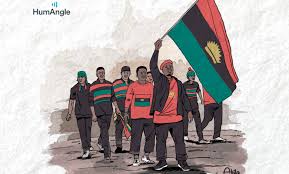
Against this backdrop, the recent news about Nnamdi Kanu’s deteriorating health could spark strong reactions within the IPOB community and the Igbo people at large. For many, his condition has become symbolic not only of his personal plight but of the perceived marginalization of the region. If left unaddressed, these sentiments could influence voter behavior and deepen mistrust in federal institutions.
At the same time, how other regions of the nation perceive these developments is another perspective the government must carefully consider. While some may view Kanu’s trial and health concerns strictly as a legal matter, others interpret it as a sign of systemic imbalance and selective justice. For stakeholders in government, this highlights the delicate balancing act required: ensuring national unity without alienating a key demographic whose political participation is vital for Nigeria’s future.
Conclusion: Crisis, Compassion, and Choice
The news and rumors surrounding Nnamdi Kanu’s health are not merely another episode in Nigeria’s political theater, they carry real consequences, with real lives at stake. If his condition proves to be more serious than the government acknowledges, the issue could escalate beyond the courtroom into the streets, fueling unrest and deepening the sense of alienation among his supporters.
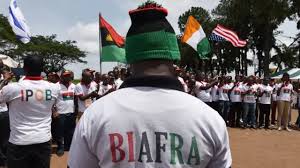
Nigeria now faces a defining choice: will it continue down the path of confrontation, detaining a weakened and controversial figure at all costs, or will it open space for dialogue rooted in accountability and compassion? The former may maintain short-term control, but the latter offers a path toward long-term stability.
Ultimately, this is not just about the fate of one man. It is a test of whether Nigeria can confront its deepest divisions with justice, humanity, and foresight or whether it will allow old wounds to reopen, threatening the fragile unity of the nation.