French World Cup Team 'Without Frenchmen,' Says Ex-Spanish PM Rajoy
Former Spanish Prime Minister Mariano Rajoy has sparked widespread controversy by claiming the French football team plays 'without Frenchmen' in his World Cup column. These remarks, interpreted as references to immigrant backgrounds, have drawn condemnation from politicians in both Spain and France. The incident reignites a long-standing debate about national identity and immigration in French football, coinciding with a crucial Spain-France World Cup semifinal.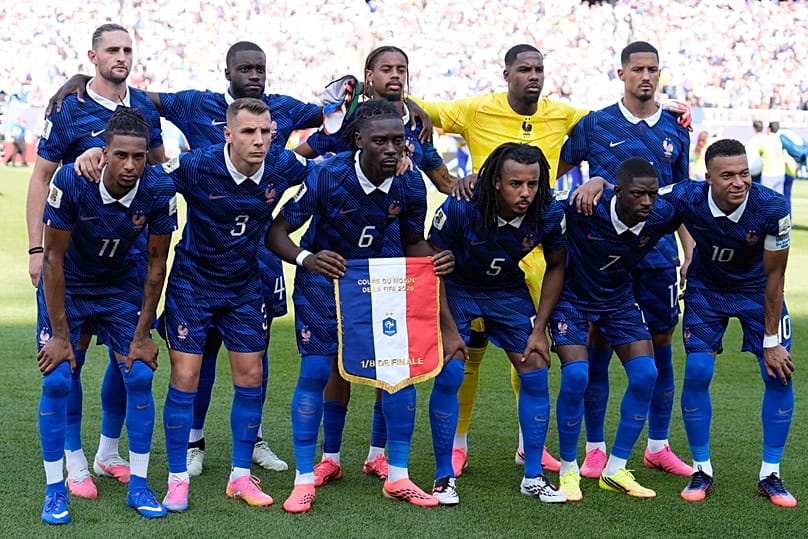
Former Spanish Prime Minister Mariano Rajoy has ignited a significant controversy with his recent remarks suggesting that France's national football team plays 'without Frenchmen'. The comment was made in his latest World Cup column for El Debate, where he reviews Spain's matches. In his column, titled 'Hoy llegó el desquite' (today was the day for revenge), Rajoy discussed Spain's 2-1 quarterfinal victory over Belgium and previewed La Roja's upcoming semifinal clash against Didier Deschamps' France side. It was within this context that the former conservative prime minister, who led the Spanish government from 2011 to 2018, made his contentious statement.
After acknowledging France's two World Cup titles and their undefeated record in the current tournament, Rajoy praised their 'top-tier squad' before adding the controversial qualifier: 'but without Frenchmen'. This comment was widely interpreted as an apparent reference to the fact that many players in the French squad either have immigrant backgrounds or originate from former French colonies. However, a closer look at the squad reveals that out of the 26 players called up by Deschamps, only three were born outside France: Michael Olise, born in London to a British-Nigerian father and French-Algerian mother; Marcus Thuram, born in Parma while his father, French football legend Lilian Thuram, played in Italy; and Brice Samba, who was born in the Democratic Republic of the Congo.
Rajoy's remarks have drawn widespread condemnation from political figures in both Spain and France. Speaking on Spanish TV, ruling left-wing PSOE Party MEP José Cepeda labeled Rajoy's comments 'racist and xenophobic', describing it as 'shameful'. In France, the reactions on social media were swift and strong. France's Minister Delegate for Equality between Women and Men and for the Fight against Discriminations, Aurore Bergé, posted on X that 'the repeated racist outbursts are intolerable. It's time they stop and that sports return to being sports: a space where we are judged on our talent and no other criterion.' Fabien Roussel, the national secretary of the French Communist Party, called for Rajoy to be 'condemned' on X, drawing parallels to recent comments by a Paraguayan politician about French star striker Kylian Mbappé, which led to a legal investigation in Paris for 'aggravated public insult'. Roussel asserted that such individuals 'just can't help but spout vile racism in a bid to rile up our wonderful French team'. The Élysée did not immediately comment on the matter.
The controversy surrounding Rajoy's comments is not new, fitting into a long-running discussion about French football and immigration. This debate dates back to France's first World Cup triumph in 1998, when a diverse team featuring players like Zinedine Zidane, Lilian Thuram, Marcel Desailly, and Patrick Vieira, many of whom had immigrant backgrounds or relatives from former French colonies, was celebrated as a potent symbol of French multiculturalism. Yet, even then, figures like Jean-Marie Le Pen's National Front argued that the team did not truly represent France and that it was 'artificial' to include foreign-born players and present them as the French national team. These arguments, widely condemned as racist at the time, have repeatedly resurfaced in French politics, often intertwined with broader debates on immigration and national identity.
The timing of this latest flashpoint is particularly notable, as Spanish Prime Minister Pedro Sánchez is scheduled to visit Paris on Tuesday for the annual 14 July Bastille Day holiday, coincidentally the same day France and Spain are set to compete in their World Cup semifinal in Dallas. Rajoy's comments underscore the persistent tension between national identity, immigration, and sports, especially within the highly visible context of international football tournaments.