Eye in the Sky: Which African Countries Own Their Own Satellites?
Which African Countries Are in Space, and Why?
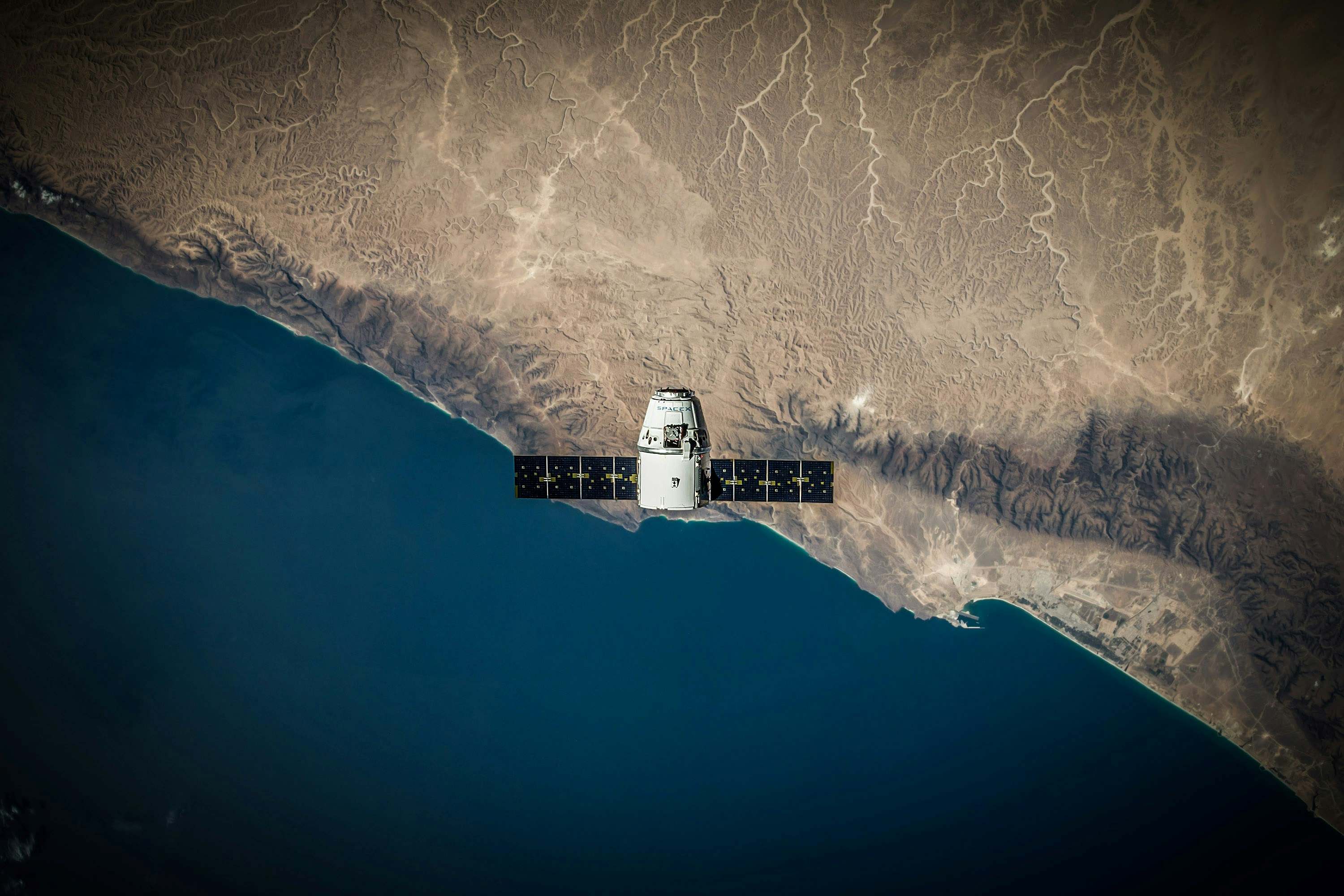
Africa's Quiet Race to Space
In a world where satellites shape everything from global communications to food security, it might come as a surprise that Africa, often overlooked in technological discourse, is quietly expanding its presence far above the clouds.
The continent, once peripheral in the conversation about space exploration, is now looking up.As of 2025, 23 African nations are either operating or preparing to launch satellites.
More than60 African satellites currently orbit the Earth, and 125 more are expected by the end of next year. While the numbers might seem modest compared to space giants like the United States, China, or even India, they tell a story of ambition, urgency, and strategic transformation.
Satellites with a Social Purpose
Unlike some space programs driven by militarism, many African satellite missions are deeply grounded in local needs.
Satellites are helping farmers predict rainfall, governments monitor deforestation, and humanitarian agencies assess the damage after floods. They are helping connect rural communities to the internet and enabling scientists to monitor climate change with unprecedented precision.
It’s not that African nations are trying to "catch up" with the traditional space powers. They are playing a different game—one that is slower, more purpose-driven, and shaped by constraint as much as ambition.
Latest Tech News
Decode Africa's Digital Transformation
From Startups to Fintech Hubs - We Cover It All.
The Four Pillars of African Satellite Power
At the forefront are four countries that together shape Africa’s current satellite narrative: South Africa, Egypt, Nigeria, and Algeria. Between them, they account for the lion’s share of the continent’s operational satellites, and each carries a distinct vision for why space matters.
South Africa and Egypt are tied at the top, each operating thirteen satellites. But beneath the symmetry lies divergence in intent.

The South African National Space Agency (SANSA)has become a key actor in harnessing space for both national development and regional collaboration. It has positioned itself as the continent’s science and climate sentinel.
Its satellites support agriculture, monitor weather patterns, and assist in managing natural resources. Egypt, on the other hand, has leaned into surveillance, remote sensing, and strategic communications.
The EgyptSat series, run by the National Authority for Remote Sensing and Space Sciences (NARSS), is emblematic of a broader Middle Eastern and North African push to develop indigenous space capabilities, often with defense and national security in mind.
How About Nigeria and Algeria?
Then comes Nigeria, with seven satellites in orbit. Its satellite program, overseen by the Nigerian Space Research and Development Agency (NASRDA), embodies the multifaceted role of space in a country juggling environmental challenges, a vast population, and a tech-savvy youth. Its satellites aid everything from environmental monitoring to disaster response and education.
Algeria, with six satellites, has quietly built a system focused on telecommunications and national security. Its space program, run by the Algerian Space Agency (ASAL)—has been remarkably pragmatic, often developed in collaboration with partners from China and Europe.
Latest Tech News
Decode Africa's Digital Transformation
From Startups to Fintech Hubs - We Cover It All.
Emerging Players, Small Satellites, Big Ideas
Beyond these dominant four, a constellation of other African countries is joining the club.
Morocco operates multiple satellites, including its Mohammed VI-A and B spacecraft, with a strong focus on Earth observation and national security.
Kenya, in partnership with Bulgaria’s EnduroSat, launched Taifa-1, its first operational Earth observation satellite.
Rwanda, never shy about branding itself as a tech-forward nation, operates two satellites: RwaSat-1 and Icyerekezo. One is used for environmental monitoring, the other for bringing internet access to remote schools.
Together, these nations are transforming the image of Africa in space, not as a passive recipient of satellite services, but as an increasingly autonomous actor, operating its own hardware in orbit.
What's Next: The Satellites of Tomorrow

Image Credit: Unsplash
The next wave is even more telling. Countries like Botswana are preparing for their first launches. BotSat-1, a hyperspectral imaging satellite, is designed to monitor agricultural output and mining activity—critical sectors in Botswana’s economy.
Latest Tech News
Decode Africa's Digital Transformation
From Startups to Fintech Hubs - We Cover It All.
In all, more than 125 satellites are expected from African countries by 2026. It’s a surge that underscores not just technical ambition, but the urgency of addressing 21st-century challenges from the vantage point of space.
Africa’s growing satellite ownership mirrors broader economic trends. In 2021, the continent’s space economy was valued at $19.49 billion. By 2026, it is expected to hit $22.64 billion, a growth of over 16 percent. These are not speculative numbers. They reflect tangible investments in national space agencies, university partnerships, private-sector players, and international collaborations.
Ownership Versus Access
There is a subtle but crucial distinction between owning satellites and accessing satellite services. Africa has access to satellite internet providers like Starlink, which now operates in many parts of the continent.
But while Starlink brings bandwidth, it does not bring sovereignty. Its satellites are not African, nor do they answer to African regulators or development agendas.
Ownership, on the other hand, means more than just hardware. It means the ability to shape policies, control data, prioritize missions, and build domestic talent in science and engineering. It’s a long game, and one that African governments seem increasingly willing to play.
A Continent Looks Up

Image Credit: Unsplash
The story of Africa in space is not a story of rivalry. It’s a story of necessity. Climate change, food insecurity, resource management, urbanization—these are not abstract problems. They are pressing, daily realities. And space technology, for all its costs and complexities, offers tools to address them.
Latest Tech News
Decode Africa's Digital Transformation
From Startups to Fintech Hubs - We Cover It All.
There is no space race on the continent in the Cold War sense. Instead, there is something quieter, more deliberate. A continental awakening to the fact that what happens up there may just shape everything down here.
In the shadow of mega constellations and Mars missions, Africa’s satellite story can be easy to miss.