Europe Fortifies: EU Rolls Out Landmark €150 Billion Defense Loan Amidst Global Tensions
Europe is significantly enhancing its defence capabilities and tightening sanctions against Russia, as highlighted by European Commission President Ursula von der Leyen's recent tour. Central to this strategy is the €150 billion SAFE loan scheme, designed to facilitate joint procurement of European-made military equipment among member states, with first funds expected in early next year.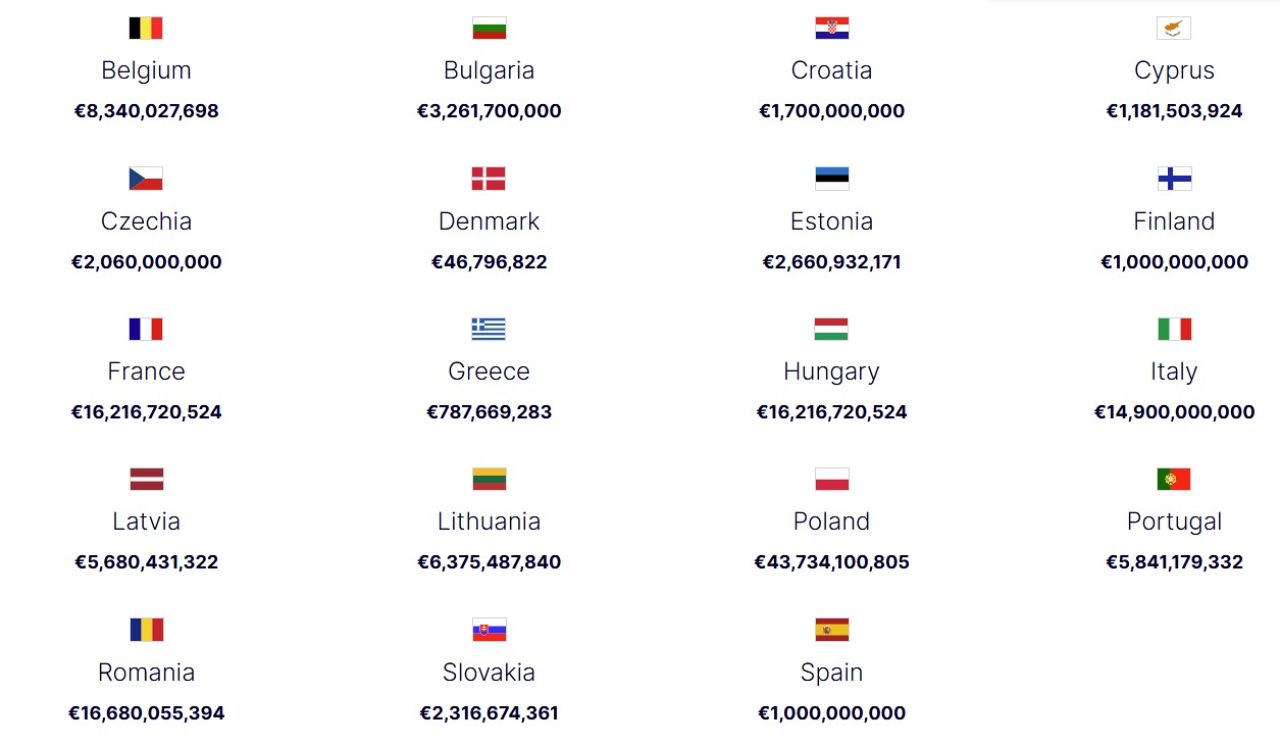
European leaders are emphasizing a critical need to bolster defence spending and tighten sanctions against Russia, a sentiment strongly articulated by European Commission President Ursula von der Leyen during her recent tour of European states bordering Russia or Belarus. Speaking in Estonia alongside Prime Minister Kristen Michal, von der Leyen underscored the goal of significantly closing identified defence gaps by 2030, with a particular focus on strengthening Europe's defence capabilities and making the Eastern flank safer. She praised Estonia, already a top NATO defence spender relative to its GDP, for its rapid and strategic investments, stating, "We are rapidly investing more, we are investing better, and we are investing European." Prime Minister Michal echoed this urgency, asserting, "We have no illusions. Russia can be stopped only by force, only by united force." Discussions also focused on intensifying sanctions against Russia, particularly targeting its 'shadow fleet', and determining the path forward for Russia's frozen assets.
A key instrument in this renewed defence strategy is the European Commission's €150 billion Security Action for Europe (SAFE) loan scheme. Estonia itself plans to borrow €3.6 billion through this mechanism to fund its defence expenditures. The SAFE initiative is designed to allow member states to jointly procure European-made military equipment, aiming to boost the acquisition of priority defence products such as ammunition, missiles, artillery systems, drones, anti-drone systems, air and missile defence systems, critical infrastructure protection, space asset protection, cyber, AI, and electronic warfare capabilities.
The Commission has adopted tentative allocations for the SAFE loans for the 19 member states that requested access to the program, marking a significant step forward for Europe's defence readiness. Commissioner for Defence and Space, Andrius Kubilius, highlighted the urgency of the situation, stating, "We have no time for the luxury of incremental improvement." Requests from just five member states constitute more than two-thirds of the total available assistance. Poland is set to receive the largest share at €43.7 billion, followed by Romania with €16.7 billion, and France and Hungary each receiving €16.2 billion, with Italy securing €14.9 billion. Member states have until November 30 to submit detailed national investment plans for assessment by the Commission and approval by the European Council, with loan agreements expected to be signed and payments to follow immediately in the first quarter of next year.
Strict eligibility criteria apply to the SAFE funds, particularly regarding the origin of equipment. Products must be European-made, meaning no more than 35% of component costs can originate from outside the EU, EEA-EFTA, or Ukraine. For highly sensitive equipment, such as advanced drones and air and missile defence systems, even stricter conditions are in place: European manufacturers must possess design authority, ensuring they can modify the equipment and prevent its use from being blocked by non-EU entities. While some member states, like Germany, did not request SAFE funds directly, Kubilius noted that they might still utilize the mechanism to secure better prices for defence procurement. The scheme also offers advantageous rates for member states with less favorable credit ratings compared to the Commission's.
The SAFE initiative also allows for increased participation from third countries that maintain a Security and Defence Partnership with the EU, provided they establish a second bilateral agreement with the bloc. Both Canada and the UK have expressed intentions to swiftly finalize such deals, with EU ambassadors poised to discuss the negotiation framework soon. Looking ahead, the European Commission is exploring additional funding mechanisms for defence, which are anticipated to be outlined in a comprehensive "Roadmap to Readiness 2030" presented to member states in October, further cementing Europe's commitment to a robust and unified defence posture.