EU Leaders Clash Over Ukraine Veto, Geopolitics Dominate Enlargement Summit
The European Union's enlargement has become a geopolitical necessity amid global instability, according to leaders at a recent Euronews summit. While there's a strong push for expansion to create a safer, stronger Europe, the process is plagued by frustrations over national vetoes and debates about the nature of future membership. Candidate countries are also pushing back against perceived unfair criticism, highlighting the complex path to a unified Europe.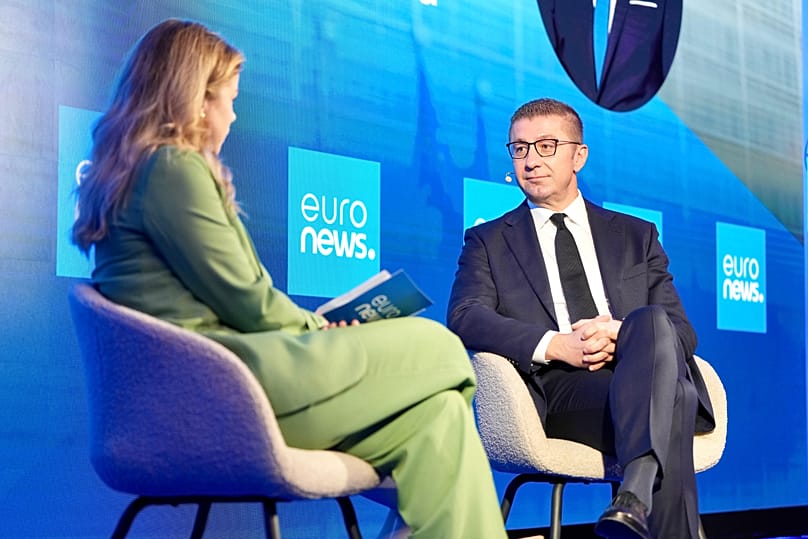
The European Union enlargement process has re-emerged as a defining strategic question for the bloc, driven by a shifting geopolitical landscape and rising global instability. A high-level Euronews summit brought together EU officials and leaders from candidate countries, where the message was clear: expanding the Union is no longer a matter of choice, but of necessity. However, this unique gathering also highlighted significant frustrations on both sides, particularly regarding the use of national vetoes by member states.
Leaders present at the summit unanimously agreed that enlargement is a geopolitical imperative. European Commission Vice-President and European Council President António Costa emphasized the urgency, stating that the EU can no longer delay integrating new members. "The current geopolitical context makes this priority all the more urgent and necessary for the European Union," Costa explained, adding that "enlarging is the best investment we can make today for our future" to ensure a safer, stronger, and more peaceful Europe. Moldovan President Maia Sandu underscored the vulnerability of countries like Moldova to interference from Moscow, warning that failing to support democratic nations leaves them open to being "used by Russia against Ukraine and the EU countries." Montenegro’s Deputy Prime Minister Filip Ivanović echoed this, calling enlargement "the best policy the EU ever had" and a means to transform the EU into a formidable geopolitical player. Ukrainian President Volodymyr Zelenskyy reinforced this sentiment, describing accession as a crucial "security guarantee" against Russia's neo-imperialism and a commitment to shared values of "life, freedom, democracy and humanity." Albanian Prime Minister Edi Rama observed that it took "a military aggression on European soil to wake Brussels up," acknowledging a new momentum for enlargement.
A primary source of frustration for candidate countries is the use of national vetoes by individual EU member states, which can stall the accession process. North Macedonia's Prime Minister Hristijan Mickoski described this practice as a form of "bullying." His country's path to EU membership has been one of the most protracted, blocked by Bulgaria over historical and linguistic issues. Mickoski questioned why an aspiring member should remain silent when "somebody dares to bully someone else who wants to join the club," warning that such tactics would recur because they are effective. Enlargement Commissioner Marta Kos also criticized the use of vetoes as "not fair," specifically referencing Hungary's actions regarding Ukraine's accession. Despite having given a green light to Ukraine's candidate status and the start of negotiations, Hungary has subsequently blocked further progress. President Zelenskyy directly condemned Hungary's veto as "specific support" for Vladimir Putin, asserting that blocking Ukraine in the EU aids Russia. This deadlock has also caused "collateral paralysis" for other candidate countries like Moldova. Commissioner Kos suggested a workaround: the Commission and aspiring member states could continue technical work behind the scenes, ensuring that negotiation chapters are ready for rapid closure once political backing from member states is secured.
Candidate countries have firmly rejected proposals for a "probation period" for future EU members, during which they might not possess full veto rights. Ukrainian President Volodymyr Zelenskyy stated that such an approach would contradict the fundamental principles of equality and unity upon which the EU was founded, insisting that "if we speak about EU membership, it has to be fully pledged. You cannot be semi- or demi-member of the EU." Montenegro’s Ivanović similarly found the idea of accession without full rights "hardly acceptable," given his country's 15-year "trial period." Commissioner Kos personally voiced strict opposition to such proposals. Instead of partial membership, the Commission's enlargement tsar suggested that the bloc should make better use of accession treaties to define "transitional periods," citing Poland's accession treaty regarding agricultural land as an example. These transitional periods could facilitate full integration and strengthen the EU.
Some leaders from candidate countries pushed back against what they perceived as overly harsh or one-sided criticism in the European Commission’s latest Enlargement Package. Ukrainian President Volodymyr Zelenskyy took issue with reports flagging "recent negative trends" concerning anti-corruption efforts and civil society, emphasizing that Ukraine has implemented "the widest, the broadest anti-corruption infrastructure in Europe" even while fighting a full-scale war. Albanian Prime Minister Edi Rama similarly rejected "lectures" from anyone on the fight against corruption, asserting his country’s progress in tackling drug traffickers and organized crime. Serbian President Aleksandar Vučić dismissed criticism of political polarization in his country, arguing it is a global trend exacerbated by social networks and an "evidence of democracy." Vučić also faced scrutiny for Serbia's low alignment rate with EU foreign policy, including its refusal to apply sanctions against Russia and his visit to Moscow. While defending his right to "talk with someone," Commissioner Kos urged Serbia to "make geopolitical choices," stating that being supportive of the Russian regime is something the EU "cannot tolerate anymore."
Despite these challenges and internal disagreements, progress in EU enlargement has been palpable over the past three years. Ukraine, Moldova, Georgia, and Bosnia and Herzegovina have all been granted candidate status, while North Macedonia and Albania have formally opened negotiations with Brussels. Montenegro continues to advance as a frontrunner. However, this renewed impulse has also starkly exposed the frustrations and exasperation inherent in the ambition of joining the European family of nations, particularly concerning the unanimous decision-making process. The ultimate goal remains the "reunification of Europe," a vision that requires both strategic commitment from the EU and consistent reform efforts from aspiring members, along with a shared understanding of geopolitical realities.