Election Integrity Push: CSOs Demand Clampdown on Vote Buying for 2027
Civil society organizations have called on INEC and political actors to take stronger measures against vote buying and unregulated campaign spending for the 2027 general elections. The National Civil Society Organisations Summit 2026 urged strict compliance with electoral laws, addressing shortcomings from the 2023 elections. Discussions highlighted the need for transparent election financing, enhanced voter education, and special provisions for vulnerable groups to ensure electoral integrity.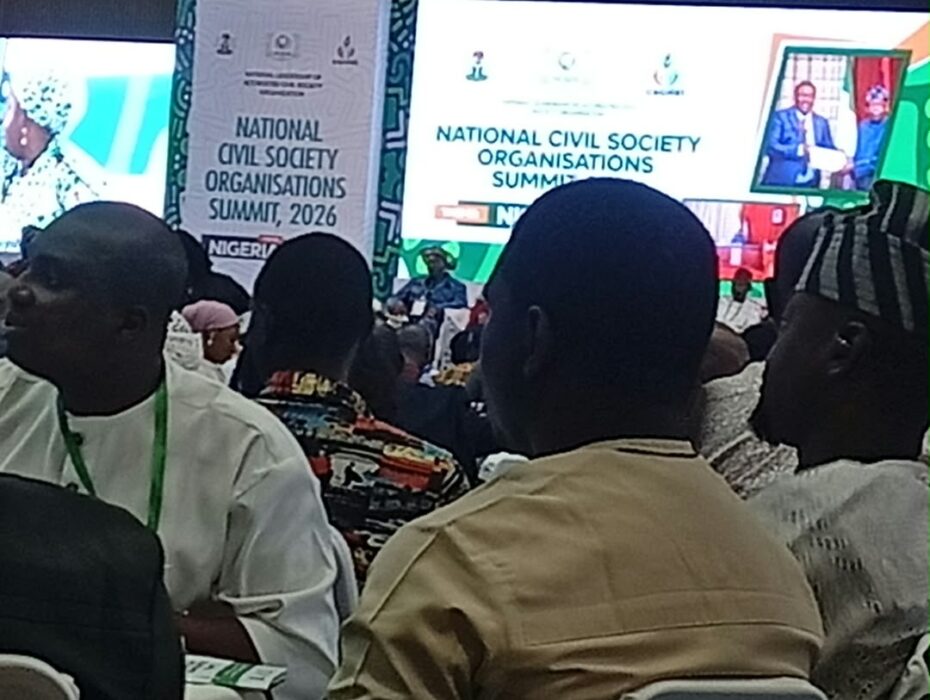
Civil society organisations have collectively urged the Independent National Electoral Commission (INEC) and various political stakeholders to implement more robust measures against prevalent issues such as vote buying and the unregulated spending during political campaigns. This call was made in anticipation of Nigeria's 2027 general elections. The unified demand emerged from the National Civil Society Organisations Summit 2026, a significant gathering held in Abuja. The summit was convened by the Civil Society Organisation on Community Advancement and Humanitarian Empowerment Initiative (CSCHEI), under the leadership of Dr. Kunle Yusuff.
During the summit, participants stressed the critical need for INEC and other relevant parties to ensure stringent adherence to the amended electoral law. Furthermore, they called for a comprehensive review and rectification of the various shortcomings that marred the 2023 general elections. These identified deficiencies notably included widespread vote buying, significant logistical inadequacies, and insufficient voter enlightenment efforts across the nation.
Panel discussions during the summit extensively covered the subject of election financing. Experts argued emphatically that electoral finances must be meticulously tracked and managed to effectively prevent excessive spending by candidates and parties. This proactive tracking is essential to curb voter inducement schemes and to thwart any attempts to manipulate electoral outcomes through monetary influence. It was highlighted that the current absence of effective enforcement mechanisms for campaign spending limits has regrettably created a fertile ground for candidates and political actors to exceed prescribed financial thresholds, thereby undermining the principle of a level playing field for all contestants.
A diverse group of panelists contributed to these crucial discussions. These included notable figures such as Amb. Charles Omini, Special Envoy, West Africa, International Human Rights Protection Service; Chief Oluwasegun Oyedijo, National Coordinator, Support for Civil Society Organisations; Amb. Zainab Mohammed, Coordinator, Partnership for Rural Women Development; Danjuma Bello Sarki, Executive Director, Initiative for Promotion of Civic Obligations and Sustainable Peace; Bar. Crownwell Chibuzor, Executive Director, Youth Education on Human Rights and Civic Responsibilities; and Dr. Ezeadili Appolonia Obiageri, CEO, Africa for Millennium Change Initiative.
Bar. Crownwell Chibuzor underscored the necessity for stronger measures to enhance both participation and credibility within the electoral process, pointing out that voter apathy remains a substantial concern. Chibuzor also put forward a novel proposal: the adoption of a voting arrangement that would permit essential professional workers to cast their ballots on days separate from the general electorate. This, he argued, would effectively reduce the risk of their disenfranchisement due to professional duties. He articulated, “There should be lessons to strengthen credibility in terms of number of citizens that participate in elections. Most times the number does not tally, such that we can unboard the mail system of election to ensure that core professional workers can have separate days for voting so as not to be disenfranchised.”
Dr. Ezeadili Appolonia Obiageri, in her contribution, shed light on the vital role of women and persons with disabilities in elections. She advocated for the implementation of special arrangements designed to simplify the voting process for these vulnerable groups. Dr. Appolonia specifically suggested that pregnant women and persons with disabilities should be accorded priority during voting, rather than being subjected to arduous long queues, which could severely discourage their participation. She also voiced concern over the inadequate enlightenment provided to women regarding electoral laws, despite their significant importance to the overall electoral process.
Adding his voice to the warnings against vote buying, Ezenwa Nwagwu, the Executive Director of Peering Advocacy and Advancement Centre in Africa (PAACA), emphasized the indispensable importance of the Bimodal Voter Accreditation System (BVAS) to the integrity of the electoral process. Nwagwu vividly likened the BVAS's importance to that of an ATM card, explaining that just as an ATM card grants access to financial resources, the electoral system, enabled by BVAS, determines who makes critical decisions that profoundly affect issues such as fuel prices, inflation, and the nation’s holistic development. He strongly urged both citizens and political actors to unequivocally reject vote buying, issuing a stern warning that participants in electoral inducement activities could face serious legal consequences. Nwagwu clarified that the absence of explicit sanctions in certain areas should not be misconstrued as immunity from prosecution, asserting that individuals involved could still be prosecuted and potentially acquire the status of ex-convicts.
In conclusion, the summit delivered a clear mandate, calling for intensified monitoring of campaign finances, rigorous enforcement of electoral rules, significant improvements in voter education campaigns, and the proactive implementation of measures to prevent any form of voter manipulation in the run-up to the 2027 elections.