Do Nigerians Abroad Really Pay Tax Twice?
Do Nigerians abroad pay tax twice? This article explains Nigeria’s tax laws, the 183-day residency rule, remittance exemptions, and how double taxation agreements protect diaspora income.

There is a cousin of mine who lives abroad, let’s call her Amaka.
Amaka is the dependable one in the family. The one who sends money home when school fees suddenly appear like uninvited guests. The one who contributes to hospital bills without announcing it. The one who quietly funds repairs to the family house without asking for praise.
One evening, sometime after Nigeria’s new tax reform announcements began circulating online, Amaka sent me a message.
“Precious,” she wrote, “is it true Nigeria will now tax the money I send home?”
Her fear was not dramatic, it was a practical one that needed to be asked.
Because for Nigerians abroad, sending money home is not just luxury. It is a responsibility. It is a culture in itself for many families and an obligation stitched into identity.
But somewhere between broadcasts, threads, and confidently wrong opinions, panic began to spread.
People said Nigeria would tax foreign income, others said remittances would now attract deductions.
Some even claimed that simply transferring money to a Nigerian account would alert tax authorities.
But like many fears born online, the truth is always quieter, simpler, and far less threatening.
Understanding that truth begins with one important distinction: where income is earned matters more than where it is sent.
Income Earned Abroad Is Not Taxed in Nigeria

The foundation of Nigeria’s tax reform act is based on source of income or money, not the movement of it.
This means income earned outside Nigeria by Nigerians who live and work abroad is not subject to Nigerian tax simply because the money enters the country.
Diaspora Connect
Stay Connected to Home
From Lagos to London, Accra to Atlanta - We Cover It All.
If Amaka earns her salary in the United Kingdom, pays tax there, and sends part of that money to Nigeria, Nigeria does not tax that income again.
The transfer itself does not create a tax obligation that she needs to adhere to.
Remittances, gifts, and personal transfers are considered personal funds, not taxable income under Nigerian law.

Whether the money is used to support family, fund education, or invest in community projects, the act of sending it home does not convert it into taxable income.
This distinction is critical. Tax authorities are concerned with income generation, not income relocation.
Money moving across borders is not the same as money being earned within those borders.
This is why billions of dollars in remittances continue to flow into Nigeria annually without being taxed.
These transfers sustain households, stabilize communities, and strengthen the economy. Taxing them would discourage financial support systems that millions depend on.
Fortunately, the law recognizes this reality.
The 183-Day Rule: Residency Determines Tax Responsibility
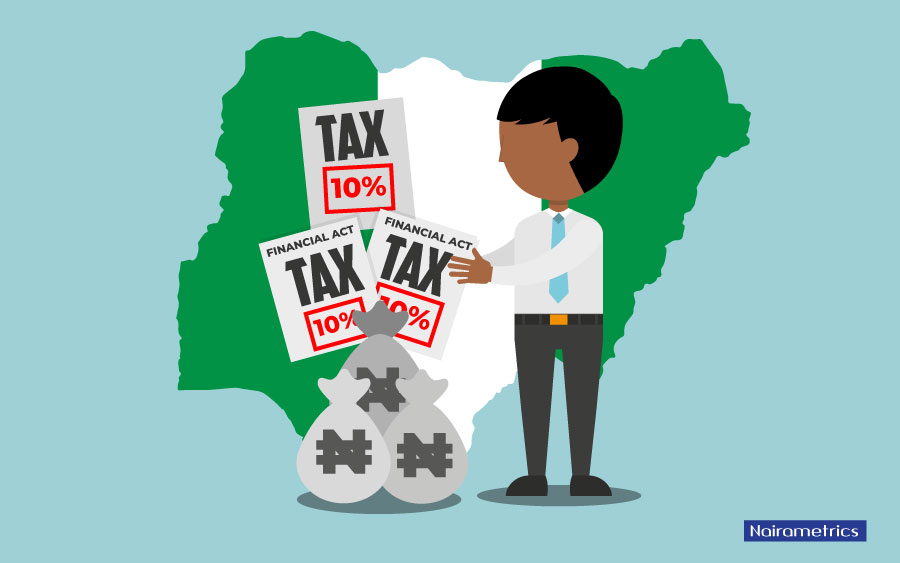
Much of the confusion surrounding taxation as regards the diasporan community comes from misunderstanding tax residency.
Tax residency is not determined by citizenship, it is determined by physical presence of being in Nigerian soil.
Under Nigeria’s tax framework, the key threshold is 183 days.
If an individual spends up to 183 days or more in Nigeria within a 12-month period, they may be classified as a tax resident. If they spend less than that, they are considered a non-resident.
Diaspora Connect
Stay Connected to Home
From Lagos to London, Accra to Atlanta - We Cover It All.
This classification determines what income Nigeria can tax. Non-residents are taxed only on income derived from Nigeria, nothing more.
This means a Nigerian software engineer living in Canada, who earns income from a Canadian employer, is not taxed in Nigeria simply because they are Nigerian.
Nationality does not create tax liability, it is actually residency that does and even dual citizenship does not change this principle.
The law focuses on where you live and where you earn, not what passport you hold.
This is an important shift in understanding, because many Nigerians abroad assume their identity alone can make them taxable.
It does not, only Nigerian-source income falls within Nigeria’s tax authority. This panic is also understandable in line within the context of the directive given by the Nigerian government reaffirming that all individuals earning taxable income must file their annual tax returns by March 31, 2026, for the 2025 fiscal year.
And my cousin Amaka is probably wondering if she might be filing a tax return by next year because she still has ties to her home back in Nigeria.
When Nigerians Abroad May Actually Pay Tax in Nigeria

While foreign-earned income is protected, income connected to Nigeria is not exempt from being taxed.
If a Nigerian living abroad earns income from Nigerian sources, that income may be taxable in Nigeria.
This includes:
Rental income from property located in Nigeria
Profits from businesses operating in Nigeria
Dividends from Nigerian companies
Income from remote work performed for Nigerian employers
In these cases, the location of the income source—not the individual—determines taxation and what is actually taxed.
The logic about this matter of taxation for the diasporan community is simply straightforward.
If economic activity occurs within Nigeria, it contributes to Nigeria’s economic system, so therefore, it falls under Nigerian tax jurisdiction.
But this does not mean the individual will automatically pay tax twice, this is where international safeguards come into play.
Double Taxation Agreements Protect Nigerians Abroad

Double taxation occurs when two countries attempt to tax the same income.
To prevent this, Nigeria has established Double Taxation Agreements (DTAs) with several countries, including the United Kingdom, Canada, France, South Africa, China, and others.
These agreements ensure that income taxed in one country is not taxed again unfairly in another.
They provide mechanisms such as:
Tax credits for foreign taxes already paid
Tax exemptions on certain income types
Allocation of taxing rights between countries
Diaspora Connect
Stay Connected to Home
From Lagos to London, Accra to Atlanta - We Cover It All.
Even in situations where no formal agreement exists, Nigerian law provides unilateral tax relief.
This means Nigerians who have already paid tax abroad on certain income can claim relief in Nigeria to avoid being taxed twice.
This system aligns Nigeria with international tax standards and ensures fairness in global income taxation.
It protects Nigerians abroad from being penalized simply for maintaining financial ties with home.
Why This Clarification Matters More Than Ever

The fear surrounding taxation is not just about money, it is the uncertainty around it.
For many Nigerians abroad, financial support to family is not always optional, it is actually expected.
It pays tuition, funds healthcare, builds homes and actually sustains livelihoods, this is the reality of many diasporans and the effects of black tax.
The idea that these contributions could be taxed created understandable anxiety but the law, when properly understood, offers reassurance rather than threat and provides context for better understanding.
Nigeria does not tax foreign income earned by non-residents. It also does not tax remittances, gifts, or personal transfers.
It taxes only income generated within its borders of the countries and businesses that are in operations within the Nigerian market.
This clarity is essential in an age where misinformation spreads faster than official policy.
Because when people act on fear instead of facts, they make decisions that may harm them unnecessarily.
Some may reduce financial support to family, others may avoid investing in Nigeria entirely or even cutting ties from the Nigerian market which is not good
Diaspora Connect
Stay Connected to Home
From Lagos to London, Accra to Atlanta - We Cover It All.
These outcomes weaken the very systems that remittances help sustain and understanding the law restores confidence.
It allows Nigerians abroad to continue supporting home without fear of invisible penalties, it allows financial planning to be based on truth rather than rumor and perhaps most importantly, it replaces panic with peace of mind.
The Real Threat Has Never Been Tax, But Misinformation

When Amaka asked her question, she was not asking about tax law.
She was asking whether helping her family would now come at an extra cost.
The answer, thankfully, was no.
Nigeria’s tax system does not punish Nigerians abroad for earning foreign income.
It recognizes the difference between earning money and sending money and actually shows the fact that remittances are acts of responsibility, not taxable events.
The real danger here that Amaka was running away fromwas never double taxation, it was misunderstanding.
Because in the end, knowledge does more than inform. It protects and actually gives clarity.
Diaspora Connect
Stay Connected to Home
From Lagos to London, Accra to Atlanta - We Cover It All.
And for millions of Nigerians abroad, it ensures that supporting home remains exactly what it has always been: An act of care, not a taxable offense.