Dignitaries Grace Star-Studded Premiere of MKO Abiola Documentary in Lagos!
The 'MKO' documentary, directed by Nigerian-American Ose Oyamendan, offers a comprehensive look at the June 12 crisis, MKO Abiola's final years, and his mysterious death, integrating testimonies from key political figures. The film premiered in Lagos on October 1, hosted by President Bola Tinubu, and is set for a nationwide cinema release, aiming to preserve Nigeria's democratic history for future generations.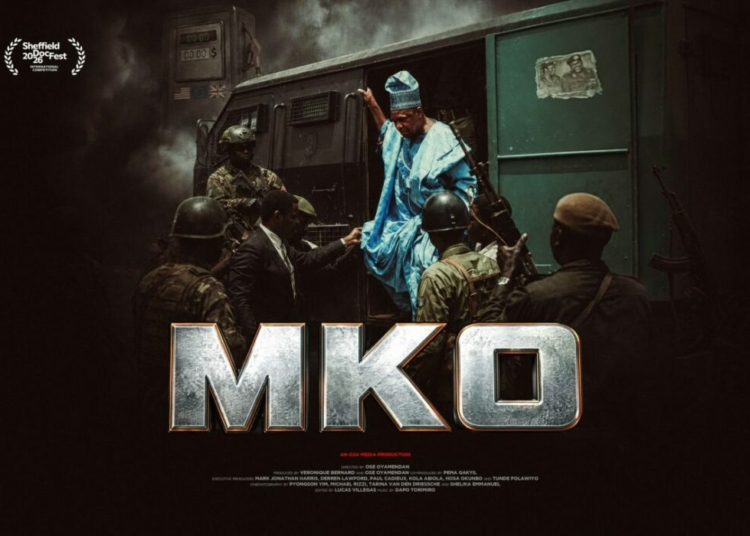
Nigerian-American filmmaker Ose Oyamendan has produced a significant body of documentary work, giving the public a valuable account of a pivotal part of Nigeria's political history. His latest documentary, titled 'MKO', chronologically details the June 12 crisis, the final years of MKO Abiola, and his sudden, mysterious death in custody during a meeting with top U.S. diplomats. The film delves into one of the most explosive and unanswered political murder mysteries of our time, posing the question: Who killed MKO Abiola and why?
The documentary specifically focuses on the June 12, 1993 presidential election, widely recognized as a watershed moment in Nigeria's democratic history, which was subsequently annulled by the then military government. It examines Abiola's presumed victory, his subsequent detention, and the widespread pro-democracy struggle that emerged in the aftermath of the election's annulment. The film revisits these events, exploring the broader fight for the restoration of democratic governance and the profound sacrifices made by those involved in the movement.
To provide a comprehensive narrative, 'MKO' features powerful testimonies and an extensive collection of archival footage from individuals closely connected to these historical events. These key personalities include former military leaders Ibrahim Babangida, who annulled the June 12 election, and Abdulsalami Abubakar, whose administration oversaw Nigeria's return to civilian rule. Also featured are former President Olusegun Obasanjo, Nobel laureate Wole Soyinka, and Ambassador Baba Gana Kingibe, who served as Abiola’s running mate. Other notable interviewees include former American diplomats Walter Carrington and Thomas Pickering – the former US Deputy Secretary of State who was present during the meeting when Abiola died – along with former Canadian High Commissioner Gerald Ohlsen, members of Abiola’s family, foreign journalists, and Theodore Zadok, Abiola’s security guard during his detention.
Ose Oyamendan highlighted the critical historical context of the film, noting that it captures a period where many leaders sided with dictators. He stated, “Tinubu risked his life, livelihood and his family’s safety by standing with the people’s mandate. This is a story of that struggle that has brought us to where we are today.” Moses Babatope, Managing Director of Nile Entertainment, which handles the documentary's distribution, expressed the project's deep personal significance for him, citing his father's work at Concord Newspaper, an institution founded by Chief MKO Abiola.
Babatope emphasized that beyond his personal connection, the documentary is an essential contribution to preserving Nigeria’s political history. He articulated that MKO Abiola’s story represents one of the most defining periods in Nigeria's democratic journey, a history that must be meticulously documented and made accessible, especially to younger generations. He affirmed that the film is a record of a pivotal moment, brilliantly captured by Ose Oyamendan, and Nile Entertainment is proud to support its release, encouraging audiences across the country to experience it in cinemas.
The 'MKO' documentary had its official launch and premiere on October 1 in Lagos. President Bola Tinubu, who served as host, attended the event alongside First Lady, Senator Oluremi Tinubu, underscoring the profound significance attached to Abiola’s legacy in Nigeria’s democratic history. The premiere, held at the Wole Soyinka Centre for Culture and the Creative Arts, gathered a distinguished assembly of senior government officials, political leaders, and cultural figures. Attendees included Senate President Godswill Akpabio, Lagos State Governor Babajide Sanwo-Olu, Ogun State Governor Dapo Abiodun, Kwara State Governor AbdulRahman AbdulRazaq, Deputy Senate President Jibrin Barau, Deputy Speaker of the House of Representatives Benjamin Kalu, Chief of Staff to the President Femi Gbajabiamila, Minister of Art, Culture, Tourism and the Creative Economy Hannatu Musawa, and former Ogun State Governor Segun Osoba, among other dignitaries. The documentary had previously debuted at the Sheffield International Documentary Festival on June 12 and is scheduled for a nationwide cinema release starting October 2.
The documentary places Abiola’s personal story within the broader political and historical circumstances surrounding Nigeria’s democratic transition. His emergence as the presumed winner of the 1993 election and his subsequent detention became defining episodes in the campaign against continued military rule. This film serves as a vital tool for reflection on Abiola’s political legacy and the historical events that ultimately shaped Nigeria’s return to democratic governance, making this crucial historical account accessible to a wider audience.