Devastation in Kyiv: Russian Strikes Wipe Out Supplies and 12 Million School Books
Russian forces have launched five consecutive days of intense aerial attacks on Kyiv and its surrounding regions, utilizing jet-powered drones that have caused significant civilian casualties and disrupted daily life. Ukraine is struggling to counter these advanced drones while facing shortages and ongoing assaults on its cultural and energy infrastructure.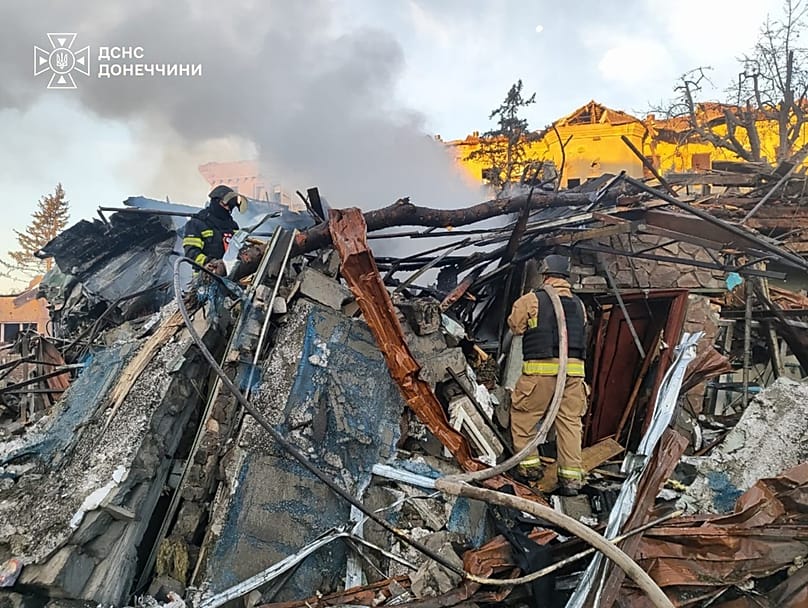
Russian forces have launched relentless aerial attacks against Kyiv and its surrounding region for a fifth consecutive day, utilizing jet-powered drones that have significantly intensified the conflict. These assaults, occurring more than four years after Russia's full-scale invasion, have severely disrupted daily routines with almost constant air raid alerts and have left some supermarket shelves bare following repeated strikes on critical warehouses.
The recent escalation has resulted in substantial civilian casualties, with nearly 50 civilians killed in two major attacks in July, and at least 38 more in a strike on Saturday. Beyond direct loss of life, Russia has also targeted Ukraine's educational and cultural infrastructure. An overnight strike on a printing press near Kyiv destroyed approximately 12 million textbooks just before the new school year was set to begin, raising concerns about whether parents would send their children back to school, despite the availability of air raid shelters and online class options. Earlier, a similar strike on a warehouse in Kharkiv destroyed 8 million books, prompting accusations from Kyiv that Moscow is intentionally trying to obliterate Ukrainian education and culture.
Specific incidents underscore the widespread impact: aerial attacks in Brovary and Boryspil, cities within the Kyiv region, struck several warehouses and wounded four people. Imagery depicts the aftermath of guided bomb strikes in Sloviansk and warehouse damage in Myla, illustrating the physical devastation across the country.
Ukrainian President Volodymyr Zelenskyy has acknowledged the significant challenge of countering Russia's rapidly deployed jet-propelled drones. He reported that between Thursday and Sunday, Russia fired almost 1,500 drones, with approximately 800 being jet-powered. While combat aircraft are currently attempting to intercept these advanced drones, Ukraine is actively developing more effective counter-technology, with four companies working on interceptor drones and one showing particular success.
The repeated strikes on food distribution centers and retail hubs have disrupted Ukrainian logistics, leading to public concern about potential food shortages. In response, Zelenskyy adviser Serhii Beskrestnov reassured the public via social media, urging against panic and confirming that producers and retailers are restructuring supply chains. He also indicated that European countries stand ready to fill any food supply shortfalls if necessary.
Concurrently, Russia continues its strategy of attacking Ukraine's power grid, aiming to leave civilians without heating or running water as winter approaches. An energy facility in Ukraine’s northern Chernihiv region was damaged in a massive overnight drone attack, with the Russian Defence Ministry announcing preparations for