Devastating Nor'easter Wreaks Havoc on Long Island, Beach Erosion and Holiday Disruptions Reported
A powerful nor'easter battered Long Island, causing extensive beach erosion and infrastructure damage across the South Shore and East End. The storm also disrupted Jewish Sukkot observances, but communities demonstrated remarkable resilience in rebuilding amidst the destruction, highlighting themes of fragility and faith.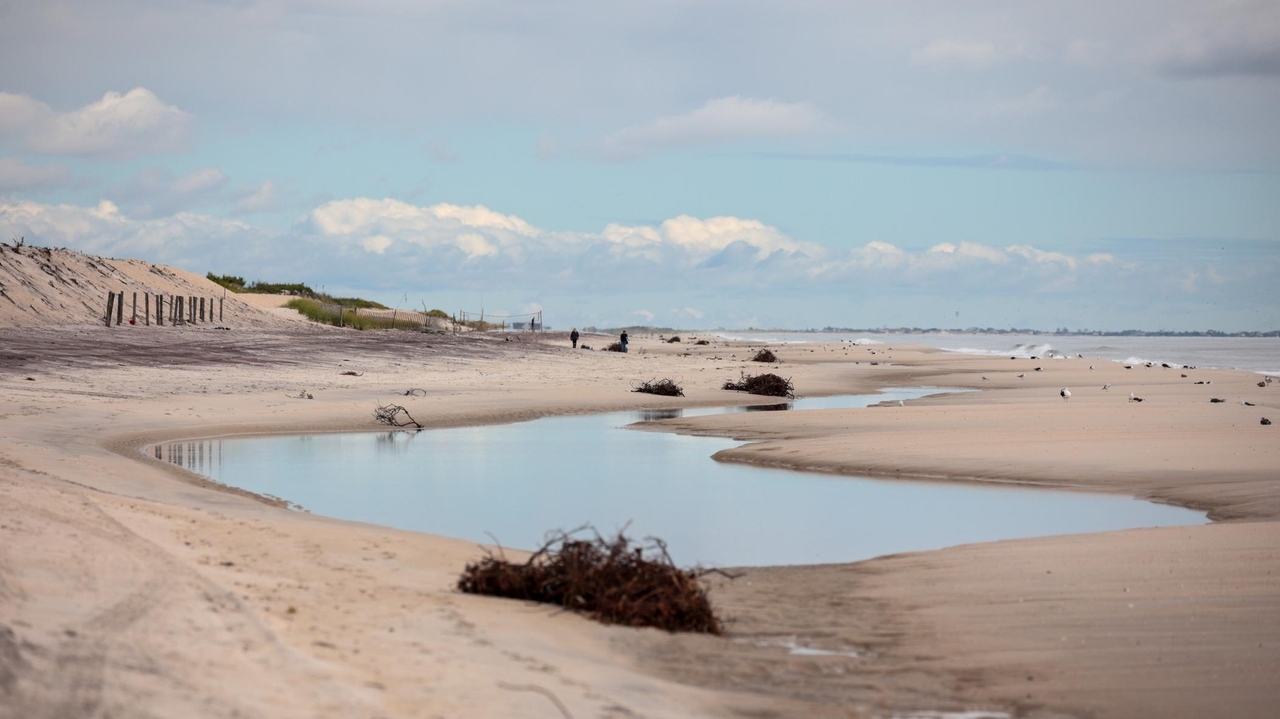
A powerful early-season nor'easter recently swept across Long Island, leaving a path of widespread destruction, particularly impacting its vulnerable coastlines and even disrupting local cultural observances. The devastating storm unleashed powerful winds, strong surf, heavy rain, and intensified coastal flooding, causing significant beach erosion, damaging dunes, and threatening critical infrastructure and ecological habitats across Nassau's South Shore and the East End.
On Nassau's South Shore, Tobay Beach experienced approximately 60% sand erosion, an amount typically seen over an entire offseason, according to Supervisor Joseph Saladino. Oyster Bay town annually allocates around $3 million for beach replenishment efforts. However, in the previous year, the town benefited from a federal initiative, receiving hydraulically dredged sand as part of the U.S. Army Corps of Engineers' project to maintain the Fire Island Inlet navigation channel. This denser sand, which cost the town $3.1 million (half reimbursed by the state), appeared to have mitigated some of the recent storm's impact, preventing even more extensive damage.
Experts caution that beach replenishment is merely "a treatment, not a cure," as stated by Henry Bokuniewicz, a geologist and professor of oceanography at Stony Brook University. Long-term solutions are often expensive and can be ineffective or even detrimental. For instance, shoreline groins, perpendicular rock structures meant to trap sand, can ironically prevent natural sand migration farther down the beach. Furthermore, the erosion poses a serious threat to endangered species like the piping plover and terrapin turtles, whose nesting habitats within the dunes and sloping sands are severely disrupted by such storm events, noted Colin Bell, deputy commissioner of Oyster Bay's environmental resources department.
The East End also bore the brunt of the nor'easter's fury, with officials assessing widespread erosion and embarking on extensive cleanup operations. Coastal geologist Aram Terchunian observed "widespread beach erosion" but "spotty" dune erosion at South Fork ocean beaches, attributing the latter to exceptionally wide beaches acting as a protective barrier. The worst erosion occurred west of Shinnecock Inlet, where offshore wave heights peaked around 19 feet and storm surge in the bays reached approximately 5.2 feet above sea level, classifying it as a 10- to 15-year storm event.
Southampton Town’s emergency management administrator, Ryan Murphy, reported that at Tiana Beach in Hampton Bays, "pretty much the entire beach and dune was lost all the way up to the pavilion on the ocean side." Overwash from the storm caused water to crest over the dunes, pushing sand onto Dune Road and leading to its temporary closure. Murphy emphasized the critical role of these dunes in protecting the major commercial fishing dock nearby, which is vital to the state's maritime economy.
Throughout the region, parks and natural areas sustained considerable damage. Long Island regional state parks director George Gorman reported a 6- to 8-foot "clifflike drop" at Hither Hills State Park in Montauk, along with moderate erosion at Montauk Point and Camp Hero state parks, and significant erosion at Wildwood State Park in Wading River. Orient Point State Park required 1,500 cubic yards of sand to protect vulnerable sections of an access road before reopening. While Southold Town was largely spared the worst, its Lt. George R. Sullivan Town Beach, already eroded, saw its parking lot flooded. Southold Supervisor Al Krupski voiced frustration over the futility of past sand replenishment efforts, recalling a failed project two years prior as a "waste of taxpayers’ money." Riverhead beaches also experienced displaced sand and lost several access steps, necessitating regrading and extensive debris cleanup.
Beyond the environmental and infrastructural damage, the nor'easter also impacted the Jewish observance of Sukkot, a weeklong holiday commemorating the 40-year survival of Israelites in the desert. Many temporary sukkah tents, integral to modern-day observances, were damaged or destroyed by the storm's powerful winds and pounding rain. In Commack, Rabbi Mendel Teldon's congregation opted to disassemble their sukkah based on severe forecasts, while his personal 20-by-60-foot sukkah in Smithtown collapsed with him inside, describing the damage as "overwhelming."
Despite the destruction, the storm served as a powerful reminder of community and resilience. Due to Sabbath observances, immediate rebuilding of sukkahs was not possible over the weekend. However, congregation members, neighbors, and friends rallied together on Sunday and Monday, working in the rain to reconstruct damaged sukkahs. Rabbi Steven Conn of the Plainview Jewish Center, whose 20-by-40-foot sukkah roof also collapsed, reflected on the fragility of life and structures, stating, "We get knocked down — and then we build back up again." Similarly, Rabbi Anchelle Perl of Chabad of Mineola, who lost three sukkahs, including one at NYU Langone Hospital-Long Island, saw the "flying sukkahs" as a reminder that "what’s consistent above all those shakes is our faith in almighty God." These incidents underscored the powerful force of Mother Nature, the inherent vulnerability of coastal communities, and the enduring human spirit of resilience and mutual support in times of adversity.