NHS Patient Survival Rates Lag Behind Rich Nations Despite Billions
A recent international analysis reveals NHS patients face higher mortality rates than in most wealthy countries, despite record funding. The UK ranks poorly for treatable mortality, struggling with equipment shortages, long waiting times, and underinvestment in infrastructure. Experts suggest the core issue is how funds are allocated, not the NHS funding model itself.
A recent major international analysis has revealed that NHS patients exhibit higher mortality rates compared to those in almost every other wealthy country, despite receiving record levels of funding.
Britain ranks near the bottom of a global league tablefor 'treatable mortality' – deaths considered potentially avoidable with timely and effective healthcare – with only the United States performing worse.
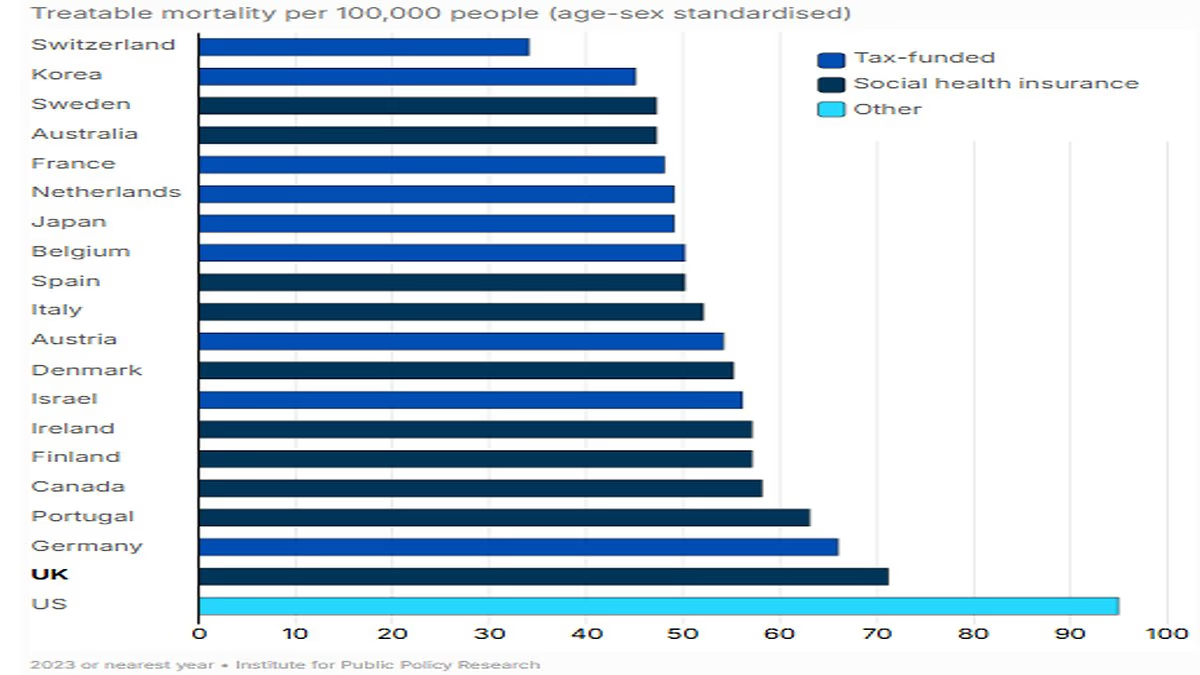
These findings are expected to intensify scrutiny of NHS survival outcomes, waiting times, and overall performance, as patients continue to experience prolonged delays in diagnosis and treatment across the UK.
Despite a substantial increase in health spending, which has risen by more than £60 billion in a decade to reach £242 billion annually, the NHS continues to lag behind comparable countries across a range of health indicators.
Experts have attributed this disparity to 'poorly targeted' funding, suggesting that a greater proportion of funds has been allocated to staffing and pay, while hospitals grapple with critical shortages of essential equipment, scanners, and infrastructure.
Specifically, the UK possesses only 19 MRI, CT, and PET scanners per million people, a stark contrast to approximately 50 in similar tax-funded healthcare systems and up to 68 in others.
Furthermore, the nation has fewer hospital beds than many comparable countries, a factor contributing significantly to longer waiting times and delays in both diagnosis and treatment.
These pressures are clearly reflected in international outcome measures, such as survival within 30 days of a heart attack, where the UK consistently performs below average.
The Telegraph reported these findings, also highlighting that Britain is among the worst performers for unmet medical needs, with patients frequently reporting difficulties in accessing timely care.
Widespread long NHS waiting lists for specialist appointments and elective surgery persist, leaving many patients waiting months for crucial treatment.
The Institute for Public Policy Research (IPPR) contends that years of chronic underinvestment in NHS infrastructure – encompassing hospitals, scanners, and technology – are the primary drivers of these systemic pressures.
Capital investment in the NHS remains at roughly half the level observed in comparable countries. While debates surrounding NHS reform are prevalent, researchers have dismissed a shift to European-style insurance systems as a 'pointless distraction'.
They assert that the fundamental issue lies in how NHS funding is allocated and invested, rather than in the funding model itself.
Health Secretary Wes Streeting has emphasized the necessity for NHS budgets to be spent more effectively, acknowledging that ministers face difficult choices and must ensure spending is 'well spent'.
He remarked on the timely nature of the report, noting, 'It dispels the myth that insurance-based healthcare systems are more efficient. While this Government is cutting the back office to reinvest in the front line, those who would rather move to an insurance system would do precisely the opposite.'
Streeting reaffirmed the NHS model as the fairest way to provide care, preventing wealth from dictating health outcomes. He underscored that the founding promise of the NHS from 1948 – that healthcare should be universally available without financial worry – remains as relevant today.
The IPPR report also brought to light broader concerns regarding NHS capacity, infrastructure, and long-term strategic planning. Separately, recent NHS England figures last week indicated that some trusts recorded a higher-than-expected number of deaths compared with statistical expectations.
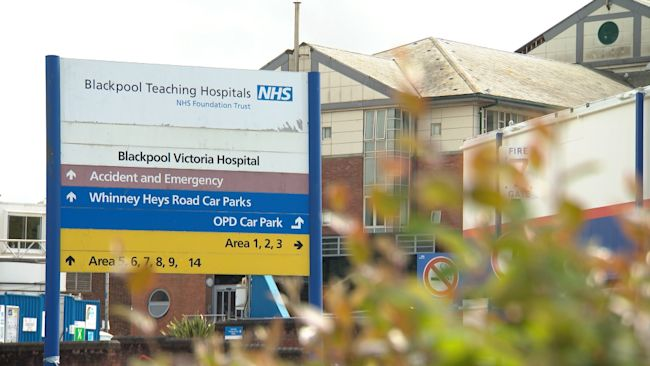
Blackpool Teaching Hospitals NHS Foundation Trust recorded deaths 31.9%above expected levels, Medway NHS Foundation Trust saw deaths 30% above expected levels, and University Hospitals of Morecambe Bay NHS Foundation Trust recorded deaths 28.8% above expected levels.
The NHS, however, stresses that these figures are not a direct measure of quality of care and should not be interpreted in isolation as definitive evidence of poor performance.

It is worth noting that all three trusts are also among lower-ranked NHS organizations in national performance tables, with inspectors having previously identified concerns requiring further review.