Cinema Icon Richard Linklater's Next Masterpiece Revealed: A 'Nouvelle Vague' Director's Flawless Classic Takeover
Richard Linklater's latest films, "Nouvelle Vague" and "Blue Moon," unexpectedly released together, form a compelling thematic pair exploring the start and end of artistic careers. Linklater delves into the joyous creation of Godard's "Breathless" while portraying the draining decline of Larry Hart, offering a fascinating look into his directorial process and the lives of real artists.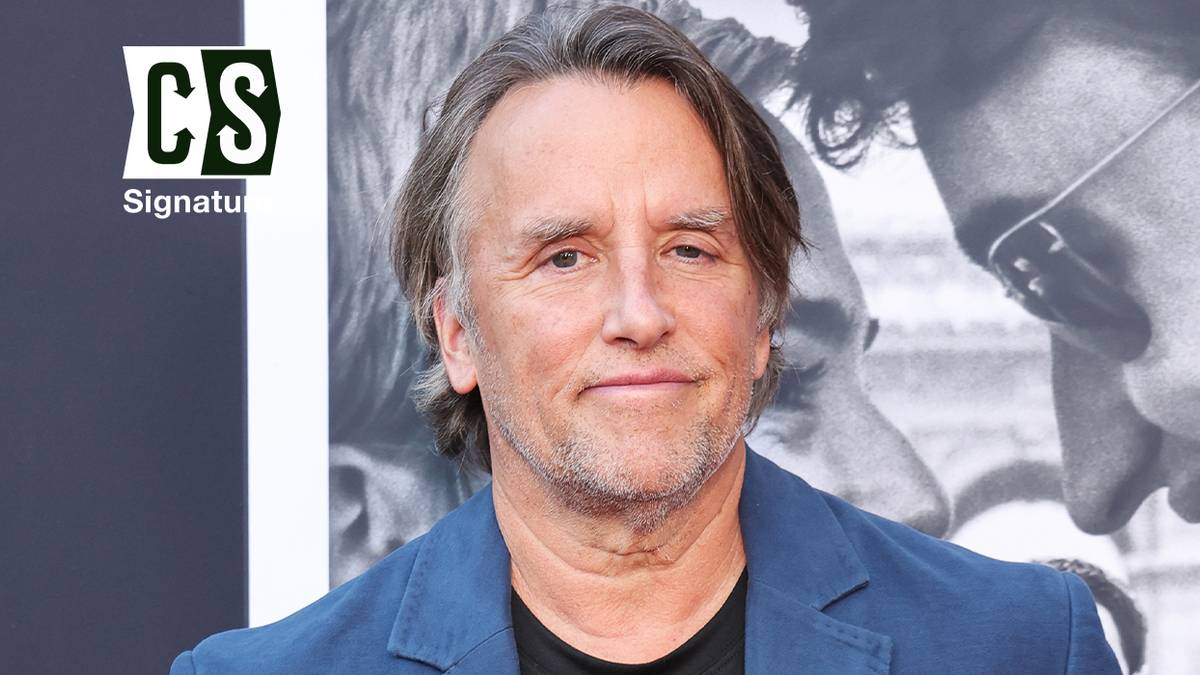
Filmmaker Richard Linklater finds himself with two thematically intertwined films, "Nouvelle Vague" and "Blue Moon," released almost simultaneously. While Linklater initially downplays comparisons to musical album pairings like Guns ‘n’ Roses’ "Use Your Illusion I and II" or Bruce Springsteen's "Human Touch" and "Lucky Town," acknowledging the concurrent release was unintentional, he concedes the thematic overlap is undeniable. These two films, shot back-to-back, explore contrasting stages of an artistic career, making their accidental joint release particularly fascinating.
"Nouvelle Vague" chronicles the jubilant inception of an artistic journey, depicting Jean-Luc Godard (Guillaume Marbeck) as he directs Jean Seberg (Zoey Deutch) and Jean-Paul Belmondo (Aubry Dullin) in his seminal first feature, "Breathless." It brims with the optimism and boundless possibilities of creativity. In stark contrast, "Blue Moon" portrays the twilight of a career through Ethan Hawke's portrayal of Larry Hart on the opening night of "Oklahoma!," a story steeped in petty grievances and despair, culminating in Hart’s death seven months later. Linklater, who was acutely aware of these contrasting themes, has even suggested a broader trilogy, including his 2009 film "Me and Orson Welles," creating a narrative of two beginnings and one end.
Linklater’s experience shooting the films was as contrasting as their themes. He found the production of "Nouvelle Vague" to be a "joyous shoot," filled with the exhilaration of working with young actors. Conversely, "Blue Moon" was described as "draining," a sentiment echoed by Linklater’s own mood shifts when discussing the projects. He intentionally shot "Nouvelle Vague" first, appreciating the life-affirming energy before diving into the reductive and melancholic journey of "Blue Moon."
Delving into the making of "Nouvelle Vague," Linklater immersed himself deeply into the historical context of "Breathless." He had unprecedented access to extensive documentation, including pictures, camera reports, and payroll records, allowing him to authentically recreate the atmosphere. A remarkable detail of the production was the use of Raoul Coutard’s actual camera, the very one that filmed "Breathless," which Linklater felt established a profound connection to the spirits of that era. The film even humorously depicts Godard’s attempts at a conventional car stunt for "Breathless" that was ultimately unused, later becoming a subtle joke for cinephiles. Linklater noted his vastly different directorial approach compared to Godard, emphasizing his own reliance on scripts and extensive rehearsals. He also highly praised Zoey Deutch’s chameleon-like performance as Jean Seberg, highlighting her dedication to embodying the complex role across multiple layers of acting and in French.
The production of "Blue Moon" demanded a different, more intense approach from Linklater. He confessed to being a "naggy ass bitchy director" to achieve the desired effect of having Ethan Hawke's character, Larry Hart, "disappear." Linklater constantly pushed Hawke to strip away any hint of his confident, charming persona, insisting that gestures or expressions that were too "Ethan" were not "Larry." This rigorous process led Hawke to jokingly wonder if Linklater disliked his acting, despite their long collaborative history. Linklater acknowledged the intense, draining nature of depicting Hart’s decline, a journey of reduction where all roads led to a very sad place. He also subtly integrated an homage to director George Roy Hill in a scene where Larry Hart, despite his self-absorption, generously dispenses advice to others, a detail Linklater believed only true cinephiles would appreciate, linking the film to a performance-based directorial style inspired by Lumet and Hill.
These films, though released by different distributors and not intentionally concurrent, resonate powerfully as companion pieces. They underscore Linklater's rare venture into historical biopics, contrasting with his usual original narratives or adaptions with significant liberties, such as "Hit Man." The serendipitous timing of their release amplifies their profound dialogue on the nature of creation, decline, and the enduring legacy of artistic lives.