Catastrophic Floods Ravage Nepal and China: Over 950 Dead, Hydropower Tunnels Trapped
A catastrophic flash flood, triggered by a glacial collapse in the Himalayas, has devastated the Nepal-China border, leaving over 950 dead and thousands missing. Rescuers are desperately working to save hundreds of hydropower workers trapped in submerged tunnels, while families search for loved ones caught in the deluge.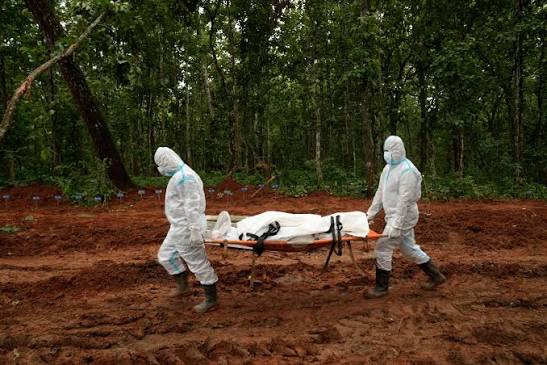
A catastrophic flash flood, triggered by a glacial collapse high in the Himalayan region, has wreaked havoc along the Nepal-China border, leading to a grim humanitarian crisis.
The rescuers are in a desperate race against time to free hundreds of workers believed to be trapped in gigantic tunnels at various hydropower sites that were engulfed by mud and water.
The combined death toll in Nepal and China has tragically surpassed 950, with over 4,400 individuals still reported missing, as families grow increasingly desperate for news of their loved ones.
The disaster, which struck last Wednesday, saw particularly severe impacts on Nepal's hydropower sector.
The Independent Power Producers’ Association, Nepal (IPPAN), reported that at least 900 workers from 12 hydropower projects in Nepal’s Rasuwa and Nuwakot districts remain unaccounted for, with approximately 500 of them thought to be trapped within the extensive tunnel systems.
Initial calls for help were made by some workers, and those who managed to escape provided harrowing accounts of colleagues still inside.
However, six days post-disaster, fears are mounting that survivors may be succumbing to suffocation, lacking essential supplies like food and water.
The rescue operations are primarily concentrated on these massive tunnels, which are described as being large enough to accommodate trucks.
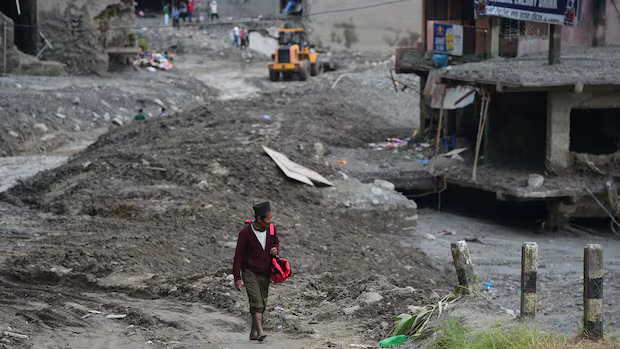
A geoscientist, Jakob Steiner noted that efforts are underway to provide oxygen to some trapped individuals.
In the Upper Trishuli-1 Hydropower Project in Rasuwa, a staggering 576 people are missing, with about 300 believed to be trapped inside its tunnel.
At the Trishuli-3 Hydropower Project, Nepalese army crews are working tirelessly to descend 15 meters (50 feet) into a tunnel in their search for survivors.
Beyond the immediate human toll, a flood-ravaged power station in Dhading, critical for supplying electricity to over 20,000 local residents, underscores the widespread infrastructural damage.
On the Chinese side of the border, rescue and recovery efforts have focused on re-establishing crucial infrastructure.
When the state broadcaster CCTV highlighted the attempts to rebuild the road leading to the Gyirong Port border crossing, a vital artery for travel between China and Nepal.
Despite heavy machinery and workers tirelessly trying to repave sections, the road remains submerged under 6.6 to 9.8 feet of rapidly rushing water, exacerbated by days of continuous rain.
Chinese state media coverage has emphasized the official response, detailing the deployment of firefighters and the People’s Liberation Army, with less information available regarding the specific victims on their side.
The full extent of the human cost continues to emerge. Nepal’s disaster agency reported 939 deaths and 3,925 missing, including 592 foreigners.
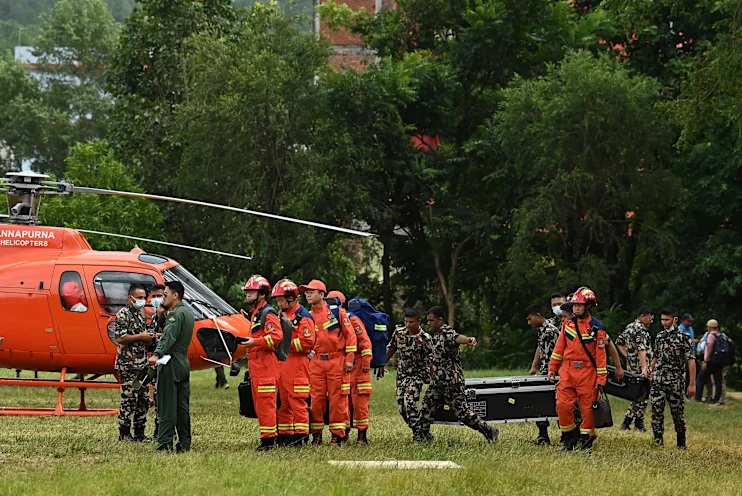
As of Sunday, Chinese authorities has confirmed 16 deaths and 546 missing, amongwhom 261 were foreigners, including over 100 Nepalis.
This devastating event has left countless families in anguish, anxiously awaiting news.

Among those desperately searching is Maraval Nagappan, who traveled to Nepal to find his son, Sathya Narayan.
Sathya was leading a group of 49 Indian pilgrims returning from Mount Kailash in southwestern Tibet.
They were caught in the floodwaters at a Chinese immigration complex while awaiting formalities to cross into Nepal.
The surveillance footage captured the terrifying moment water surged through the complex, with Nagappan identifying some members of his son's group fleeing.
The pilgrimage, which began on August 14, ended in tragedy, leaving Nagappan without contact from his son since the disaster. "I don’t know whether he is alive or dead," he told The Associated Press.
The scientific explanation behind this catastrophe points to a severe glacial collapse. Satellite images analyzed by scientists revealed that bedrock beneath a high-altitude glacier in the Himalayas collapsed, dislodging a portion of the glacier.
The force of this rockfall was so immense that it registered as a magnitude 5.2 seismic event.
The resultant deluge of rocks and melted water cascaded into the valleys below, swelling rivers into a powerful torrent that obliterated buildings, bridges, and vast expanses of earth across both Tibet and Nepal.