Bitcoin Rises Above Politics: A New Era for Human Rights
Often perceived as a capitalistic tool, Bitcoin's crucial role in human rights is frequently overlooked. This article explores how Bitcoin provides vital financial inclusion for vulnerable communities, safeguards freedom to transact against authoritarian pressures, and offers protection from rampant inflation, demonstrating its politically neutral utility for all.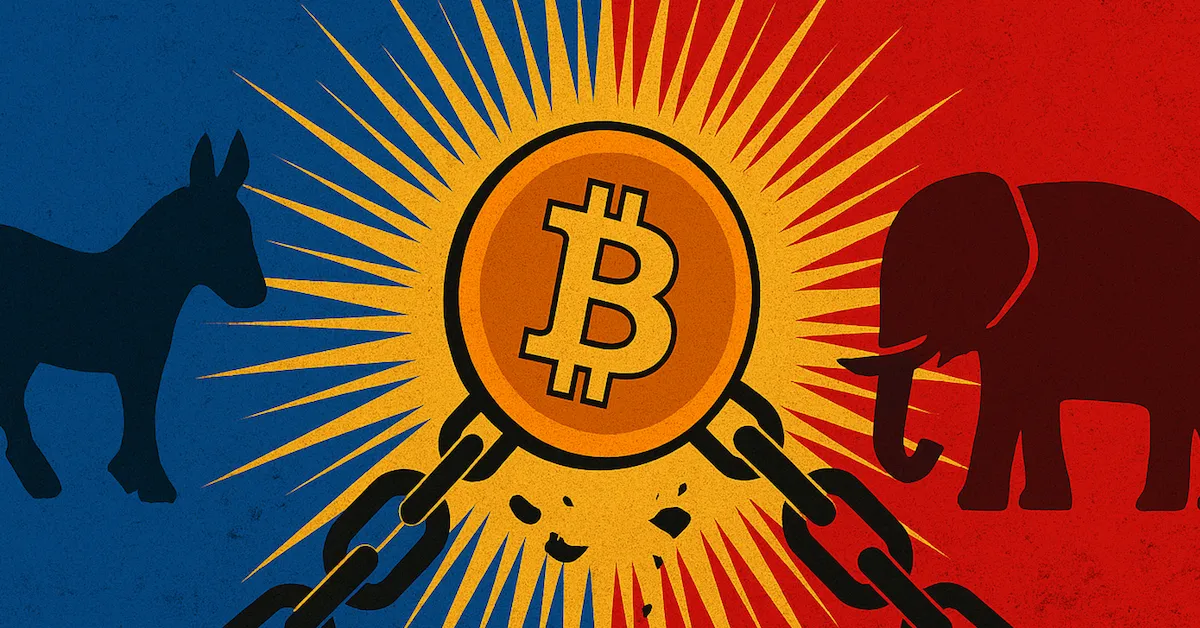
Bitcoin often faces concerns from individuals with left-leaning ideologies, who perceive it as a capitalistic tool. This perspective, highlighted by an interview with Harshvardhan, an MIT Bitcoin Club alumnus, stems from Bitcoin’s frequent association with the Trump administration in the U.S. and mainstream media coverage predominantly focusing on its price fluctuations. Consequently, the broader public rarely encounters narratives about Bitcoin's profound impact on human rights, financial inclusion, freedom to transact, and protection against inflation.
A compelling demonstration of Bitcoin's role in financial inclusion is unfolding in Kibera, Africa’s largest informal settlement in Kenya. Through the dedicated efforts of Afribit Kibera, residents are receiving education on Bitcoin usage, consequently integrating Kenya's most impoverished and financially vulnerable populations into the digital economy and enabling them to save for the first time. The BBC recently featured this impactful work. A crucial aspect often overlooked is that many Kibera residents are refugees, lacking national IDs, which disqualifies them from using M-Pesa, Kenya's prevalent digital payment system. However, by utilizing a non-custodial Bitcoin Lightning wallet in conjunction with Tando, a local Kenyan app facilitating Bitcoin payments with Kenyan Shilling settlement, these individuals can actively participate in the digital economy without requiring Know Your Customer (KYC) checks.
The freedom to transact, often taken for granted in Western nations with established digital payment systems like PayPal or CashApp, is a critical concern for activists and dissidents globally, particularly under authoritarian regimes. These individuals frequently experience the freezing or closure of their accounts when they voice opposition. Debanking has become a common tactic for authoritarian rulers, exemplified by the Putin regime's shutdown of Alexei Navalny's Anti-Corruption Foundation's bank accounts. Even in supposedly democratic nations, this phenomenon exists; for instance, the U.S. Biden administration's "Operation Choke Point 2.0" debanked numerous Bitcoin and crypto companies, seemingly due to political disfavor. This illustrates that even private banking and fintech institutions can be pressured by governing powers, regardless of their democratic status, to restrict transactions. Lyn Alden, in her book "Broken Money," emphasizes Bitcoin's significance in this context, stating that "self-custodial financial services force governments to actually charge people with a crime before they can use pressure to freeze their accounts." Alden argues that Bitcoin transcends political divides, as its utility becomes apparent when one considers a future political landscape led by less favored politicians.
Furthermore, Bitcoin offers a vital safeguard against inflation, a concept often misunderstood by those unfamiliar with its inherent scarcity. With a strictly capped supply of 21 million units, Bitcoin starkly contrasts with fiat currencies, which can be printed indefinitely, leading to the devaluation of citizens' time and labor. While the U.S. dollar, often considered relatively stable, has still experienced notable inflation, many other global currencies face far more alarming rates of debasement, as seen in countries like Venezuela, Lebanon, Argentina, and Turkey. Sabina Waithira, co-founder of Tando, actively educates university students in Kenya about Bitcoin's ability to provide freedom from inflation, high fees, and foster an open financial system. This freedom is particularly pertinent in Kenya, where the national currency has experienced annual inflation rates as high as 14% since the mid-2000s.
Ultimately, Bitcoin, as an open protocol not controlled by any single entity, is inherently politically neutral. While the Trump administration's pro-Bitcoin stance may alienate some on the political left, it does not diminish Bitcoin's capacity to facilitate causes often championed by liberal ideologies, such as financial inclusion. For those whose politics align with liberal thought, resources like The Progressive Bitcoiner nonprofit and Jason Maier’s "A Progressive’s Case for Bitcoin" offer valuable perspectives. Similarly, for individuals who prioritize human rights facilitated by Bitcoin but feel politically unaligned, the Human Rights Foundation's Financial Freedom division and its newsletter provide crucial insights. Bitcoin stands as a powerful tool for all humanity, bridging the political spectrum, and it is imperative that this message achieves broader recognition.