Beyond the Ballot Box: How Africa's Youth Are Remaking Political Accountability
Discover how Africa's youth are challenging power. Explore new forms of political accountability, from digital activism to grassroots organizing, beyond traditional politics.

While traditional political discourse often fixes on elections and formal institutions, a new, potent form of political accountability is being forged by young Africans far beyond the ballot box.
This article explores how Africa's Gen Z and young millennials leverage innovative strategies – from digital activism and investigative citizen journalism to grassroots community organizing and creative dissent – to hold power accountable.
We move past narratives of youth apathy or mere protest, uncovering how this tech-savvy, globally aware generation systematically exposes corruption, demands transparency, and challenges governance failures, even in repressive environments.
Non-Traditional Strategies: The Youth's New Playbook for Accountability
Africa's youth are redefining political accountability through diverse, impactful strategies that go beyond conventional voting.

SOURCE: Google
This generation leverages technology, creativity, and collective action to demand transparency, expose corruption, and challenge governance failures. Their approach emphasizes direct, continuous pressure.
Digital activism stands as a cornerstone. Social media platforms like X (formerly Twitter), TikTok, and WhatsApp are powerful tools for mobilization, advocacy, and real-time reporting. Hashtag movements are prime examples:
The #EndSARS movement in Nigeria (2020) against police brutality swiftly gained global traction, demonstrating digital campaigns' power to spark mass demonstrations and push for systemic change, as reported byAfrican Leadership Magazine. Young Nigerians crowdfunded legal aid and medical supplies, building decentralized communication networks.
In Ghana, the #FixTheCountry movement (2021) rallied young people against unemployment, inflation, and political complacency, forcing national debates, as detailed byAfrican Leadership Magazine.
Kenya's #RejectFinanceBill (mid-2024) saw youth-led digital protests spread rapidly, leading to mass demonstrations and compelling Parliament to withdraw the controversial bill. This watershed moment underscores online activism's formidable influence, as extensively reported by bothAfrican Leadership Magazine and theJournal of Democracy. Namibia's #ShutItAllDown movement also showcased digital activism's ability to amplify youth voices, as observed byThe CFMA.
Beyond viral hashtags, investigative citizen journalism and data projects are crucial.
Young activists utilize digital tools and data analytics to monitor public services and report on issues like corruption and mismanagement. Platforms like BudgIT (Nigeria), Odekro (Ghana), and Mzalendo (Kenya) leverage open data to monitor government budgets, demanding greater transparency, as described byAfrican Leadership Magazine.
In Madagascar, young activists collaborate with investigative journalists to denounce large-scale corruption, detailed in a 2023UNODC report. Anti-corruption apps also emerge as critical tools for whistleblowers, a point made byPoliticsociety.org.
While digital strategies offer broad reach, grassroots community organizing remains an indispensable component, often intersecting with digital efforts. Young people form their own political organizations and engage directly with governance issues at local levels.
They build capacity through workshops on advocacy and communication, fostering networks for shared resources and collaboration, as discussed by fundsforNGOs. This physical community presence ensures sustained pressure and direct engagement with local concerns.
Furthermore, creative dissent and artistic protest provide another powerful avenue. Graffiti, music, spoken word, and visual arts are skillfully utilized to articulate grievances, critique power, and mobilize public opinion in ways that frequently bypass conventional state-controlled media.
These artistic forms resonate deeply, conveying complex political messages accessibly and proving challenging for authorities to directly suppress. These multifaceted strategies collectively signify a profound transformation in how political engagement is understood and practiced, making accountability a continuous, dynamic process rather than a mere episodic event.
Overcoming Obstacles: Resilience in Repressive Environments
Youth-led movements in Africa confront formidable obstacles, including pervasive internet shutdowns, severe state repression, and persistently limited resources.
Yet, their ingenuity and profound resilience enable them to sustain efforts and achieve tangible results even in highly restrictive environments.
Social Insight
Navigate the Rhythms of African Communities
Bold Conversations. Real Impact. True Narratives.
Internet shutdowns are a common tactic employed by authoritarian regimes. However, youth activists have developed innovative methods to circumvent these blackouts. Virtual Private Networks (VPNs), for instance, have become indispensable, allowing users to mask their location and access blocked content.
Countries like Zimbabwe and Uganda have seen surges in VPN usage during internet restrictions, documented byFairPlanet(2019) andAfricans Rising.
During prolonged shutdowns, as in Anglophone Cameroon (2017-2018), youth traveled to access the internet, even establishing "internet refugee camps" or drafting emails offline to send when connections were found, as reported byFairPlanet.
Activists also build robust offline networks, relying on word-of-mouth and physical gatherings, and pre-distribute materials to maintain communication. Training sessions byAfricans Rising equip members to identify shutdown patterns and stay connected.
State repression, encompassing arbitrary arrests, violence, threats, and surveillance, is a severe challenge. Youth movements respond with various tactics:
Decentralized leadership structures make it harder to cripple a movement by arresting key figures. The #EndSARS movement, for example, largely operated without a single, identifiable leader, enhancing its resilience against state crackdowns, as analyzed byAfrican Leadership Magazine.
Legal support networks and crowdfunded legal aid protect activists against wrongful arrests and human rights abuses, a crucial strategy highlighted byAfrican Leadership Magazine.
International advocacy and strategic partnerships amplify their voices globally, putting pressure on governments and drawing attention to human rights violations, supported by organizations likePeaceau.org.
Creative dissent through art and satire can also express grievances in ways harder for authorities to directly censor.
Limited resources are a perennial problem. Many youth-led initiatives operate on shoestring budgets, which they overcome through:
Crowdfunding, both locally and from the diaspora, for legal aid, medical supplies, and operational costs, as observed byAfrican Leadership Magazine.
Volunteerism, leveraging the passion and skills of young people deeply committed to their causes.
Strategic alliances with civil society organizations, NGOs, and sympathetic formal institutions to access funding, training, and logistical support, as noted byPoliticsociety.org andfundsforNGOs.
Investing in civic tech startups for digital governance tools, with over $45 million invested since 2021 from various philanthropic and multilateral sources, is underscored byAfrican Leadership Magazine.
These movements demonstrate remarkable adaptability and fortitude, proving that repression, while impactful, cannot entirely quash the youth's drive for accountability.
The Future of Power: Redefining Democracy and Governance
The shift in youth political engagement across Africa profoundly impacts the future of democracy, governance, and the very definition of "political power". This tech-savvy generation is actively reshaping the political landscape.
Firstly, democracy is becoming more dynamic and less confined to electoral cycles. While formal election participation can sometimes be lower for youth, their non-traditional engagement ensures accountability is a continuous demand, not just a quadrennial event, as highlighted by SWP andThe CFMA. They push for direct accountability and tangible results, moving beyond rhetoric. This continuous scrutiny forces leaders to be more responsive, fostering a more robust democratic feedback loop.
Social Insight
Navigate the Rhythms of African Communities
Bold Conversations. Real Impact. True Narratives.
Secondly, the nature of governance is being challenged. Young Africans demand greater transparency and an end to endemic corruption. Their digital tools allow them to track government spending and policy implementation, making secrecy harder, as discussed inAfrican Leadership Magazine.
This bottom-up pressure means traditional political communication is no longer effective. Governments are increasingly compelled to engage with youth in authentic and participatory ways, potentially leading to more inclusive policy-making.
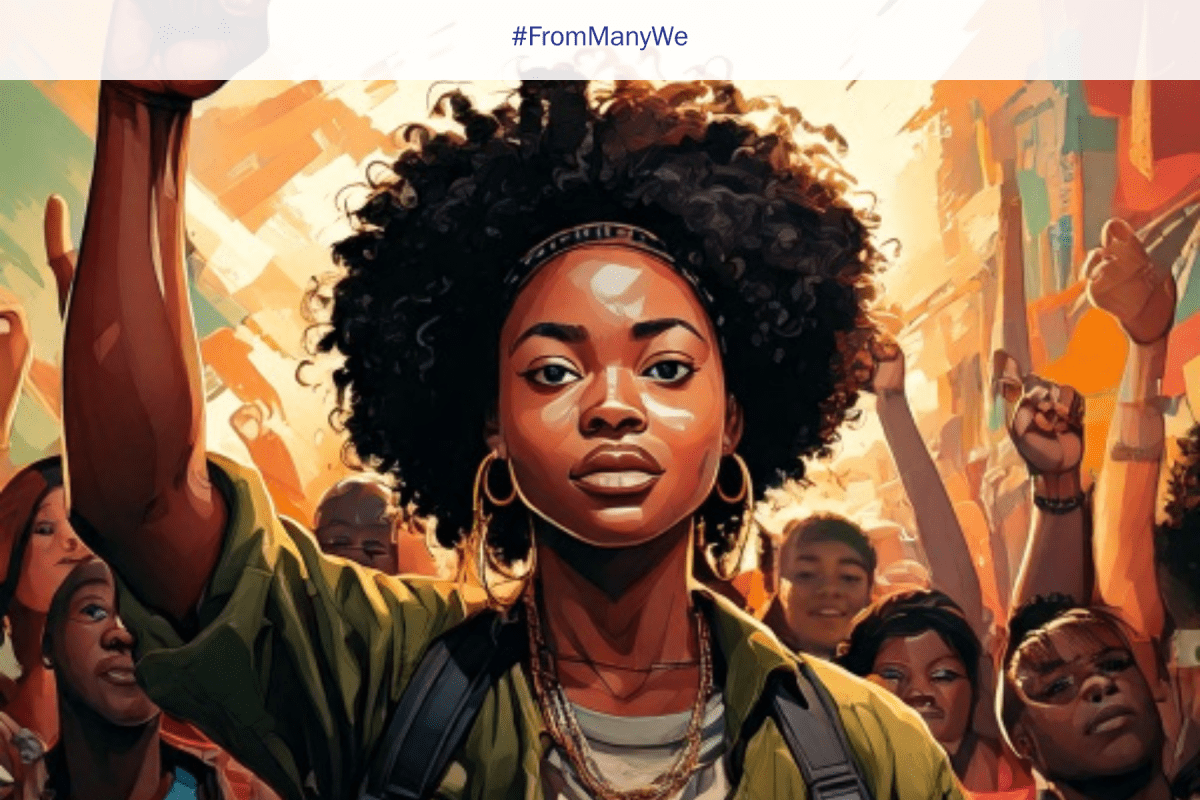
Thirdly, the definition of "political power" is expanding. Power is no longer solely concentrated within formal institutions or traditional elites. Youth movements, through their decentralized and networked structures, demonstrate that power can be distributed, collective, and highly influential, even without holding formal office.
SOURCE: Google
Their ability to mobilize millions and force policy changes through non-electoral means highlights a new frontier of civic power. Future leaders must contend with powerful, digitally organized youth movements that can rapidly shape public opinion and action, according to bothAfrican Leadership Magazine and the Kettering Foundation.
This evolving landscape presents both opportunities and risks. The opportunity lies in building more inclusive, responsive, and resilient democracies that genuinely reflect their largest demographic.
By empowering youth as active participants, Africa can unlock immense potential for innovation and development, as highlighted bythe CFMA.
However, risks exist. Digital activism can be accompanied by disinformation and cyberattacks. Governments may also try to co-opt or manipulate youth movements.
Furthermore, while youth may prefer democracy, some studies suggest a willingness to tolerate military intervention if elected leaders abuse power, signaling a focus on performance over rhetoric, a complex dynamic discussed by theKettering Foundation.
Ultimately, the active engagement of African youth is a critical factor in shaping the continent's governance trajectory.
They are the architects of tomorrow's political landscape, redefining what it means to participate, lead, and hold power accountable. Their continued influence will undoubtedly lead to more inclusive, innovative, and responsive political systems across Africa.