Anya Taylor-Joy and Timothy Olyphant Deliver Devastating 'Gut-Punch' Ending in Apple TV's 'Lucky'
The Apple TV+ crime thriller "Lucky" concludes its limited series run, with co-showrunner Cassie Pappas detailing the intentional crafting of its "one-two punch" finale. The interview sheds light on Anya Taylor-Joy's significant creative input, the symbolic father-daughter dynamic, and the challenging production of its climactic scenes.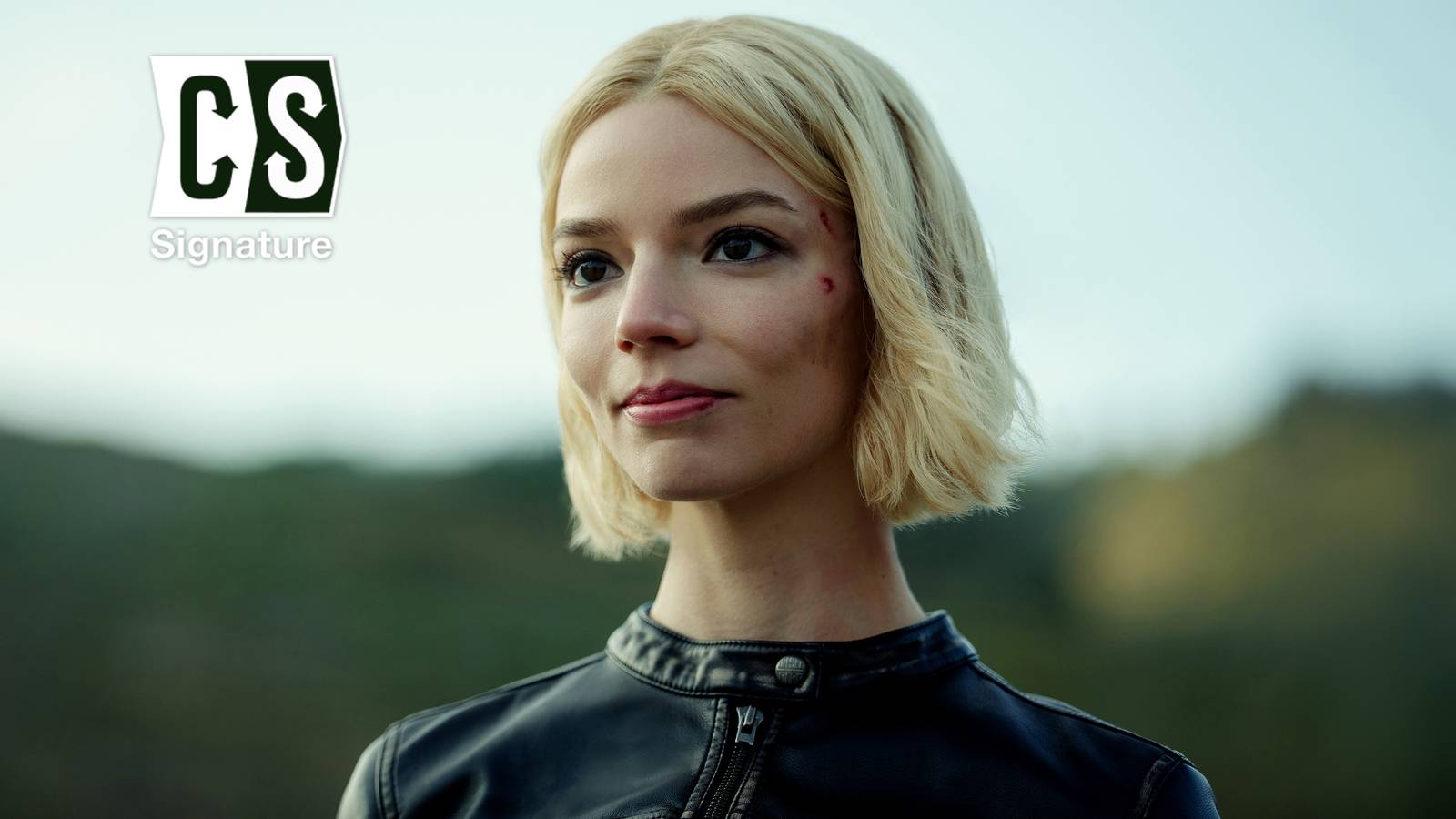
Apple TV's crime thriller "Lucky," an adaptation of Marissa Stapley's 2021 novel, was meticulously crafted as a one-and-done limited series, a plan that remains unchanged, according to co-showrunner and executive producer Cassie Pappas. The finale, titled "All Good Things," was intentionally designed as a "one-two punch," featuring a major confrontation followed by Lucky's quiet, decisive break from her father, John (Timothy Olyphant). Pappas, who also wrote the finale, spoke about the creative process, Anya Taylor-Joy's collaborative role, and the challenging production of the series.
At the heart of "Lucky" is the complex, dysfunctional father-daughter relationship, a core element preserved from the book. Pappas and co-showrunner Jonathan Tropper were drawn to the theme of inheriting parental baggage, blending it with a criminal element. The show explores Lucky's dual struggle: running from external threats like the FBI and the mob, while simultaneously trying to escape the internal forces of her genetics and her father's influence. While the book heavily featured flashbacks to Lucky's childhood, the adaptation distilled these into "impressionistic memories" to maintain the show's propulsive, on-the-run narrative, balancing action with emotional depth. A key example is a flashback in the finale showing younger Lucky and John in a motel room, encapsulating years of their transient life without extensive exposition.
Anya Taylor-Joy, the titular lead, was deeply involved as an executive producer and creative collaborator. Pappas lauded Taylor-Joy's intelligence, natural producing instincts, and exquisite taste in elements like wardrobe and music. Taylor-Joy provided critical feedback, notably rejecting a storyline where Lucky becomes pregnant, which was not in the book. Her reasoning was that it would shift Lucky's motivation from personal freedom to acting for a child, which was not the story she wanted to tell. Taylor-Joy also strongly advocated against starting the pilot with excessive exposition, trusting the audience's intelligence to catch up as they were dropped directly into the action. Her clarity of vision was instrumental in shaping the narrative, including suggesting Drew Starkey for the role of Cary.
The creative team made tough narrative decisions, such as the death of Cary at the season's midpoint. This event was crucial for Lucky to realize the real, life-or-death consequences of her cons and to "level up" her resolve to break free from her father's control. Cary's death served as a stepping stone, preceding Lucky's ultimate confrontation with her paternal relationship. The series intentionally centered around three women: Lucky, Priscilla (the mob boss), and Agent Billie Rand (an original character for the show, played by Aunjanue Ellis-Taylor). This triumvirate allowed for an exploration of women's experiences in a world often dominated by men, with each character ultimately shattering their respective "glass ceilings" and achieving a form of redemption, a dynamic rarely seen in the genre.
The finale's climactic meet-up was set in a gas terminal, a location chosen for its striking visual and narrative potential. The gas scam itself was inspired by a real-life event in Los Angeles. During a location scout, the director, Jonathan van Tulleken, spotted a giant puddle of oil, inspiring the scene where one of Wayne's henchmen is drowned. Filming at this location proved to be exceptionally grueling, with 100-degree Santa Clarita weather, fumes, and the constant presence of a snake wrangler, making it a tougher shoot than the Vegas-set premiere.
The finale's pacing was deliberately structured to include an emotional climax after the action set piece. This "one-two punch" allowed Lucky to first resolve the external threats, then confront her deeper, internal struggle with her father. Pappas explained this as Lucky running an "emotional con" on John. Despite his criminal nature, Lucky harbored a "tension of opposites," acknowledging he was her father but recognizing his inability to change. A pivotal scene involves them sharing dreams, where John interprets Lucky's recurring drowning nightmare as simply "running out of time," missing its emotional depth. This realization leads Lucky to set a final trap with a teddy bear, forcing her father to choose between her and his criminal life, which he inevitably does, displaying a twisted parental pride in her cunning.
Symbolism, particularly the water motif, is woven throughout the series. Lucky's recurring dream of drowning, which her father exploited for cons in her childhood, transforms by the end into an image of freedom and a clean slate. The final shot of Lucky at Big Sur, a location secured by a skeleton crew as the last thing shot for the series, is a powerful visual. It parallels her waking up alone in a motel at the start of the series, but this time, it represents her taking her "first breath of a new life." Stripped of her masks, she stands at the ocean, fulfilling a childhood promise she gives to herself, ready to define her own identity in freedom, with a subtle hint of a smile marking her peace.