Africa’s Oldest Seat of Learning: The Story of al-Qarawiyyin
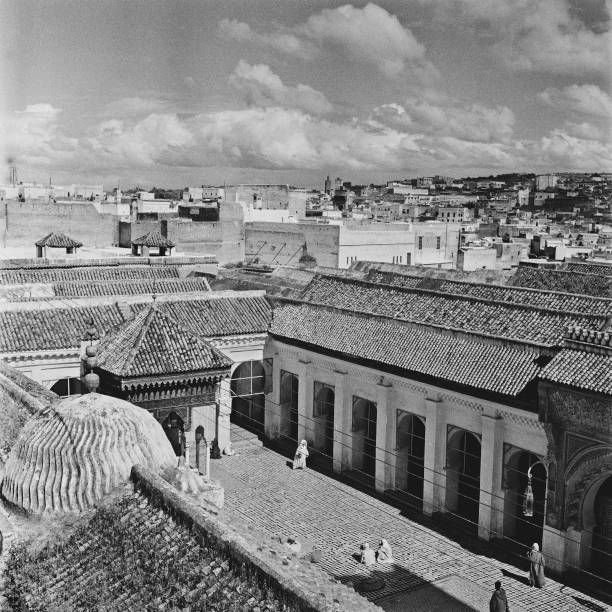
Long before Oxford or Harvard opened their doors, Africa was already home to a seat of learning that would shape global thought for over a millennium. The University of al-Qarawiyyin in Fez, Morocco — founded in 859 AD by the visionary Fatima al-Fihri — stands as the world’s oldest degree-awarding university still in operation. Its story challenges the common narrative of Africa’s intellectual history, reminding the world that the continent has been a wellspring of scholarship, innovation, and cultural exchange for centuries. From its role in the Islamic Golden Age to its survival through empires and upheavals, al-Qarawiyyin is more than a historic institution; it is a living legacy that demands protection, celebration, and continuation.
Story story
History often arrives to us in fragments — some carefully polished by time, others buried under centuries of silence. When we speak of great universities, our minds tend to leap toward Oxford, Cambridge, Harvard, or the Sorbonne. These are the names carved into the marble of global prestige. Yet, long before any of them opened their doors, a place of learning was already alive on African soil — the University of al-Qarawiyyin in Fez, Morocco, founded in 859 AD. It was not only a house of knowledge but a testament to Africa’s long tradition of intellectual cultivation. And perhaps most remarkable of all, it was founded by a woman.
The Woman Who Built a University
The story begins with Fatima al-Fihri, the daughter of a wealthy merchant who had migrated from Tunisia to Morocco. Fatima and her sister Mariam inherited substantial wealth after their father’s death. In an age when such fortune could have been spent on palaces, jewelry, or lavish estates, Fatima envisioned something different. She chose to build a mosque that would double as a school — a sanctuary where worship and scholarship would intertwine.
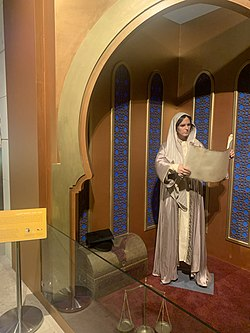
Depiction of Fatima al-Fihriya at The Jordan Museum in Amman, Jordan.
SOURCE: wikipedia

From its modest beginnings, the al-Qarawiyyin Mosque became a gathering place for scholars and students, eventually evolving into a full-fledged university. Its walls echoed with the sound of debates in theology, mathematics, astronomy, medicine, law, and philosophy. Fatima herself oversaw its construction and endowed it with resources to ensure its survival through generations. Her vision was simple yet revolutionary: knowledge should serve both faith and society, and should be accessible to all who sought it earnestly.
A Hub in the Golden Age of Learning
By the 10th century, al-Qarawiyyin was more than a local institution — it was a lighthouse in the Islamic Golden Age, attracting students and thinkers from across North Africa, Andalusia (modern Spain), the Middle East, and beyond. Fez became a meeting point for ideas, where traders brought goods, travelers brought stories, and scholars brought manuscripts.
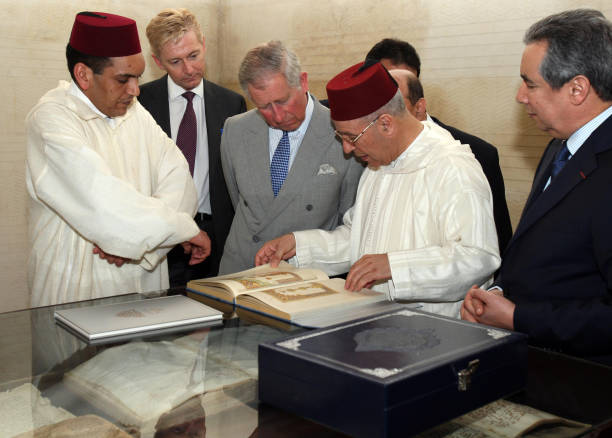
Subjects at al-Qarawiyyin reflected the richness of African and Islamic intellectual traditions.Astronomy was taught alongside religious jurisprudence; mathematics alongside music; medicine alongside metaphysics. The university’s libraries became treasure troves of human thought, preserving manuscripts that would later influence Europe’s Renaissance.
Among its notable students and associates were the philosopher Ibn Rushd (Averroes), the Jewish polymath Maimonides, and the 14th-century traveler Ibn Battuta. Even Gerbert of Aurillac, who would later become Pope Sylvester II, is believed to have studied there, carrying mathematical knowledge — including the use of the zero — back to Europe.
A Challenge to Historical Amnesia
SOURCE: gettyimages

The fact that the world’s oldest existing degree-awarding university lies in Africa is still a surprise to many. This is no accident. Centuries of colonial narratives have painted Africa as a continent waiting to be “enlightened” from the outside, erasing or sidelining its own rich traditions of scholarship. The story of al-Qarawiyyin is a reminder that African intellectual life is not a modern invention but an ancient inheritance.
It also challenges the assumption that the history of higher education is purely a European tale. When Oxford was still a century away from being founded, when Cambridge was only a dream in the mist, when Harvard would not be imagined for nearly eight hundred years — al-Qarawiyyin was already teaching, already debating, already producing thinkers who would shape the course of global thought.
Continuity Through the Centuries
Unlike many ancient institutions that have faded into ruin, al-Qarawiyyin has never stopped functioning. Over its 1,100 years of history, it has adapted to political changes, survived dynastic shifts, and witnessed the rise and fall of empires. Even during periods of stagnation, the commitment to learning within its walls never fully vanished.
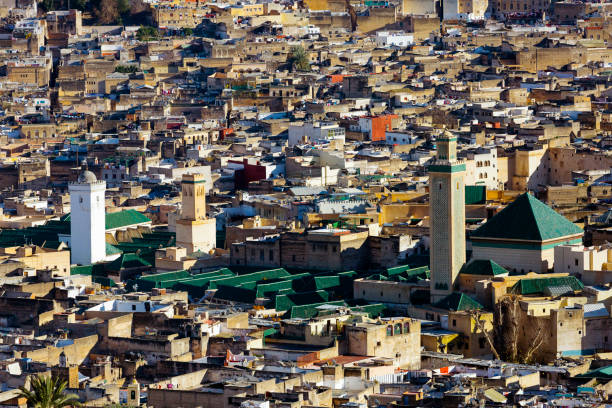
Today, the University of al-Qarawiyyin remains part of Morocco’s higher education system, offering programs in Islamic studies, law, and the natural sciences. While modern facilities have been added, the heart of the institution still beats within the old medina of Fez, surrounded by narrow streets where the air is thick with the scent of leatherwork and the hum of daily trade.
Lessons for the Present
History
Rewind the Stories that Made Africa, Africa
A Journey Through Time, Narrated with Insight.
In the 21st century, when Africa’s educational challenges often dominate headlines, al-Qarawiyyin stands as both a symbol of pride and a quiet call to action. It tells us that the capacity for enduring scholarship has always existed here — the question is how we nurture it today.
Fatima al-Fihri’s example is especially potent. She reminds us that education is not merely the responsibility of governments or institutions, but of individuals with the vision to see beyond their own lifetimes. Her decision to invest in knowledge rather than personal luxury has echoed across more than a millennium, touching lives far beyond the borders of Morocco.
A Legacy to Protect
As Africa grapples with the pressures of globalization, the erosion of indigenous knowledge, and the challenges of funding education, the legacy of al-Qarawiyyin becomes all the more precious. It is not simply a relic of the past, but a living reminder that African scholarship once commanded global respect — and can again.
Its survival across centuries is also a lesson in resilience. Al-Qarawiyyin has endured invasions, political upheavals, and shifts in cultural tides, yet it has never surrendered its essence. That continuity is not just a stroke of luck — it reflects a community’s deep respect for the pursuit of knowledge. Every generation that repaired its walls, preserved its manuscripts, and defended its purpose became a silent custodian of history, ensuring that what Fatima al-Fihri began would never be lost to time.
SOURCE: gettyimages


Preserving such legacies today requires more than nostalgia; it demands active stewardship. The same vision that inspired its founding must inspire modern African societies to protect and expand their own centers of learning. Just as the ink of ancient scholars was considered more sacred than the blood of martyrs in some traditions, so too must the preservation of knowledge be treated as a sacred duty. In protecting institutions like al-Qarawiyyin, Africa protects not only a building or a tradition, but a testament to the continent’s place in the global history of thought.
To tell the story of the University of al-Qarawiyyin is to reclaim a piece of Africa’s intellectual dignity. It is to insist that history must be told in full, not in fragments, and that Africa’s contributions to the human story are as old and as essential as any other continent’s.
More than a building, more than an institution, al-Qarawiyyin is a bridge — linking the Africa that was, the Africa that is, and the Africa that can be.