Africa's Construction Dilemma: Safety Sacrificed for Profit?
Scaffolding, a critical yet often overlooked element in construction, poses significant safety risks in South Africa, leading to tragic fatalities from falls. The industry grapples with balancing speed and safety, exacerbated by undercutting, skills shortages, and inadequate enforcement. Urgent reforms in training, regulations, and client accountability are essential to ensure worker safety as urban development expands.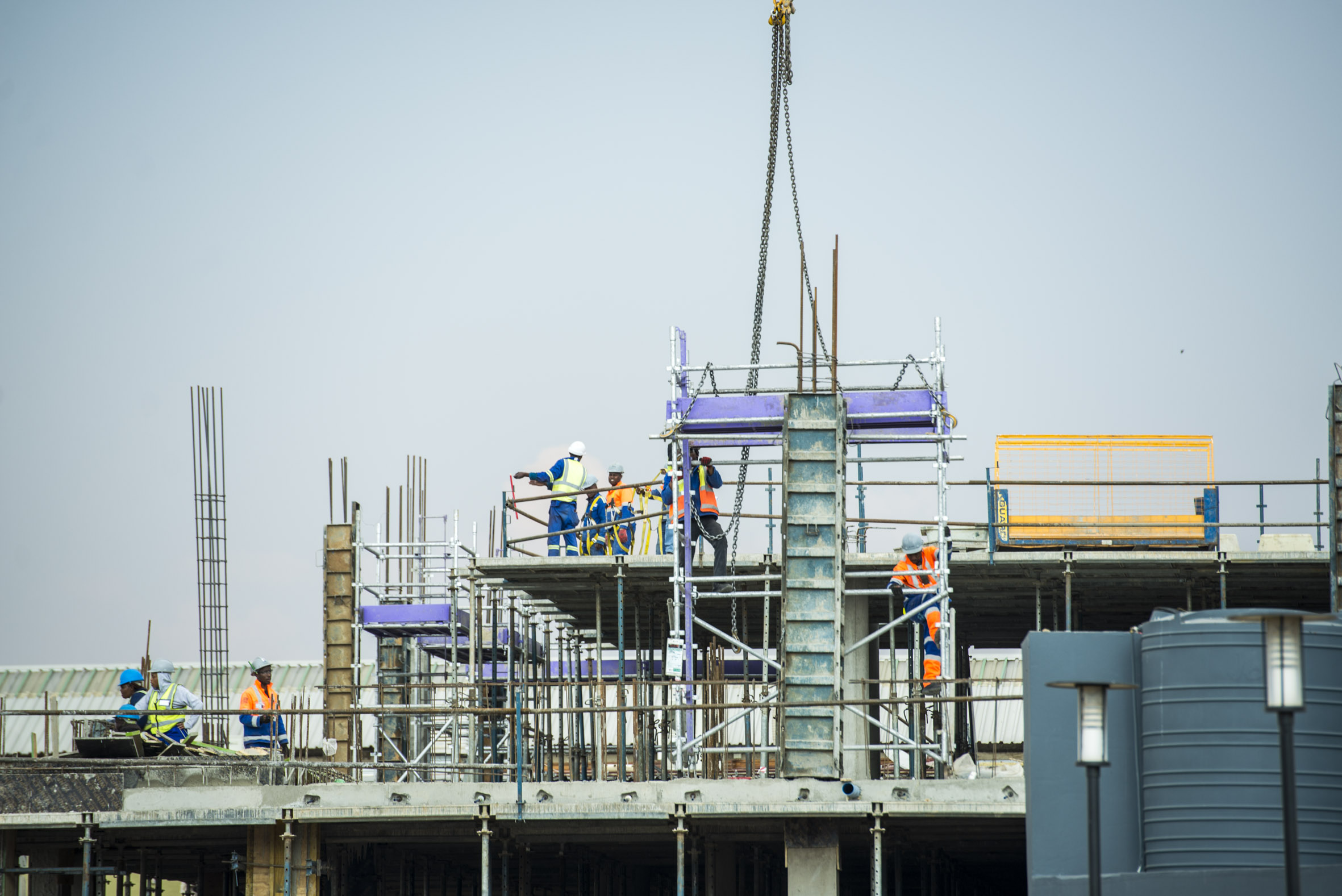
Falls from height globally remain the single largest cause of construction-related deaths, a sobering statistic brought into stark reality by observations on construction sites, such as workers balancing several metres above ground without visible fall protection. This unsettling sight, often normalized in many parts of the continent, highlights a critical, yet often overlooked, aspect of urban development: scaffolding.
Scaffolding, though temporary and largely invisible to the public, is the lifeblood of urban development, especially as South Africa builds higher, denser urban nodes with more complex developments. While not the finished building or the architectural marvel, it is a temporary skeletal labyrinth of steel hugging high-rises in cityscapes like Cape Town and Sandton. Its construction involves intricate engineering, physics, and precision; a fully erected scaffold can span kilometres of tubing and weigh hundreds of tonnes, effectively creating a temporary second building around the permanent one.
The complexity is further exemplified by practices in places like Hong Kong, where skilled rattan workers swiftly erect bamboo scaffolding for skyscrapers, a testament to precision and efficiency. However, when scaffolding goes wrong, the consequences are immediate and severe. While many residential and commercial projects operate at heights of 15m to 30m, South African industrial and major urban developments often see scaffolding reach 60m to 100m or more. At these extreme heights, wind becomes a significant factor, load calculations are critical, and the margin for error effectively disappears, even as the industry grapples with the constant push-and-pull between safety and speed due to tight construction timelines, fixed budgets, and expensive delays.
The human cost of neglected scaffolding safety has been tragically demonstrated in South Africa. In 2015, a scaffolding collapse during the construction of the Grayston Drive pedestrian bridge in Sandton resulted in two fatalities and 19 injuries when the structure fell onto the M1 highway during peak traffic. More recently, in the middle of last year, a scaffolding collapse at a shopping centre in Springfield Park, Durban, led to one construction worker's death and four injuries as they fell from 6m while installing signage. Such incidents are frequently traced back to overlooked calculations, skipped inspections, or pressured decisions, carrying irreversible consequences for workers operating at height.
Hassan Suleman, owner of Form Force Scaffolding, emphasizes that at height, scaffolding transitions from a temporary structure to a primary risk system, demanding engineered stability under constantly changing conditions like wind, load, and human movement. He states that treating scaffolding as secondary to the build is the biggest mistake, as its failure means everything fails. Form Force Scaffolding maintains a 100% safety record with no fatalities, attributing this to a deeply embedded safety culture rather than just a checklist. On their sites, anyone can raise a concern and stop work, and engineering standards are non-negotiable, irrespective of deadlines or budgets, to prevent a slippery slope of compromised safety.
The industry faces several challenges that can tempt corner-cutting. A portion of the market operates on undercutting, where contractors win bids by sacrificing safety through fewer inspections, lower-grade materials, and less experienced teams. Financial pressures also mount from significantly increased insurance premiums for high-risk construction work and volatile material costs (SANS-compliant steel tied to global markets and the rand). Furthermore, a severe skills gap exists, with a shortage of highly experienced riggers and supervisors. Many seasoned professionals are stretched across multiple projects, and there isn't a robust pipeline of new talent, creating an environment ripe for safety compromises.
The most critical aspect of scaffolding is often the unseen: the meticulous planning, engineering drawings, precise load calculations, and daily inspections. These repetitive checks, performed long before anyone ascends the structure, are the discipline that, when neglected, renders the entire system vulnerable. To address these systemic issues, South Africa urgently needs a stronger training pipeline for scaffolding and rigging, including more accredited programs and practical, on-site mentorship to create clear paths from entry-level to certified skilled positions.
Enforcement of existing regulations, such as the Occupational Health and Safety Act and SANS standards, also requires significant improvement, needing to be visible and unavoidable, particularly for repeat offenders. Additionally, clients, including developers and contractors, bear a responsibility to move beyond simply awarding work to the lowest bidder. They must rigorously interrogate safety records, methodologies, and compliance to break the cycle where 'cheap becomes expensive quickly' when something goes wrong.
As South Africa continues its upward urban trajectory, scaffolding will remain the silent, indispensable partner in growth. It won't feature in brochures or serve as a selling point, yet it consistently holds everything together while the core construction unfolds. As Hassan Suleman poignantly highlights, while the structures are temporary, the consequences of missteps are permanent. The ultimate measure of progress in pushing skylines higher will not solely be the height achieved, but whether every person who went up came back down alive and uninjured.