Zoe Kazan Dives Deep: Personal Family History Shapes 'East of Eden' for Netflix
Netflix's new "East of Eden" adaptation, premiering October 1, re-examines John Steinbeck's epic with a focus on Cathy Ames, exploring her complex motivations without excusing her actions. Showrunners Zoe Kazan and Jeb Stuart utilize a seven-episode format to delve into the novel's intergenerational themes of family legacy and free will, offering a comprehensive and personal retelling of the classic story.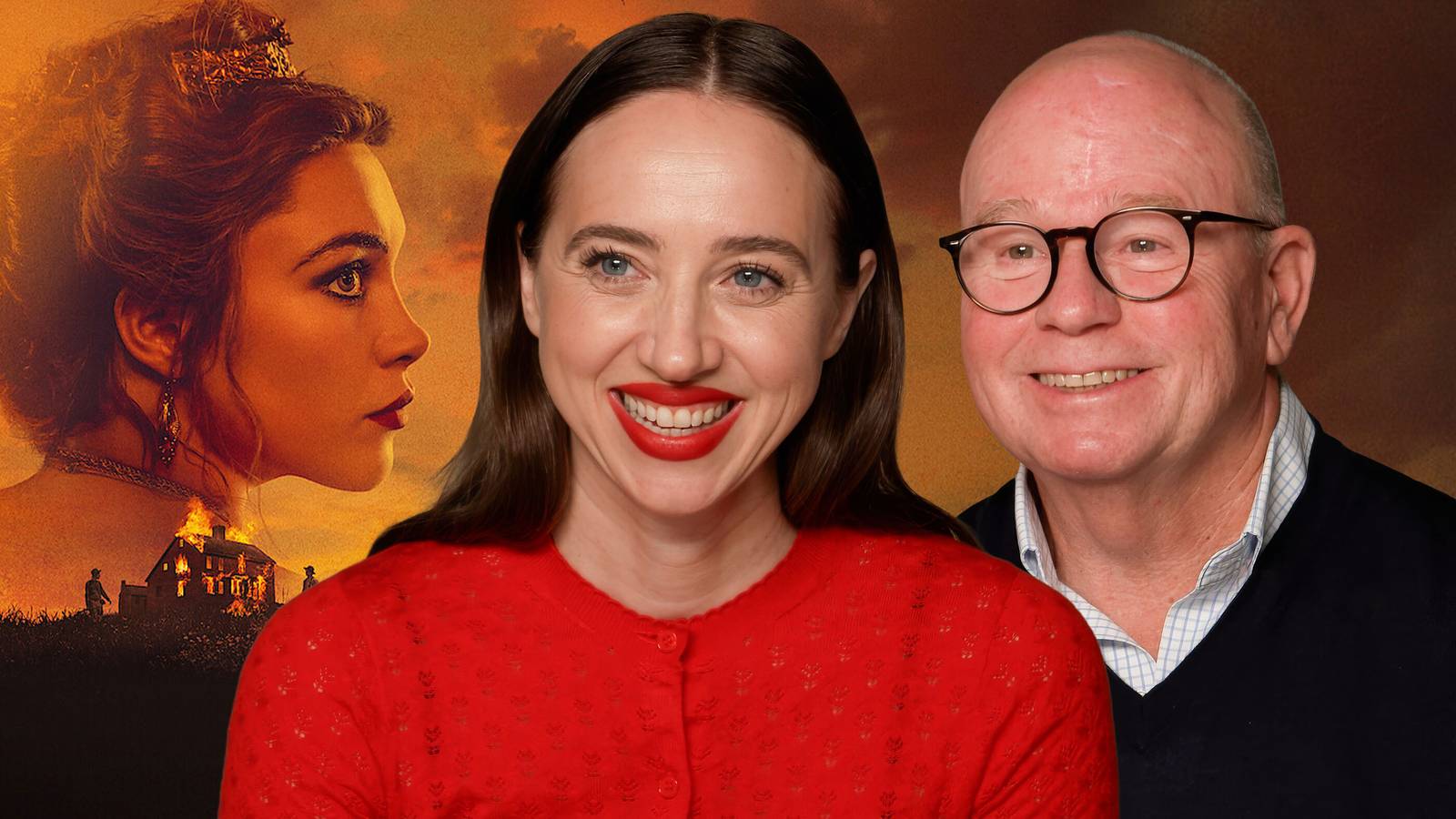
Netflix is set to premiere an ambitious new adaptation of John Steinbeck’s epic 1952 novel, "East of Eden," on October 1. This seven-episode series, led by showrunners Zoe Kazan and Jeb Stuart, promises a fresh and comprehensive look at Steinbeck's most ambitious work, which is famously based on the biblical story of Cain and Abel. Set against the backdrop of California’s Salinas Valley, the narrative intricately weaves together the lives of the Trask and Hamilton families, delving into profound themes such as the inheritance of family traits, the interplay of nature and nurture, and the enduring question of whether future generations are predestined to repeat the transgressions of their predecessors.
At the heart of this new adaptation is the enigmatic character of Cathy Ames, portrayed by Florence Pugh, who also serves as an executive producer alongside Kazan. In an interview with Collider, Zoe Kazan revealed that the series places Cathy Ames at its center, seeking to explore the complex motivations behind her actions without excusing them. This approach aims to move beyond Steinbeck's initial portrayal of Cathy as a "psychic monster" or "malformed soul," a label he himself began to question as he delved deeper into her character during his writing process. Kazan and Pugh, who have collaborated on this retelling since 2020, were drawn to Cathy's complexity, desiring to ask audiences to look beyond simple labels and consider the "why" and the human woman underneath her monstrous acts.
The decision to adapt "East of Eden" as a seven-episode series for Netflix, rather than a feature film, was crucial for showrunners Kazan and Stuart. Kazan, acknowledging her grandfather Elia Kazan's classic 1955 film, emphasized that the episodic format provides the necessary room to deeply explore Cathy's psyche and effectively convey the novel's "intergenerational aspect." This longer form allows the narrative to move characters through time, illustrating the far-reaching ramifications of their choices on subsequent generations. Stuart concurred, noting that a series offers the flexibility for tonal shifts required by such an epic piece of storytelling, unlike a two-hour film which often necessitates a consistent tone.
Zoe Kazan brings a unique personal connection to this project. Her grandfather, Elia Kazan, famously directed the 1955 film adaptation, which introduced James Dean to the world. While this familial link initially presented a "deterrent" or a "shadow" to step into, Kazan's attraction to Steinbeck's novel, particularly its familial themes and the character of Cathy Ames, predated her engagement with her grandfather's film. Having first read the book at 15, Kazan's perspective evolved significantly as a young mother. She found herself connecting with the story through the lens of parenthood, identifying with characters like Cal and Lee, and understanding Adam's struggles to be a different kind of father while inevitably repeating past patterns. Kazan also shared that her experiences as a parent inform her role as a producer, applying "tools" like setting boundaries with kindness and understanding to her collaborations on set.
The enduring relevance of "East of Eden" lies in its universal themes. Steinbeck himself considered it the culmination of his craft, a work for which all his previous novels, including "The Grapes of Wrath," were mere practice. The novel's exploration of nature versus nurture, inherited destinies, and the power of free will—symbolized by the Hebrew word "timshel" ("Thou mayest")—resonates across generations. Jeb Stuart highlighted that while the story is set between 1862 and 1918, its core message transcends time, making it a universal narrative rather than merely a modern retelling. Kazan hopes that viewers will reflect on their own families and the impact of parental choices on future generations, much as she and the team did during the production process, thinking about their own relatives and the country's history. The series features Christopher Abbott as Adam Trask, Mike Faist as Charles Trask, Joseph Zada as Cal, and Joe Anders as Aron, continuing the narrative of rivalry and inherited consequences.