Zambia's Political Firestorm: Mundubile Challenges Hichilema Amidst Campaign Blockades and Public Scrutiny
Zambia's upcoming August 13 General Election is marked by a stark contrast between international approval of President Hichilema's economic reforms and domestic discontent over hardship caused by IMF policies, debt restructuring, and tax changes. While Hichilema campaigns on development promises, opposition candidate Brian Mundubile offers a people-centric, private sector-driven economic alternative, against a backdrop of political controversies and shifting voter loyalties, particularly in Western Province.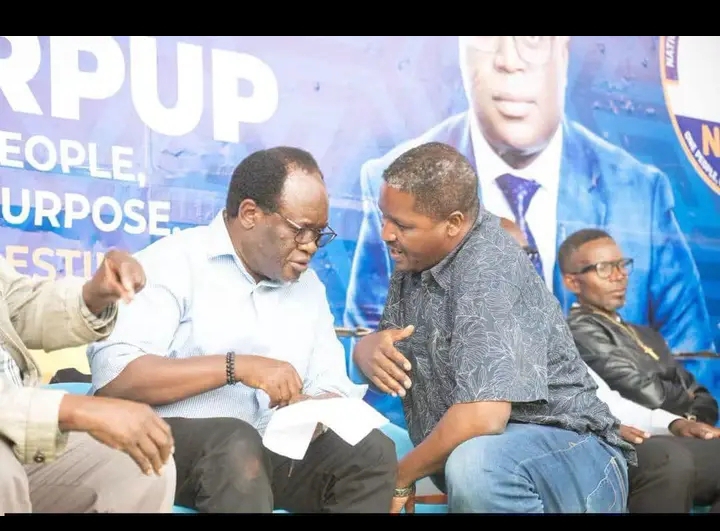
The economic performance of President Hakainde Hichilema’s administration over the past five years has presented a stark dichotomy, with international perception sharply contradicting the domestic experience. While the global community largely views the economic trajectory under his leadership favorably, a significant portion of Zambians expresses dissatisfaction, attributing various hardships to the government’s implemented policies.
Upon assuming office on August 24, 2021, President Hichilema's economic agenda was primarily structured around three core objectives. Firstly, to restore investor confidence, particularly after the country's Eurobond default in 2020, through engagement with an IMF program. Secondly, to undertake a comprehensive restructuring of the nation's foreign debt to prevent future defaults. Thirdly, to implement reforms within the country's tax system to attract increased investment, especially within the mining sector, with an ambitious target of elevating copper production to 3 million metric tonnes within three years.
Regarding the first economic objective, the administration successfully secured an IMF program by March 2022, culminating in a $1.7 billion bailout loan. This achievement was widely celebrated by the international community as a significant milestone for President Hichilema. However, from the perspective of the Zambian populace, the IMF program introduced considerable hardship. The requirement for IMF approval and vetting of national economic and tax policies, including the formulation of the National Budget, created inherent conflicts, as the IMF's understanding of local needs was often deemed inadequate. A notable consequence was the scrapping of the Farmer Input Support Program (FISP), which resulted in subsistence farmers in 2022 receiving drastically reduced fertilizer allocations – from six bags under the previous administration to sharing one bag among five people using “medas”. Other IMF-influenced policies, such as the export of electricity to generate foreign exchange, were criticized for causing prolonged loadshedding domestically, at the expense of the local economy. Thus, while the international community perceived the IMF program as a success, the majority of Zambians viewed it as a disaster.
President Hichilema’s second major economic agenda, foreign debt restructuring, evolved into a protracted negotiation process with creditors. Debt restructuring, in essence, involves modifying existing debt terms to make them more manageable, potentially through partial write-offs, extended repayment periods, reduced interest rates, or a combination thereof. The success of this initiative remains difficult to ascertain definitively, as the Debt Restructuring Agreement signed with creditors has not been made public, despite calls for transparency from opposition leaders and civil society organizations. Critics speculate that the process involved significant debt substitution, where foreign debt was replaced with domestic debt. This hypothesis is supported by an unexplained sharp increase in government domestic borrowing through Treasury Bills and Government bonds, which escalated from approximately K93 billion in 2021 to around K260 billion at present. This suggests that the government may have borrowed from the local economy to repay some foreign creditors as part of the restructuring arrangements.
Substituting foreign debt with domestic debt is generally considered a detrimental economic strategy. A substantial increase in government domestic borrowing depletes liquidity within the local economy, thereby stifling economic growth, which is the ultimate objective. Local financial institutions typically prioritize lending to the government over the private sector. Consequently, high government borrowing crowds out the private sector, impeding its growth and, by extension, employment creation. The 43,000 public sector jobs cited by President Hichilema over the past five years, while appreciated, are deemed insignificant in addressing Zambia's widespread unemployment. Therefore, while the international community lauded the debt restructuring as successful, many Zambians experienced hardships due to the suffocation of the local private sector and subsequent hindrance to job creation.
The third major economic agenda, reforming the country’s tax system to attract greater foreign investment in the mining sector, saw the 2022 National Budget extending tax holidays amounting to $3.2 billion to mining companies. Other favorable reforms included making withholding tax a deductible expense for income tax purposes, effectively abolishing it for mines. This decision was criticized as it removed a crucial and reliable tax revenue stream for the government, as mines often declare perpetual tax losses, avoiding income tax payments. The resulting reduction in the tax pool has reportedly led to government struggles in meeting basic financial obligations, such as timely payments to farmers for maize, often leading to delays and reliance on commercial bank loans. Domestic arrears—money owed by the government to suppliers of goods and services—have surged from approximately K18 billion in 2021 to about K104 billion currently. In a small economy like Zambia’s, such a large sum of government debt to the private sector severely curtails liquidity, hindering private sector growth, employment creation, and poverty alleviation. Furthermore, the promised 3 million metric tonnes copper production target, despite the $3.2 billion tax holiday, has not been achieved. Projections for 2026 copper production are less than 700,000 metric tonnes, which is lower than the 821,000 metric tonnes produced in 2021 before the UPND assumed office.
In contrast to the current administration's policies, Brian Mundubile, an aspiring independent MP for Roma Constituency and a member of the Brian Mundubile Presidential Campaign Team, outlines an economic turnaround plan centered on the Zambian people and the domestic private sector. His agenda prioritizes the welfare of citizens, in direct opposition to policies that have pleased the international community but caused hardship domestically. Mundubile proposes that the domestic private sector be the primary driver of economic transformation, with the government's role being to create a conducive business environment. This involves ensuring access to affordable finance, favorable tax policies, elimination of burdensome regulations, stable electricity and fuel supply with fair pricing, and timely government payments for goods and services supplied. Mundubile believes this approach will empower the private sector to create millions of jobs, unlike government-led employment initiatives which he deems insufficient.
As the August 13 General Election approaches, political campaigns are in full swing. President Hichilema, during his campaign in Luapula Province, emphasized messages of continued development, free education, social cash transfer, and cash for work programs. He pledged the quick completion and improvement of key roads, including Nchelenge-Chienge, Kaputa-Mporokoso, Nchelenge-Matampala, and Kashikishi-Nchelenge-Mwansabombwe-Mwense-Mansa. The President also committed to reviving the Kenani rubber plantation in Nchelenge to create jobs and restocking fish in Mweru and Mweru wa Ntipa. In Kawambwa, he promised increased investment, jobs, and business opportunities, highlighting the expansion of the Constituency Development Fund (CDF) to K120 million for newly delimited constituencies, which will facilitate more schools, hospitals, health centers, and grants. He also directed the employment of volunteer health workers who attended his rally in Chiengi, urging them to serve in the districts of their deployment. Residents of Nchelenge expressed strong support for President Hichilema, citing the significant increase in Social Cash Transfer for elderly beneficiaries from K200 to K800, along with other empowerment initiatives and mealie meal distribution during hunger periods, reaffirming their readiness to grant him a second mandate.
Amidst the election fervor, the National Reconciliation Party for Unity and Prosperity (NRPUP) has categorically disavowed a video circulating on social media depicting masked individuals in “Mundubile” T-shirts making inflammatory statements and engaging in criminal conduct. The NRPUP condemned the video as false, malicious propaganda designed to tarnish the opposition's image ahead of the elections and to divert public attention from critical issues. They called upon the Zambia Police Service to immediately investigate the video’s origin, identify those responsible, and ensure impartial legal action, also noting the involvement of UPND officials in circulating the material.
A political survey conducted by the Zambia Barotseland Border Post Media House in Western Province revealed a significant decline in President Hichilema’s popularity, dropping by 47.5%. Many respondents felt betrayed by the UPND administration due to unfulfilled development promises, including the King Lewanika University, Mongu Stadium, and the Kazungula-Sesheke Road. President Hichilema's perceived failure to apologize for “demeaning remarks” about the Barotseland Kingdom and the Litunga further alienated many Lozis. The survey projects that Brian Mundubile has garnered approximately 40% support in Western Province even before his campaigns in the region. Disillusionment among UPND supporters was also linked to the selection of candidates at parliamentary and local government levels. This complex political and economic landscape sets the stage for a critical general election, where voters must weigh contrasting narratives of progress and hardship, and choose between competing visions for Zambia’s future.