Wontumi Plea Deal Rocks Ghana: Calls For Justice and Accountability Intensify Amidst Debate
Discussions surrounding Ashanti Regional NPP Chairman Bernard Antwi Boasiako's plea bargain offer in a GH¢14.3 million loan fraud case have ignited a national debate on justice, accountability, and the role of plea bargaining in Ghana. Legal and political analysts are weighing in on whether such negotiations should include punishment, ensure broader accountability, and uphold the presumption of innocence.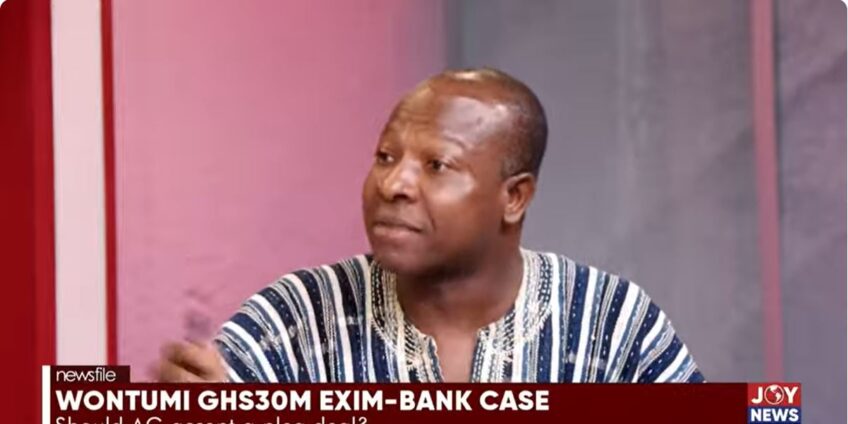
The Ghanaian criminal justice system is currently grappling with contentious plea bargain negotiations involving Bernard Antwi Boasiako, widely known as Chairman Wontumi, the Ashanti Regional Chairman of the New Patriotic Party (NPP). This high-profile case concerns an alleged GH¢14.3 million loan fraud involving the Ghana Export-Import Bank (Exim Bank), which has sparked intense public and legal debate across national platforms like JoyNews' Newsfile and Joy Prime's Prime Insight.
Formal steps towards plea negotiations have been initiated, with Mr. Wontumi’s counsel, Mr. Andy Appiah-Kubi, submitting a request to the Attorney-General on June 5, 2026. Subsequently, the Deputy Attorney-General, Dr. Justice Srem-Sai, filed a Notification of Commencement of Plea Negotiation at the Accra High Court on June 11, 2026, under Docket No. CR/0529/2026, pursuant to Section 162C(3) of Ghana’s Criminal Offences (Procedure) Act, Act 30. These developments have brought the intricacies of plea bargaining in Ghana under a spotlight, eliciting varied opinions from legal experts and political analysts.
James Kwabena Bomfeh, CEO of the Centre for Citizenship, Constitutional and Electoral Systems (CenCES), has urged the Attorney-General to consider a plea bargain if it serves the interests of justice and facilitates the recovery of state resources. Speaking on Newsfile on Saturday, June 13, he underscored that plea bargaining is a legitimate and established component of Ghana's criminal justice system, designed to achieve justice in a manner beneficial to the public interest by potentially avoiding lengthy and costly trials. However, he maintained that if negotiations cannot yield such an outcome, the case should proceed to a full trial.
Conversely, political analyst Dr. Arthur Kennedy has argued vehemently that punishment must be an integral part of any plea deal involving Chairman Wontumi. He insisted that negotiated settlements should not allow an accused person to avoid consequences by merely returning funds. Dr. Kennedy advocated for custodial sentences or criminal fines, emphasizing that Ghana’s justice system must apply the law equally to all, regardless of social or political status, stating, “A nation that deals fowl thieves and cassava thieves should not let big people go free when they commit crimes.” He clarified that while plea bargains in systems like the United States often lead to reduced sentences, they do not typically grant complete immunity from punishment.
Adding another layer to the discussion, Nana Agyei Baffour Awuah, MP for Manhyia South and Vice Chairperson of Parliament’s Subsidiary Legislation Committee, clarified that the decision to pursue plea negotiations should not be misconstrued as an admission of guilt. On Newsfile, he explained that engaging in plea bargaining is a strategic decision by defense teams, especially when clients face multiple legal proceedings. He also highlighted that if the core issue is a loan, its legal character implies repayment, and exploring options to return the money through a plea bargain can be a practical approach. Mr. Awuah stressed that Ghana’s plea bargaining framework explicitly preserves the presumption of innocence and constitutional protections, affirming that defendants retain the right to a full trial if negotiations fail.
The principle of presumption of innocence was a recurring theme among the commentators. Mr. Bomfeh expressed concern over a growing tendency to treat accused persons as guilty before adjudication, asserting that the Constitution guarantees innocence until proven otherwise. Dr. Kennedy echoed this, cautioning against presuming guilt. Similarly, Mr. Awuah emphasized that the plea bargain law itself stipulates that prosecutors must inform the accused of their right to a fair trial and that negotiations do not equate to a guilty plea.
Beyond individual culpability, Bernard Bediako Baidoo, Member of Parliament for Akwatia, called for broader scrutiny and accountability. He argued that the ongoing case should not be limited to a single individual, agreeing with Mr. Bomfeh that other persons connected to the transaction, including bank officials responsible for due diligence, must also explain their roles. Court documents confirm that the charge sheet names multiple accused persons: Bernard Antwi Boasiako, Thomas Antwi Boasiako (reportedly at large), and Wontumi Farm Limited, reinforcing the call to move away from personalizing the matter solely to Chairman Wontumi. Mr. Baidoo further questioned the fairness of prosecutorial discretion if some individuals linked to an offense are pursued while others are not.
Regarding the Attorney-General's role, Mr. Bomfeh posited that the Attorney-General, acting for the public, must consider all issues, prioritizing justice and state resource recovery. Mr. Baidoo also highlighted the dual legal and political dimensions of the Attorney-General's office, suggesting that decisions in high-profile cases carry broader public implications. He further argued that if the Attorney-General accepts a negotiated settlement without a full trial, it should be contingent on a clear concession or admission of guilt by the accused during the negotiation stage itself, distinct from a formal court plea.
These detailed discussions on the Wontumi plea bargain, alongside other national issues such as developments in the case of former MASLOC CEO Sedina Tamakloe Attionu, the impasse at Afari Military Hospital, and presidential approval ratings, were part of comprehensive current affairs programs. These forums underscore the public's demand for transparency, accountability, and the judicious application of legal frameworks in Ghana's governance landscape.
The debate surrounding Chairman Wontumi's plea negotiations exemplifies the complex balance required between expeditious resolution of cases, recovery of state assets, upholding fundamental legal principles like the presumption of innocence, ensuring accountability, and navigating intense public and political scrutiny in Ghana's evolving criminal justice system.