What will become of Earth if Solar Activity increases?
NASA and other space agencies report a surge in solar activity as the Sun enters a more energetic phase. Learn what this means for Earth, satellites, power grids, and the future of space weather.
A New Era of Solar Activity
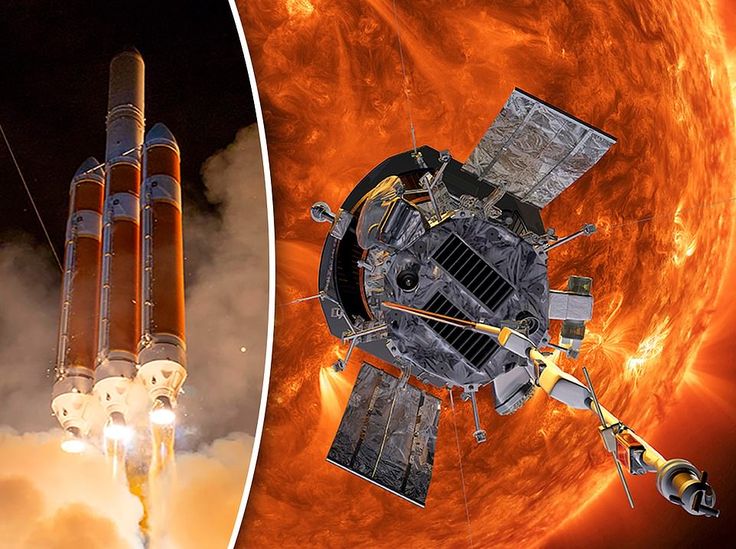
After more than a decade of relative calm, the Sun, the blazing heart of our solar system is waking up. According to new analyses from NASA and other space agencies, the Sun’s energy output and magnetic activity are surging, ushering in a period of intense space weather that could reshape how we think about communication, navigation, and power systems on Earth.
The increase marks a reversal from previous years. Scientists once speculated the Sun might enter a “grand solar minimum,” a long period of low activity that could have cooled the Earth slightly. Instead, NASA’s latest findings show the opposite: the Sun is becoming more active, with solar flares, sunspots, and coronal mass ejections (CMEs) increasing in both frequency and intensity.
The Sun follows an approximately 11-year solar cycle, swinging between periods of high and low activity. Each cycle is tracked by counting sunspots which are dark, magnetically active regions on the Sun’s surface that often coincide with solar flares and CMEs. We are currently in Solar Cycle 25, which officially began in December 2019. Initially predicted to be modest, the cycle has instead surprised scientists by surpassing expectations. Data from NASA’s Solar Dynamics Observatory shows a sharp rise in sunspot numbers since 2023, and forecasters now believe we are approaching or may have already reached the cycle’s peak.
Increased solar activity translates into more frequent and powerful solar flares, bursts ofradiation and coronal mass ejections, which hurl charged particles across space. When these reach Earth, they interact with our planet’s magnetic field, producing geomagnetic storms that can have both beautiful and disruptive consequences.
Power Grids and Infrastructure: Geomagnetic storms can induce electric currents in long conductors, such as power lines and pipelines, potentially damaging transformers and causing blackouts. A similar event in 1989 knocked out power across Quebec, Canada, for nine hours.
Satellites and Communication Systems: According to Times of India, NASA and SpaceX have both observed that high solar activity can increase atmospheric drag on satellites, shortening their lifespan or causing re-entry.
GPS and Aviation: Solar storms interfere with high-frequency radio waves, GPS navigation, and aviation communications, especially on polar routes. Airlines like Delta and United already monitor space weather closely for flight planning.
Astronaut Safety: Increased radiation exposure during intense solar events poses risks for astronauts aboard the International Space Station and future lunar or Mars missions.
One of the more enchanting outcomes of heightened solar activity is the increase in auroras, those ethereal curtains of light that shimmer across the night sky. During strong geomagnetic storms, these displays become visible far beyond their usual polar regions.
In early 2025, there were predictions and a general period of heightened solar activity, with some potential for aurora displays, but no single event as powerful and widely observed as the one in May 2024has been recorded for that period.
News snippets from that time discuss the ongoing solar maximum and individual, less significant events.During that major geomagnetic storm (the most powerful in over 20 years), auroras were reported in locations as far south as Romania, Poland, southern France, and parts of the United States and northern Mexico.
The current uptick follows an unusually quiet solar minimum that ended around 2008. Scientists are not entirely sure why the Sun has become more active than predicted, but many theories point to complex changes in its magnetic field dynamics. Dr. Lisa Upton, a solar physicist with Space Systems Research Corporation, told The Washington Post:
“We expected a relatively weak cycle, but the Sun seems to have other plans. It is a reminder that we still do not fully understand the forces driving solar magnetism.”
Space agencies and private firms are investing in better space weather forecasting. NASA, NOAA, and the European Space Agency (ESA) are collaborating on missions like the Solar Orbiter and Parker Solar Probe to study solar winds and magnetic fields up close.
Earth’s technological systems are far more interconnected today than during previous solar cycles. From power grids to internet infrastructure and GPS, everything is more vulnerable, but also better monitored.

Governments and private operators are urged to invest in resilient systems that can handle magnetic disturbances and radiation surges. While we marvel at the glowing skies and colorful auroras, scientists warn that preparedness is essential.
The surge in solar activity marks both a scientific opportunity and a technological test, a moment for humanity to appreciate our dependence on the star that makes life possible, while safeguarding the systems that keep our world connected. As NASA puts it, “The Sun is slowly waking up and with it, a new age of space weather begins.”