Voices in the Machine: Orange, OpenAI, and the Battle for African Tongue
The article discusses the partnership between Orange and OpenAI to deploy AI supporting African languages, framed as a step toward digital inclusivity. However, it raises critical questions about digital sovereignty, language representation, and cultural preservation in Africa. With over 2,000 languages, Africa's linguistic diversity is at stake as AI models may shape how these languages are digitized, interpreted, and controlled. The piece warns of potential "linguistic colonialism 2.0" if African oversight is lacking and highlights the need for local involvement in AI development.

A New Alliance, An Old Fear
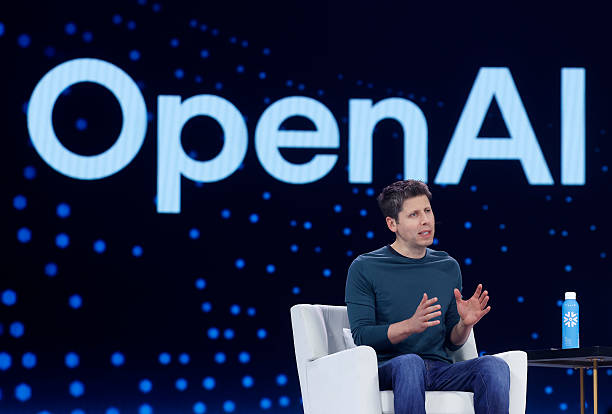
Some announcements carry more weight than they first reveal. When French telecommunications giant Orange declared its new partnership with OpenAI this August—to deploy artificial intelligence in support of African languages—it was framed as progress, as innovation, as hope. The press releases called it "a leap for digital inclusivity" and a "milestone for linguistic equity."

SOURCE: gettyimages

But in Africa, we know that not all leaps land on our terms.
Behind the polished headlines and cooperative smiles lies a deeper question: Who gets to shape the digital identity of Africa? In this new alliance between Orange and OpenAI—two foreign giants with global reach—what role will Africa play in the fate of its own languages, cultures, and digital destiny?
Because if history has taught us anything, it is that when outsiders come bearing technology in one hand, they often hold erasure in the other.
The Linguistic Battlefield
Africa is the most linguistically diverse continent on Earth, home to over 2,000 languages and countless dialects, some spoken by entire nations, others by tight-knit villages and forgotten tribes. These languages are not just modes of communication. They are archives of history, mirrors of worldview, and guardians of heritage.
And yet, most of them are invisible online.
Try speaking Tiv to a chatbot. Try asking Siri a question in Wolof. Try translating an Igbo proverb into Swahili without it losing its soul. The global digital space is built around dominant languages—English, French, Mandarin, Spanish. African tongues are rarely more than an afterthought, often relegated to text-transcription experiments or poorly trained translation models.
The promise of the Orange–OpenAI partnership is to change that. The companies have pledged to support the development of models that understand, process, and respond in African languages—bridging the gap between human heritage and machine intelligence.
But whose version of those languages will be preserved? Who gets to decide what the AI understands? Who will guide how machines interpret African culture?
These are questions not just of access, but of power.
Between Innovation and Infiltration
Make no mistake: this collaboration could be revolutionary. With OpenAI’s advanced large language models and Orange’s vast telecom infrastructure across Francophone and West Africa, millions of Africans could gain AI access in their native tongues. Rural traders might use voice commands in Hausa. Students might study in Wolof. Elders might finally see their language encoded, recognized, and celebrated.
Latest Tech News
Decode Africa's Digital Transformation
From Startups to Fintech Hubs - We Cover It All.
SOURCE: gettyimages

But we must be cautious. Because while the technology is new, the power dynamics are old.
For decades, Orange has operated across Africa—not merely as a service provider, but as a quiet extension of France’s economic and political presence in the region. It controls swathes of mobile data, call infrastructure, and digital payment systems in places like Senegal, Mali, Côte d’Ivoire, and Guinea.
Now, with OpenAI, Orange steps deeper—not just into African economies, but into African minds. Language is not neutral. It carries values, worldviews, and memory. Encoding it into artificial intelligence means shaping how future generations interact with that memory. If this is not done carefully, Africa could once again find itself consuming its own reflection through someone else’s mirror.
The Risk of Linguistic Colonialism

Many Africans still remember what happened the first time language became a tool of conquest.
When colonizers arrived, they brought not only guns but grammar books. They imposed foreign tongues—English, French, Portuguese—not just to communicate, but to reshape consciousness. Indigenous languages were labeled “primitive,” “tribal,” “oral.” Schools punished children for speaking their mother tongues. Churches translated God only through European accents.
The result? Generations grew up believing that to be modern meant to abandon the language of their grandparents. That fluency in English was a badge of progress, and that speaking one’s mother tongue at work or school was backward.
Today, that legacy lingers. African students write dissertations about Africa in English. Courts debate local laws in French. AI models, trained on global data, rarely “speak African” unless prompted.
So when Orange and OpenAI arrive, promising to digitize our tongues, we must ask who controls the keyboard.
Will African linguists be part of the training process? Will cultural nuances be preserved, or flattened into generic translations? Will slang, idioms, and proverbs be respected—or erased in pursuit of algorithmic efficiency?
Without African oversight, this could become linguistic colonialism 2.0—where the same tools that promise representation end up redefining us from the outside in.
Data: The New Gold, The Old Trap
Another layer to this story is the role of data.
To teach machines how to understand African languages, vast amounts of spoken and written material will be needed. Phone calls, text messages, voice recordings, radio archives, folklore—all may be fed into OpenAI’s systems to refine accuracy.
But who owns that data?
Latest Tech News
Decode Africa's Digital Transformation
From Startups to Fintech Hubs - We Cover It All.
This is not a minor concern. Across Africa, telecom companies collect enormous amounts of personal data every day. But laws governing how that data is used, stored, or monetized are either outdated or nonexistent. In many countries, users are never informed about where their data goes, who uses it, or how it's sold.
If Orange shares African voice and language data with OpenAI, what guarantees are in place that this information won’t be used commercially, politically, or even militarily?
OpenAI’s models are trained on global datasets—but Africa’s contributions are often uncredited, unprotected, and unpaid. We must ensure that our voices, once digitized, are not just used, but respected.
A Continent with Its Own Coders
It is not enough to be cautious. We must also act.
Africa is not helpless. The continent is already producing brilliant linguists, AI researchers, and data scientists who understand both the technology and the cultural nuance. Organizations like Masakhane in South Africa and Lanfrica in Nigeria are already building African-led AI projects. Universities from Ghana to Uganda are developing natural language processing tools rooted in African contexts.
The Orange–OpenAI partnership must not overshadow these efforts. Instead, it must support and integrate them. African technologists should not be seen as junior partners, but as architects. If African languages are to live digitally, they must be taught by African minds, not simply downloaded from the West.
SOURCE: gettyimages

This means investment. It means education. It means creating funding pipelines for local AI startups. It means forming continental data laws that protect cultural ownership. It means building a Pan-African Language Council for AI, one that sets ethical standards for how machines learn from human heritage.
And above all, it means refusing to outsource our voice.
What Language Really Is
Language is not just sound. It is the soul. It is how a grandmother warns, how a lover whispers, how a person remembers.
In an era where machines are beginning to speak back to us, it is critical that those machines do not forget where they learned to listen.
Orange and OpenAI may have the tools. But Africa has the wisdom. Our languages carry rhythms of migration, of resilience, of rainmakers and rebels. Let them be encoded not just as words, but as worlds.
This partnership could be the beginning of a new digital future—one where every child can speak to the internet in their mother tongue and be understood. But only if that future is built with consent, collaboration, and care.
Latest Tech News
Decode Africa's Digital Transformation
From Startups to Fintech Hubs - We Cover It All.
Because once a language is digitized incorrectly, it becomes a fossil, not a flame.