Urgent Crisis: Somalia Declares Drought Emergency Amid Mass Hunger
Somalia faces a rapidly worsening drought emergency, with four failed rainy seasons pushing millions towards hunger and displacement. The Federal Government has declared an emergency and appealed for international aid, but severe funding shortfalls are crippling humanitarian efforts amidst dire projections for food insecurity and child malnutrition.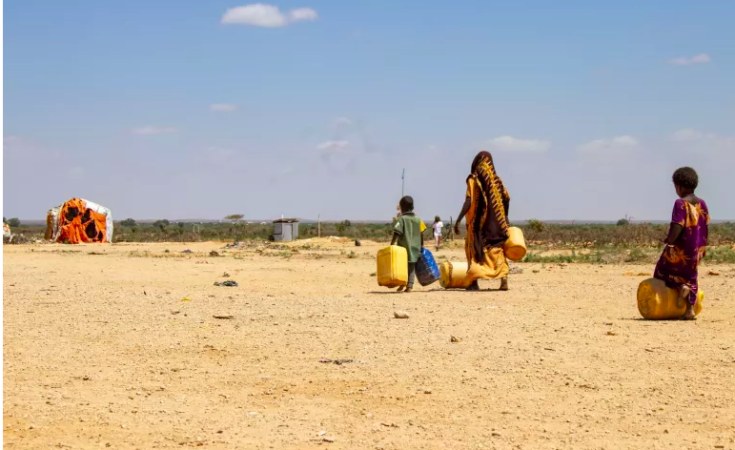
Somalia is grappling with a rapidly intensifying drought emergency, a crisis driven by four consecutive failed rainy seasons that have left vast stretches of the country parched. This severe environmental degradation puts millions of people at immediate risk of hunger and displacement, prompting urgent warnings from UN humanitarians.
Recognizing the gravity of the situation, the Federal Government of Somalia formally declared a drought emergency on November 10. Simultaneously, it issued an appeal for urgent international assistance, as conditions continued to deteriorate across northern, central, and southern regions of the nation, according to the UN relief coordination office, OCHA.
Among the hardest-hit areas is Puntland, where authorities estimate nearly one million people are in need of support. Of these, approximately 130,000 individuals face immediate life-threatening circumstances. A recent UN assessment mission to the Bari and Nugaal regions of Puntland revealed communities struggling with acute shortages of both water and food, with local residents expressing fears that a full-blown catastrophe could unfold in the coming months.
Local accounts paint a stark picture of the crisis. Abdiqani Osman Omar, the mayor of Shaxda village in the Bari region, lamented, "We have not received rain since last year; this is the worst drought in years." He described how hundreds of displaced families, primarily women and children, have sought refuge in the village over the past three months, with more continuing to arrive. Many men have been forced to migrate to neighboring Ethiopia in a desperate search for pasture and water, leaving their families behind. The mayor emphasized that Shaxda village lacks the capacity to support these new arrivals, and even the host communities themselves are in dire need of water and food assistance.
Across Puntland, the physical signs of the drought are evident: water points have dried up, vegetation has withered, and once-vibrant pastoral settlements now stand abandoned. In Dhaxan town, residents had brief hope earlier in the year from short-lived 'Gu' season (April-June) showers. However, this relief was temporary, and they are now dependent on expensive trucked water after their local borehole became contaminated. Community leader Jama Abshir Hersi noted that while around 150 families moved to the town after the short rains, vital assistance—including food, nutrition, and medical supplies for their health unit—has since dwindled significantly.
Compounding the humanitarian crisis are severe funding shortfalls. As of November 23, Somalia's 2025 Humanitarian Response Plan was only 23.7 percent funded. This critical lack of resources has forced major reductions in assistance, with the number of people receiving emergency food aid plummeting from 1.1 million in August to a mere 350,000 in November. In Puntland alone, 89 supplementary feeding sites and 198 health and stabilization centers are struggling with severe supply shortages, further jeopardizing vulnerable populations.
The current drought is unfolding against an already dire humanitarian backdrop. Projections indicate that at least 4.4 million people are expected to face acute food insecurity through December, while an alarming 1.85 million children under five are anticipated to suffer acute malnutrition through mid-2026. Furthermore, weather forecasts offer little immediate hope for relief. The UN Food and Agriculture Organization (FAO) has warned that dry and hot conditions are expected to persist across most of the country, particularly in central and northern regions, which will likely exacerbate water stress and severely limit pasture regeneration in affected areas.