Unwatchable Flop: Rare Horror Remake Achieves Infamous 0% Rotten Tomatoes Score!
The 2008 American remake of the Japanese horror film <em>One Missed Call</em> is widely regarded as a critical failure, achieving a 0% Rotten Tomatoes score. This article delves into the film's unoriginal plot, inconsistent supernatural curse, and poor execution, contrasting it with the strengths of the original J-horror and more successful remakes like <em>The Ring</em>.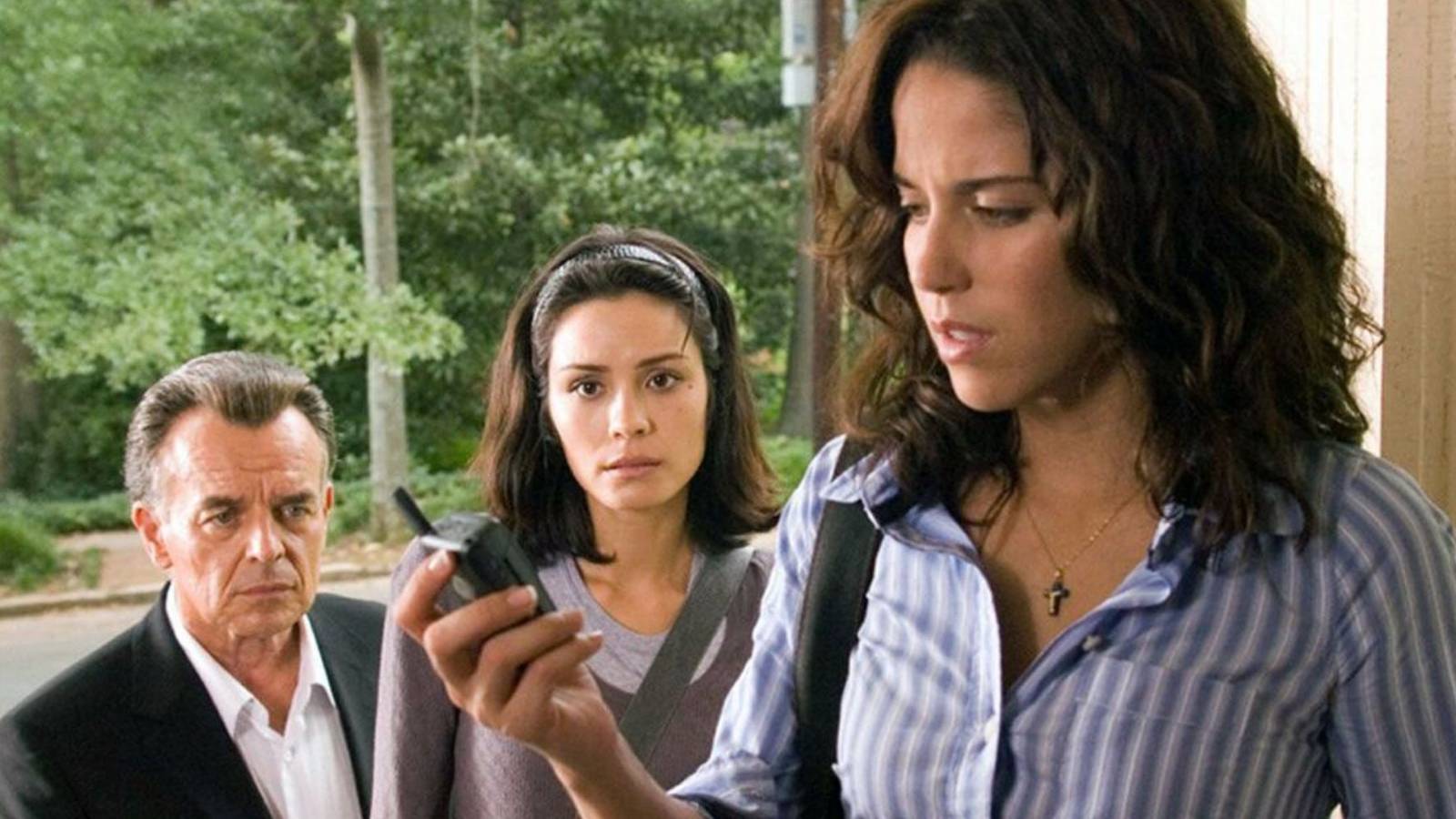
Japanese horror films are distinct from their Hollywood counterparts, often relying on psychological dread, vengeful spirits, ultraviolence, and an eerie atmosphere to instill fear, rather than the jump scares and toned-down gore frequently seen in American productions. A notable example that failed to capture these elements effectively is the 2003 Japanese film One Missed Call, which garnered a 46% Rotten Tomatoes score due to criticisms of unoriginality. However, its 2008 American remake, directed by Eric Valette, received a dismal 0% on Rotten Tomatoes, indicating an even greater critical failure.
Released during the tail end of America's trend of remaking Japanese horror films, an era that also produced the significantly better remakes of The Ring and The Grudge, the American version of One Missed Call centers on a supernatural curse spread through cell phones. The curse's victims receive a call featuring an unrecognizable ringtone from the previous victim's phone. This call typically goes to voicemail, and upon playback, the victim hears their own screams from a specific date and time in the near future. True to the message, when that date and time arrive, they die with a red candy in their mouth, perpetuating the cycle. College student Beth Raymond (Shannyn Sossamon) and Detective Jack Andrews (Edward Burns) must race to stop the curse before they, too, succumb to their predetermined deaths.
Despite its intriguing premise, the film suffers from significant flaws, borrowing heavily from or outright stealing elements from superior films like The Ring, Final Destination, and Insidious: The Last Key. The curse's mechanics lack consistency, with victims dying via supernatural ghost attacks at times and through Final Destination-esque accidents at others. Furthermore, an anomaly arises when a victim's cat is killed, despite cats not using cell phones, which contradicts the curse's stated method of claiming victims. The film is plagued by terrible CGI, and an exorcism scene features dialogue even worse than the rest of the script, though it does include Ray Wise. Scenes depicting red candies falling from victims' mouths and a severed hand dialing the next victim's number are more humorous than frightening.
Critics universally savaged the film. Bill Stamets of the Chicago Sun-Times quipped, "If you missed the first One Missed Call, made in Japan in 2004, you now can miss the American remake." Austin Kennedy of Sin Magazine sarcastically commented, "Oooooh, a cell phone that kills! Really? Wow! Some people might find that creepy, but it's just silly isn't it?" Todd Gilchrist of IGN Movies advised, "Borrowing from this bottomless well, perhaps it's best to say that you should hang up, turn off your phone or even cancel your service should this film attempt to reach out and touch you." These critiques highlight the film's poor acting, cheap effects, and unscary jump scares.
The original Japanese film, despite its own issues, earned its 46% rating through its effective atmosphere, genuinely creepy scares, developed character backstories, gratuitous violence, and director Takashi Miike's skillful use of sound and visuals to build suspense—elements crucial to J-horror's appeal. The remake, in stark contrast, lacks atmosphere, telegraphs its jump scares, and fails to develop characters that audiences can care about. Even creative or gory kills, which could have salvaged some points, were neutered to achieve a PG-13 rating, resulting in uninspired deaths.
Successful American remakes of Japanese horror films, such as The Ring, demonstrate that changes can be made without sacrificing the unsettling atmosphere that defines both versions. The Ring, for instance, shifted its focus from broad Japanese anxieties to a tighter mother/son family unit while retaining its creepy essence. One Missed Call, however, retained only the original concept, fumbling even scenes copied directly from the original, like the exorcism, rendering them ineffective. Despite its many failures, the American remake did one thing right: unlike the original, which spawned two sequels and a ten-episode television drama, the 2008 iteration was a standalone film, mercifully a "one-and-done" experience. Released on January 4, 2008, with a runtime of 87 minutes, it was directed by Eric Valette, written by Andrew Klavan, and featured Edward Burns as Jack Andrews and Shannyn Sossamon as Beth Raymond.