Trump's Explosive Threats to Nigeria Spark Global Outcry and Market Turmoil
The Nigerian government has strongly refuted US President Donald Trump's claims of "Christian genocide" and threats of military intervention, asserting the nation's constitutional commitment to religious freedom. Officials maintain that Nigeria's insecurity affects all citizens, irrespective of faith, and welcomes support while rejecting foreign interference. This diplomatic standoff highlights the complex interplay of internal security challenges and international geopolitical interests.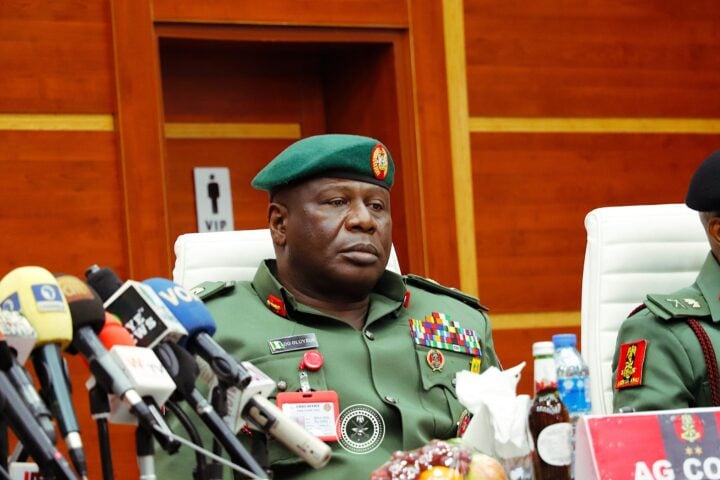
The Nigerian political and economic landscape has been significantly stirred by recent declarations from US President Donald Trump, who controversially designated Nigeria as a "Country of Particular Concern" (CPC). This designation, rooted in allegations of widespread persecution and "mass slaughter" of Christians by "radical Islamists" within Nigeria, has been accompanied by stern threats of US military intervention and the potential cessation of American aid. The Nigerian government and a diverse array of national and international stakeholders have vehemently refuted these claims, asserting Nigeria's unwavering constitutional commitment to religious freedom and cautioning against foreign interference.
President Trump's assertions, widely circulated on his Truth Social account and other platforms, stemmed from a Fox News segment that reportedly galvanized his decision-making while aboard Air Force One. His threats included preparing the Pentagon for "possible action," such as deploying "boots on ground" or conducting airstrikes, and cutting off all assistance to Nigeria if the alleged killings continued. Analysts like Reuben Abati and Oluwole Onemola have delved deeper into Trump's motivations, suggesting they extend beyond humanitarian concern to include bolstering his evangelical support base, safeguarding perceived US economic interests, or potentially even aiming for regime change, especially in light of Nigeria's strengthening ties with China and the BRICS alliance. Senator Ali Ndume critically labeled Trump's statements as "ignorant," underscoring a profound misunderstanding of Nigeria's intricate security challenges.
In a unified front, Nigerian officials have consistently and firmly pushed back against Trump's accusations. President Bola Tinubu explicitly rejected the notion of an "existential threat" to Christianity in Nigeria, emphasizing the country's robust constitutional guarantees for religious liberty and asserting that the portrayals of Nigeria as facilitating Christian genocide "do not reflect our national reality." Foreign Minister Yusuf Tuggar, during a press conference in Berlin, adamantly stated that it is "impossible" for any level of the Nigerian government to support religious persecution. Chief of Defence Staff (CDS) Olufemi Oluyede, following a high-level meeting coordinated by National Security Adviser (NSA) Nuhu Ribadu, reiterated that while Nigeria undeniably grapples with significant insecurity, particularly terrorism, these challenges affect all citizens regardless of their faith. He clarified that security agencies are fully committed to combating terrorism and, while open to international collaboration, stressed the imperative of respecting Nigeria's national sovereignty.
The international and domestic responses to Trump's threats have been varied and robust. Governor Abdullahi Sule of Nasarawa State dismissed the genocide claims as false, attributing them to misinformed foreign elements. Governor Ademola Adeleke of Osun State called for renewed diplomatic engagement, urging the US to support Nigeria's national security strategy rather than resorting to military action. The African Democratic Congress (ADC) and Peter Obi, the Labour Party's presidential candidate, criticized the Tinubu administration for what they perceived as a worsening security situation and diplomatic shortcomings, including the absence of ambassadors in crucial foreign missions. The Centre for the Promotion of Private Enterprise (CPPE) condemned the US military threat as unwarranted and economically destabilizing, predicting adverse effects on investor confidence and the Nigerian economy, advocating instead for strategic diplomacy. The Arewa Consultative Forum (ACF) forcefully reminded the US that Nigeria is not its colony and called for an impartial judicial commission of inquiry into the allegations. Pastor Wale Adefarasin questioned the sincerity of Western concern, suggesting it might be linked to Nigeria's growing control over vital resources such as oil refining capabilities and critical mineral deposits. Globally, China, through its Foreign Ministry spokesperson Mao Ning, expressed unequivocal support for the Nigerian government, firmly opposing any nation that uses religion or human rights as a pretext to meddle in other countries' internal affairs or issue threats of sanctions and force.
Analysts have drawn striking historical parallels, most notably with the "banana republic" narrative stemming from US interventions in 1950s Guatemala. Oluwole Onemola compellingly argued that historical US foreign policy often prioritizes economic and strategic interests, cloaking them in rhetoric of freedom and human rights. He suggested that Nigeria's increasing autonomy and its outreach to new global partners like Russia and China, coupled with domestic whispers of a failed coup, could be the true catalysts for Washington's concern. Reuben Abati underscored the grave dangers of Trump's aggressive stance, warning that it could fracture Nigeria's fragile balance and potentially ignite a devastating civil war, a conflict no nation, especially Nigeria, could survive. Professor Hafiz Abubakar urged Nigerians to remain vigilant against foreign designs aimed at exploiting internal divisions. These commentators collectively emphasized that the complex, multi-ethnic, and multi-religious nature of Nigeria's security challenges is being dangerously oversimplified by external narratives, which could lead to disastrous "blowback."
The immediate economic fallout included a N246 billion loss in the Nigerian stock market and a decline in dollar bonds, signaling investor caution. However, financial analysts, while acknowledging the initial emotional market reactions, largely asserted that Nigeria's fundamental economic indicators remain robust. They anticipate diplomatic resolutions and see the current market volatility as potential entry points for savvy investors. Calls for Nigeria to project calm, bolster investor confidence, and safeguard economic stability through proactive diplomacy were widespread.
The overarching sentiment among many Nigerian voices is a strong insistence on internal solutions over foreign military intervention. There is a resounding call for genuine political will, a comprehensive overhaul of the security architecture, and decisive leadership from within Nigeria. Emphasis has been placed on fostering national unity, demonstrating patriotism, and leveraging the wisdom of experienced diplomats and religious leaders to navigate these complex challenges. The consensus is clear: Nigeria must address its internal issues with a unified national effort, rather than succumbing to external pressures that risk destabilizing the nation and the West African region.