Tornado Cash Trial Concludes: Developer Roman Storm Found Guilty, Legal Fallout Explored
The high-profile Tornado Cash trial concluded with co-founder Roman Storm's guilty verdict on conspiracy to operate an unlicensed money transmitting business. This outcome sparks significant legal and regulatory discussions for crypto developers and privacy software, contrasting with previous DoJ guidance.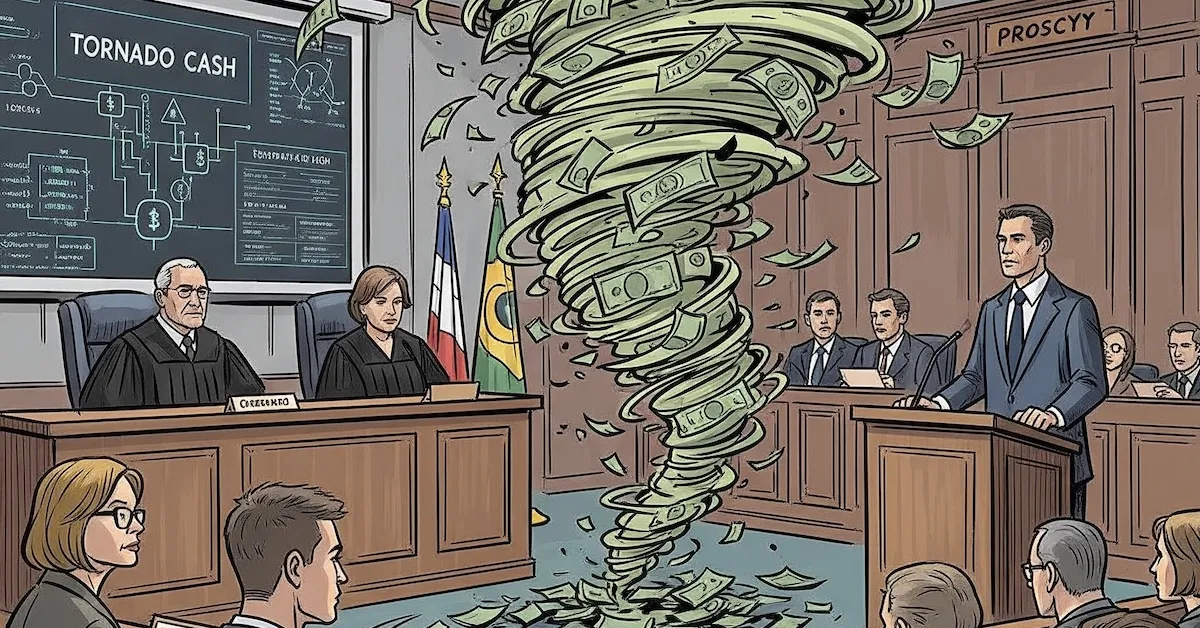
The Tornado Cash trial has reached a critical juncture, culminating in a guilty verdict for co-founder Roman Storm on the charge of conspiracy to operate an unlicensed money transmitting business. This outcome carries profound implications for developers of noncustodial Bitcoin and crypto technology, as well as those creating privacy-preserving software, a sentiment well understood by Amanda Tuminelli, executive director and chief legal officer for the DeFi Education Fund.
Tuminelli, an expert on 18 U.S. Code § 1960 – the U.S. federal law prohibiting unlicensed money transmitting businesses – provided an in-depth analysis of the charges against Storm. She highlighted her view that Storm had not violated this statute in the creation and operation of Tornado Cash, an Ethereum-based crypto mixing service. The broader debate centers on the legal classification of developers of non-controlling (noncustodial) crypto technology. Legislative efforts, such as the CLARITY Act and the Blockchain Regulatory Certainty Act (BRCA), include language designed to protect such developers, stipulating they should not require a money transmitting license or be subject to existing money transmission laws.
A significant concern raised by Tuminelli is the Department of Justice’s (DoJ) perceived shift away from 2019 FinCEN guidance, which she believes threatens innovation in the crypto space. This shift, she argues, could lead to continued prosecution of developers like Storm, despite an April memo from U.S. Deputy Attorney General Todd Blanche stating that the DoJ would cease targeting crypto entities, including mixing and tumbling services, for the actions of their end users. The DeFi Education Fund actively supported the crypto community in these legal battles, submitting amicus briefs for both the Tornado Cash and Samourai Wallet cases, though the former was rejected by the court.
The trial's conclusion saw Roman Storm found guilty on the second count of his indictment: conspiracy to operate an unlicensed money transmitting business. The jury, after three and a half days of deliberation following a trial that commenced mid-last month, did not reach a unanimous verdict on the other two counts, which included conspiracy to commit money laundering and conspiracy to violate sanctions. As a consequence of the guilty verdict on the money transmission charge, Storm now faces a potential prison sentence of up to five years.
Following the verdict, the prosecution motioned to remand Storm into custody, asserting he posed a flight risk. However, Judge Failla rejected this motion. The defense, led by Ms. Klein, successfully argued against the claim, citing Storm's deep ties to the United States: his home in Washington state is secured by a $2 million bail bond, his daughter and girlfriend reside in the U.S., his parents are green card holders, and a significant portion of his crypto community support base is U.S.-based, expected to continue aiding him during appeals. Judge Failla acknowledged the